




 Riders Preferred Membership
 Shop by Vehicle
 Track Order
 Contact Us

Meet the R 12 S. Emphasis on the "S."
Motorcycle manufacturers often reserve performance-boosting upgrades for their S-spec models. Sometimes, "S" stands for special. Other times, it’s short for sport. Considering BMW characterizes the R 12 S as a “sporty retro bike,” there’s little mystery behind its S badge. That doesn’t mean the label is entirely fitting. After all, "S" can stand for a lot of different things.
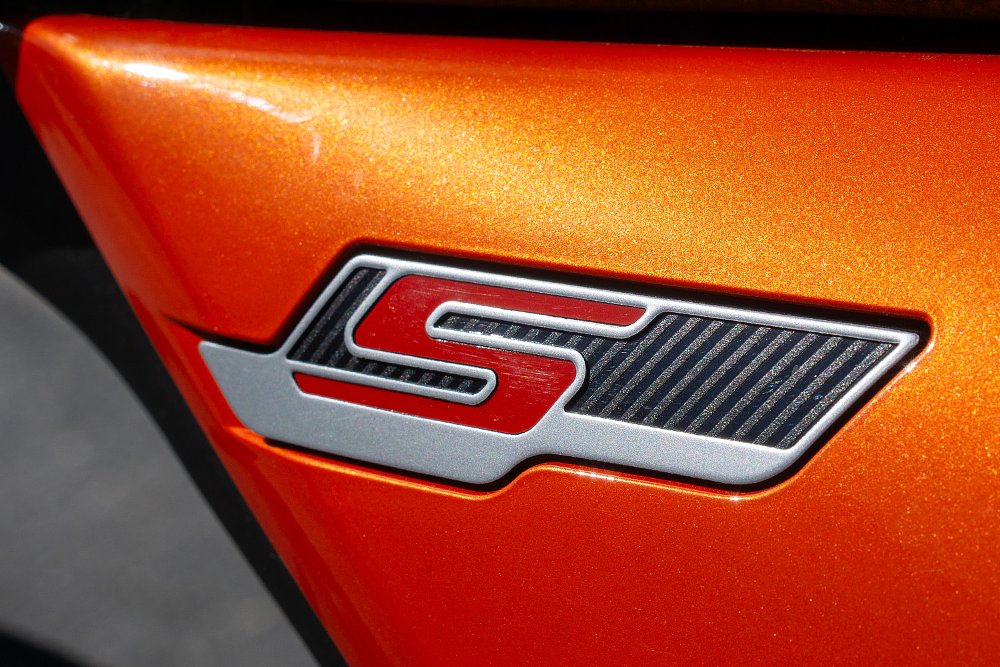
S for spin-off
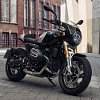
BMW’s PR machine readily admits the “R 12 S is based on the R 12 nineT.” That’s just one way of putting it. Another way is to say that the R 12 S is the R 12 nineT. From a mechanical standpoint, it is. The two share the same 1,170 cc air/oil-cooled boxer engine, adjustable suspension, and Brembo brakes. Their seat heights, rakes, and wheelbases remain consistent. Their distinguishing qualities aren’t listed on any spec sheets. Those differences boil down to a few fancy accessories and flashy throwback paint.
That, of course, is in reference to the S trim’s Lava Orange Metallic livery and anodized aluminum rims. There’s no overlooking its bikini fairing, bar-end mirrors, solo seat, and tail cowl, either. The feature-rich model also touts techy add-ons like Hill Start Assist, Headlight Pro, cruise control, and heated grips. The only semblance of a “sporty” nature, however, comes from its Shift Assistant Pro quickshifter. That’s hardly enough to earn an "S" suffix, if you ask me.
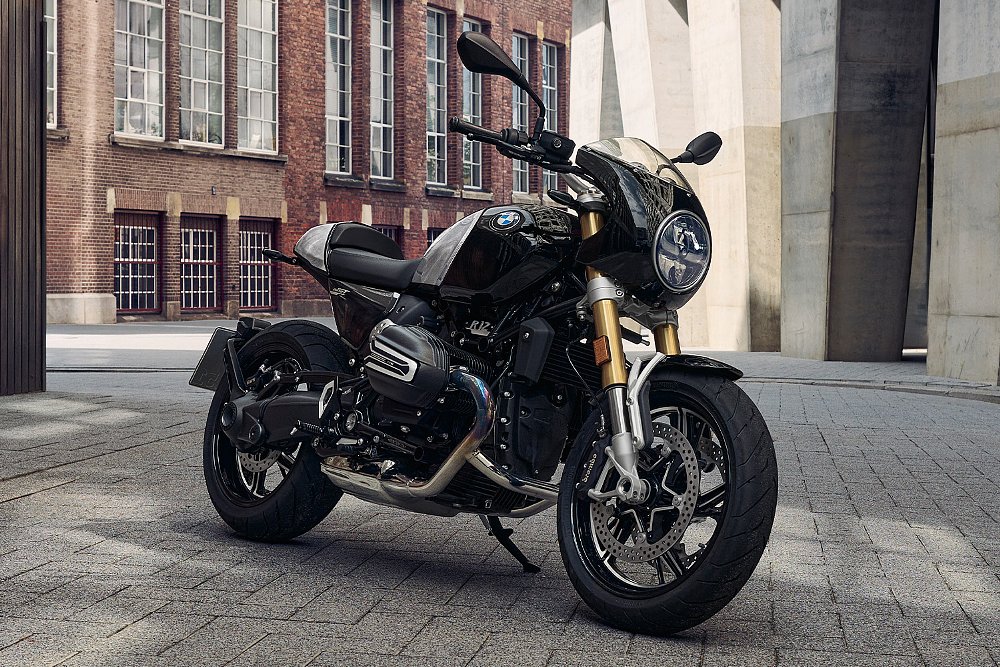
With the R 12 S and R 12 NineT nearly drawing even in performance, why burden the former with the expectation of an S variant? There’s no answering that question without looking back at the legendary model that inspired the R 12 S.
S for ‘70s
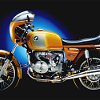
BMW introduced the R90S in 1973. Three years after its debut, the model not only dominated the 1976 Daytona 200 but also claimed the inaugural AMA Superbike title that year. Credit for that sterling race record has to go more to the tuners who developed the BMW for the new Superbike class, because the R90S found on showroom floors was far from a Superbike. In fact, many identify it as a forebearer of the modern sport-touring class. Its specs only support that notion.
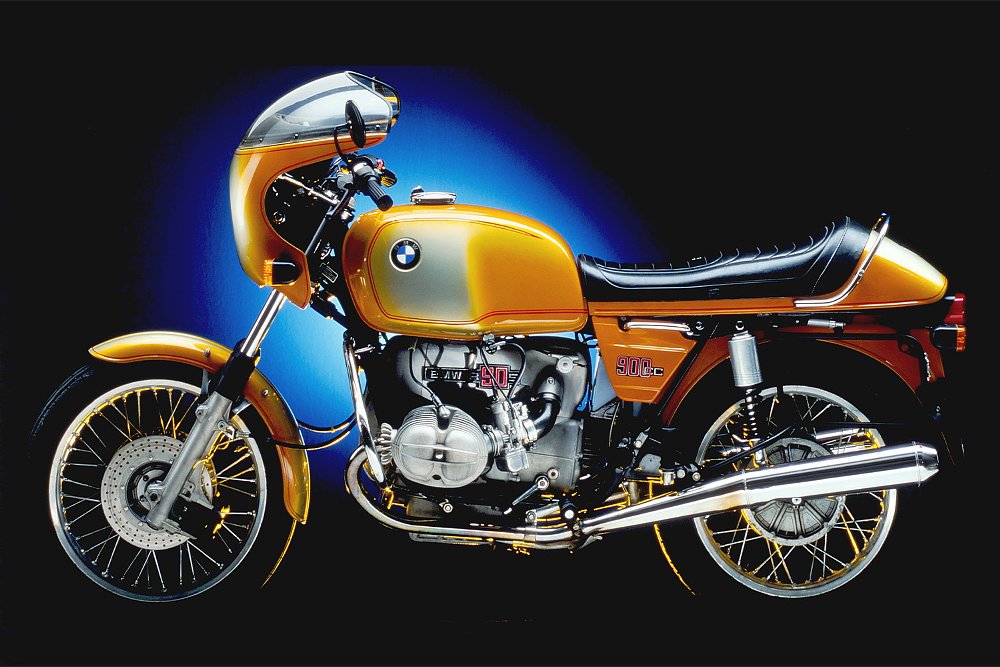
One of the fastest bikes of the era, Kawasaki’s Z1, produced 82 horsepower. The R90S made 67. The former reached a top speed of 135 mph. The latter topped out at 124 mph. Far from winning the horsepower wars, the café-styled tourer was decidedly practical. With its bubble fairing, two-up seat, and spacious luggage, the model stood more as a trusty traveling companion than a high-powered sport bike. So much so that it was nicknamed the Teutonic Tourer in its day.
The R 12 S clearly borrows much from the R90S. The sunburst orange livery. The boxer powerplant. The family name. The resemblance is unmistakable. But the R 12 S is more than just a chip off the old boxer block. It’s a sleeker, svelter take on the R bike of old. Be that as it may, the retro roadster still inherits some of the Teutonic Tourer’s pragmatic side.
S for sensible
A bubble fairing, clip-on handlebars, and rear-set footpegs. Those three components comprise café racer styling. Those three components also equate to more aggressive ergos. Models like Triumph’s Speed Triple 1200 RR and Yamaha’s XSR900 GP come to mind first, but BMW’s own R NineT Racer is one of the more infamous examples. I’m happy to report that the Bavarians learned from that experience, ditching the clip-ons, rearsets, and bubble screen with the R 12 S.
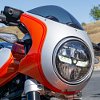
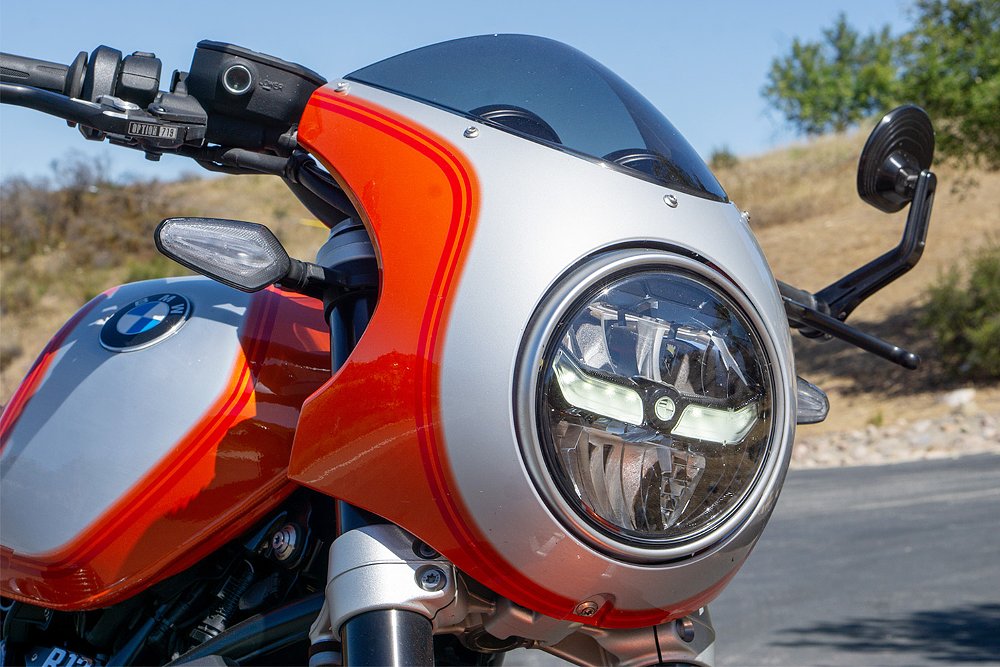
Like the R90S, the 12 S sports a fork-mounted fairing, not a frame-mounted one. It’s less of a bubble fairing and more of a glorified headlight cowl. One that allows the R 12 S to retain the R 12 NineT’s handlebar and forego clip-ons in the process. It’s a similar story with the foot controls, which are the adjustable Option 719 footpegs BMW offers as an upgrade on the base model. The resulting rider triangle is reminiscent of the NineT, because, for all intents and purposes, that’s what it is.
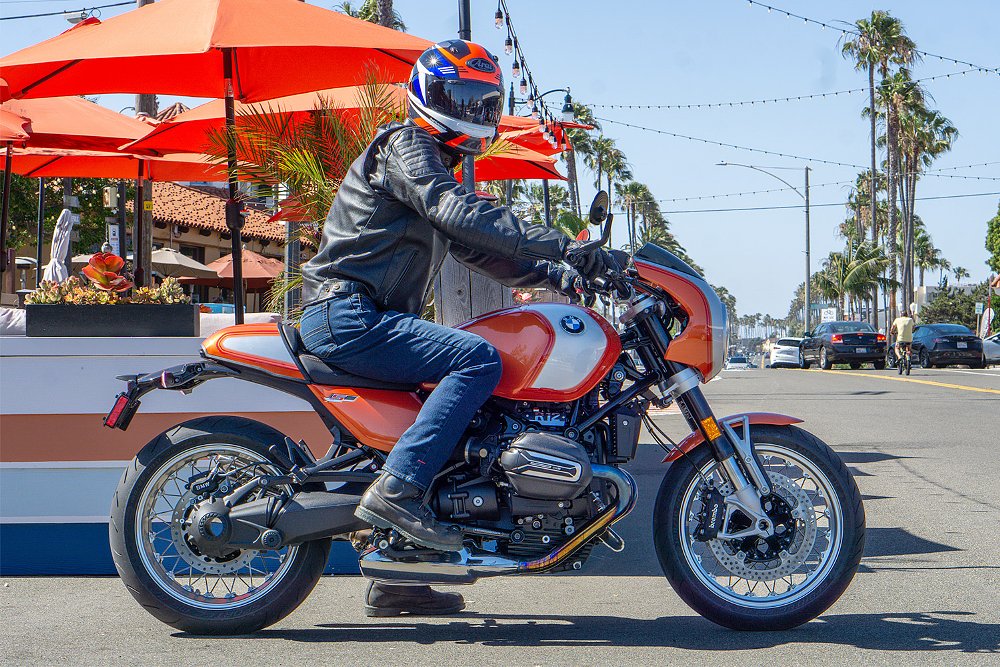
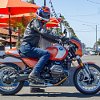
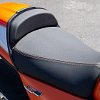
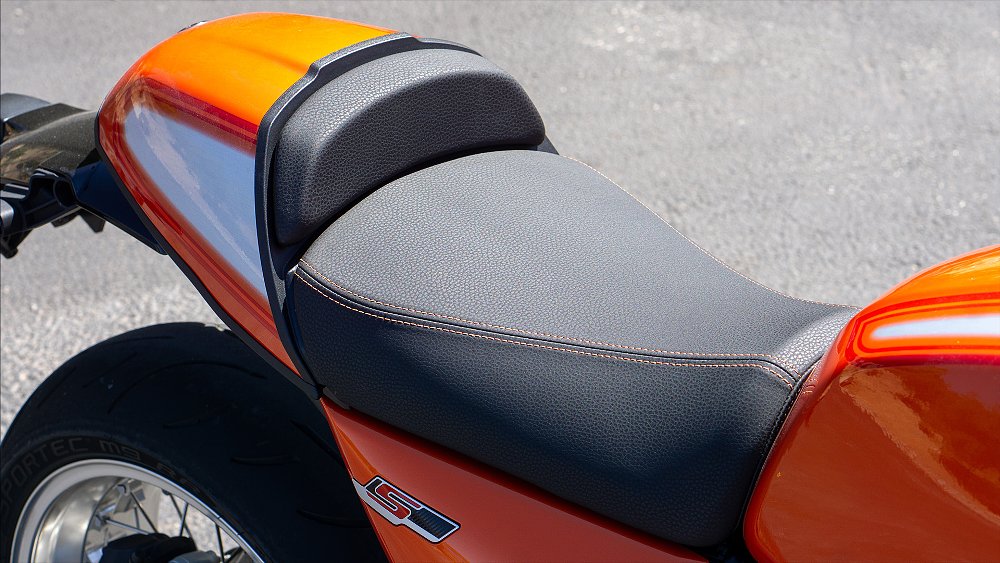
Reaching to the grips felt natural, with my chest and head positioned slightly over the tank. The pegs aren’t too low or aft, maintaining a 90-degree bend in my knees. The resulting pocket finds a happy medium between stretched and cramped, between cafe racer and cozy. Plus, the single seat is surprisingly plush, even with its narrow surface area. Don’t expect the flat-lying saddle to cup your derrière, but it’s supportive enough to provide more than 90 minutes of comfort. In all, the 12 S’s cockpit is a pleasantly accommodating. So long as you’re willing to abide by the posted speed limits, that is.
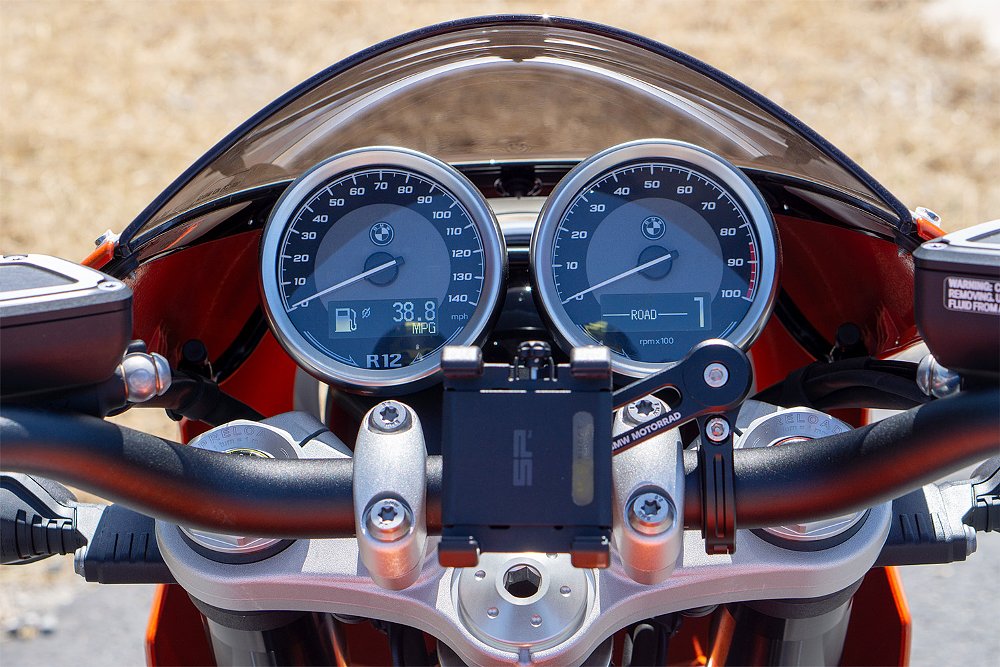
Let’s revisit that bikini fairing, shall we? Remember how it negated the need for clip-ons? Remember how that relaxed the rider ergos? That setup comes with one catch: wind resistance. With the rider sitting more upright, their upper half is more in the breeze. That becomes an issue when the bubble screen starts directing oncoming air right at your head and neck. Sustain speeds in excess of 80 mph, and the gusts lilting off the fairing’s lip produce helmet-pulling results. Fortunately, the effect is minimal when riding under 75 mph. If only the big ol' boxer didn’t implore the rider to press those limits.
S for speedy
One hundred and nine horsepower sounds somewhat pedestrian by today’s standards. That’s especially true when it’s pushing a 492-pound iron steed. Yet, that pony power feels like plenty of punch in the R 12 S’s saddle. Something tells me the opposed twin’s 85 foot-pounds of torque has something to do with it. Down low, neither horsepower nor torque is abundant, where the boxer tends to lumber out of the gate, but turn up the wick and the 12 S bursts ahead with no hesitation. That response is even more pronounced in the Dynamic ride mode. So too are the bike’s less refined attributes.
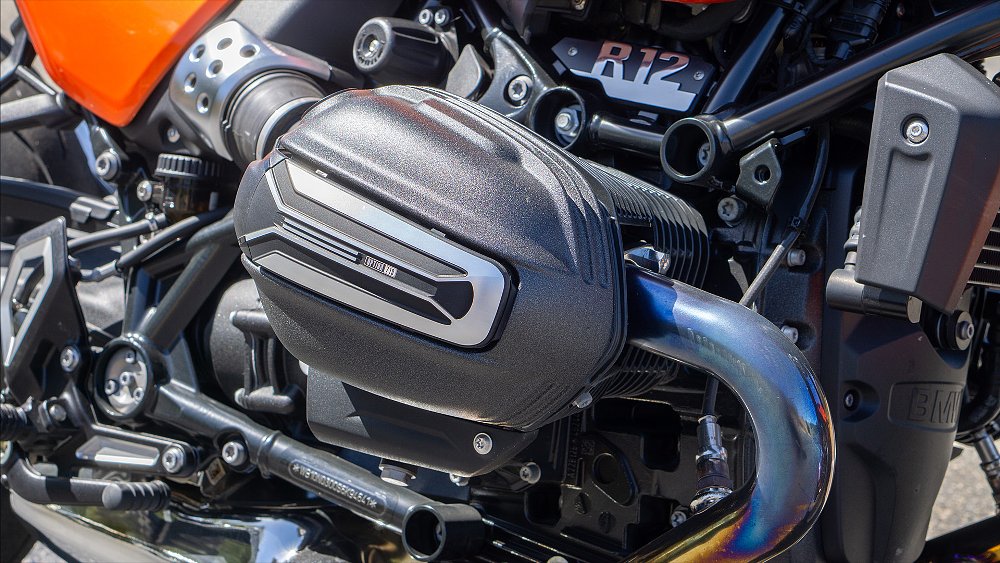
Fire up the 12 S and the trademark left-pulling boxer rock leaves little doubt about the bike’s raw nature. If that doesn’t seal the deal, the engine vibrations will. That’s because the handlebar, tank, and pegs buzz no matter where you are in the rev range. Even the dual gauges incessantly jiggle in their housings. The vibes only worsen when the tach needle crests 6,500 rpm. Still, that’s not the model’s most disruptive quality.
Quickshifters have come a long way in recent years. Most examples deliver smooth, precise gear shifts these days. I can’t include the R 12 S’s Shift Assistant Pro among them. Grab a gear anywhere between 4,000 rpm and 5,000 rpm, and this bronco is bound to buck. In one instance, I actually pulled a mini wheelie while climbing through the gears with gusto.
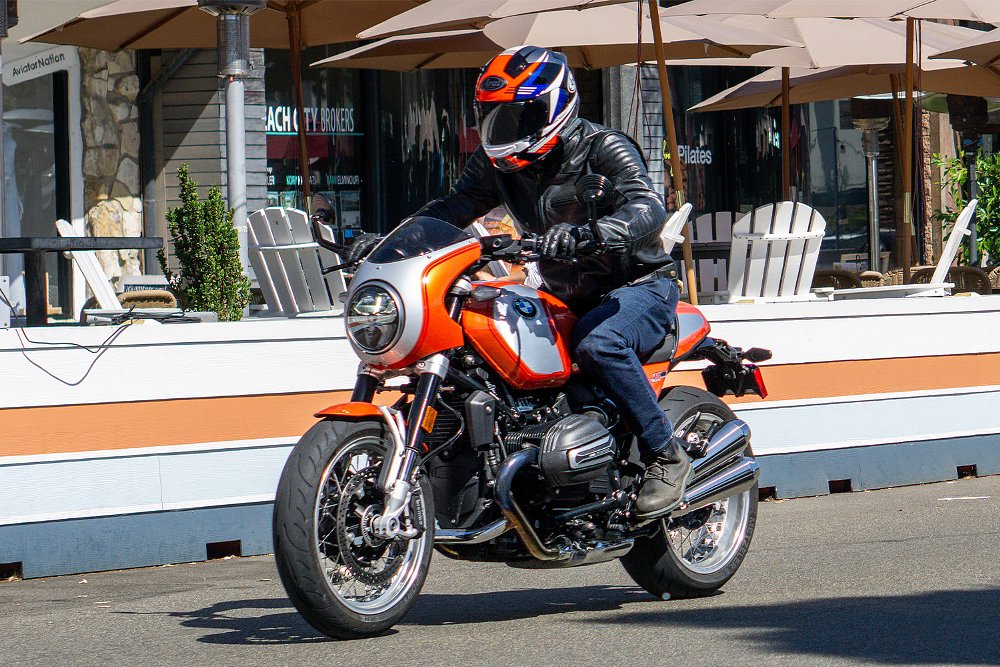
Between first, second, and third gears, shifting is downright staccato. It isn’t particularly seamless between fourth, fifth, and sixth, either. Ultimately, I resorted to steadying each upshift with a generous application of the clutch. So much for the quickshifter’s “sporty” benefits. Getting the S onto a twisty road only revealed its other deficiencies in that category.
S for substantial
Some bikes are heavy off the stand. Those same bikes might display surprisingly responsive steering once they get rolling. The R 12 S is one such bike. However, characterizing the model’s steering as agile might be a bridge too far. The S feels every bit as heavy as the 492 pounds I measured it at. Pushing the Beemer around the garage isn’t a Herculean feat, but it’s no easy one, either. The same could be said for its handling.
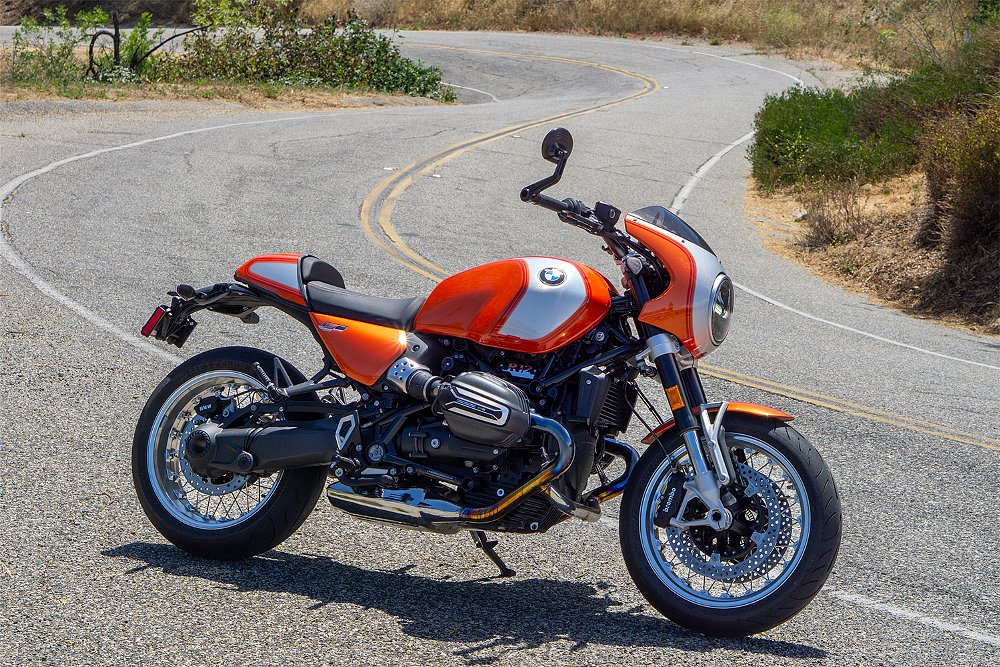
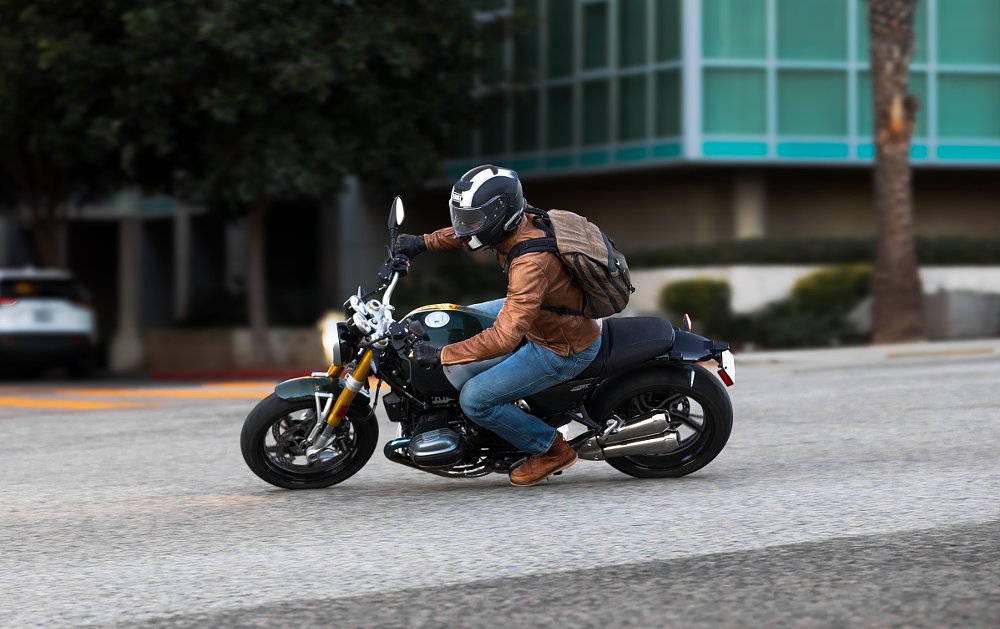
The 12 S isn’t slow to steer. It’s far from light on its feet, though. The handling isn’t cumbersome, but it’s far from flickable. That much was apparent when tipping into second-gear hairpins. It was even more apparent when transitioning side to side through S-curves. That’s when there’s no getting around the bike’s weight, both figuratively and literally.
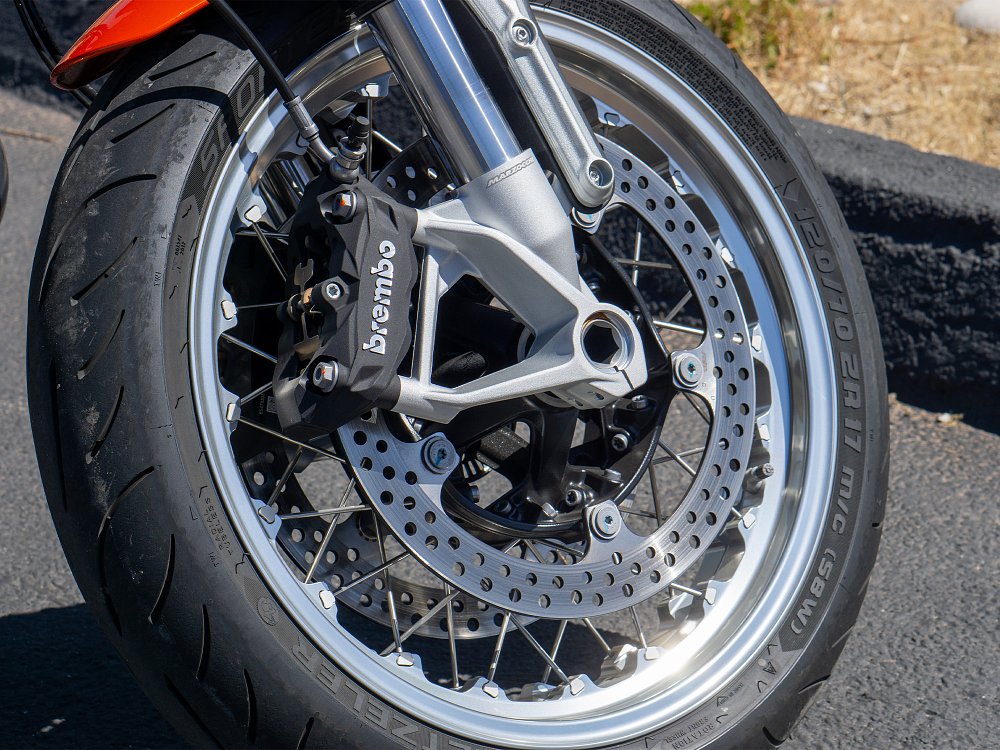
The same goes for braking zones, where I often lacked the confidence to chuck the R 12 S into a fast bend. Much of that comes down to the braking system, which was missing the initial bite and feedback I’ve come to expect from Brembo. To put it simply, wrestling the 12 S around the tight and technical curves of Malibu’s canyons was a workout. I wasn’t setting any lean angle P.R.s on the bike, I’ll tell you that much. At the same time, that’s not what the model is designed to do, now is it?
S for stylish
When I ride the R 12 S, “sporty” is one of the last words that comes to mind. Does the word “stylish” come to mind? Of course. Stunner? Sure. Show-stopper? Ab-so-lute-ly. But sporty, not so much. The model’s streamlined bodywork may portray atheliticism, but its endomorphic build keeps it from realizing those ambitions. It isn’t just heavy on the scales. It feels heavy, too. Even the clutch pull is heavy — heavier than some cruisers, in fact.
It’s not the fact that the R 12 S isn’t as sporty as a genuine sport bike. It’s not that it isn’t as sporty as many of its direct competitors. It’s that it’s not any sportier than the base R 12 NineT. Slapping on a bubble fairing and tail cowl doesn’t make a roadster any faster or nimbler. Tacking on a quickshifter — a poor one at that — doesn’t turn a street bike into an S-tier performer. It simply makes it more stylish.
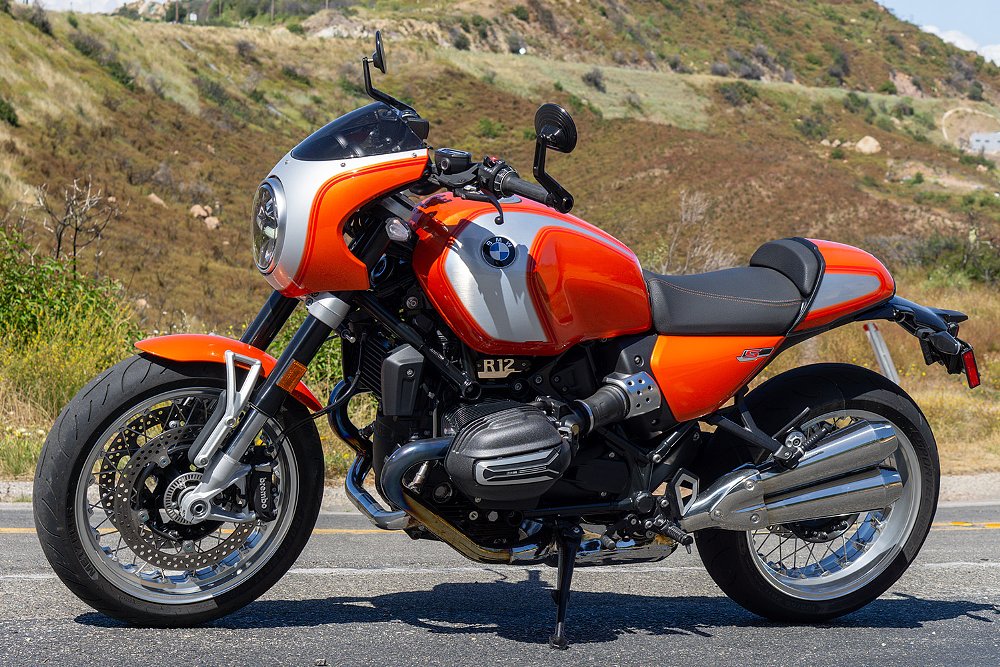
Anyone cross-shopping the R 12 S should keep that in mind. Chances are, if the handsome Beemer is on your shortlist, its aesthetics are probably a big reason why. Customers can already outfit a standard R 12 NineT with all the bits and bobs found on the R 12 S. What they can’t get is the Lava Orange Metallic paint. That’s what makes the R 12 S the perfect candidate for cruising down Main Street. Tackling a winding road on occasion is more of a bonus. If that’s the type of riding that suits you, this S-spec model is specially made for you.
| 2026 BMW R 12 S | |
|---|---|
| Price (MSRP) | $22,140 |
| Engine | 1,170 cc, air/oil-cooled, eight-valve, flat twin |
|
Transmission, final drive |
Six-speed, shaft |
| Claimed horsepower | 109 @ 7,000 rpm |
| Claimed torque | 85 foot-pounds @ 6,500 rpm |
| Frame | Tubular steel trellis |
| Front suspension | 45 mm fork, adjustable for spring preload, compression, and rebound damping; 4.7 inches of travel |
| Rear suspension | Monoshock, adjustable for spring preload and rebound damping; 4.7 inches of travel |
| Front brake | Dual four-piston calipers, 310 mm discs with ABS |
| Rear brake | Two-piston caliper, 265 mm disc with ABS |
| Rake, trail | 27.7 degrees, 4.4 inches |
| Wheelbase | 59.5 inches |
| Seat height | 31.3 inches |
| Fuel capacity | 4.2 gallons |
| Tires | Metzeler Sportec M9 RR 120/70ZR17 front, 180/55ZR17 rear |
| Measured weight | 492 pounds |
| Available | Now |
| Warranty | 36 months/36,000 miles |
| More info | bmwmotorcycles.com |