





 Riders Preferred Membership
 Shop by Vehicle
 Track Order
 Contact Us

Freedom.
It’s the ideal most often associated with the United States of America. It’s also the ideal most people associate with Harley-Davidson. That’s no mere coincidence.
The brand’s star-spangled #1 logo comes to mind. Its Screamin’ Eagle imagery is yet another example. The list goes on. But it was Paul Smith’s 1976 Bicentennial poster that originally cast the Hog as “The Great American Freedom Machine.”
Fifty years later, the Milwaukee marque doubles down on that narrative, commemorating the U-S-of-A’s 250th anniversary with the limited-edition 2026 Super Glide.
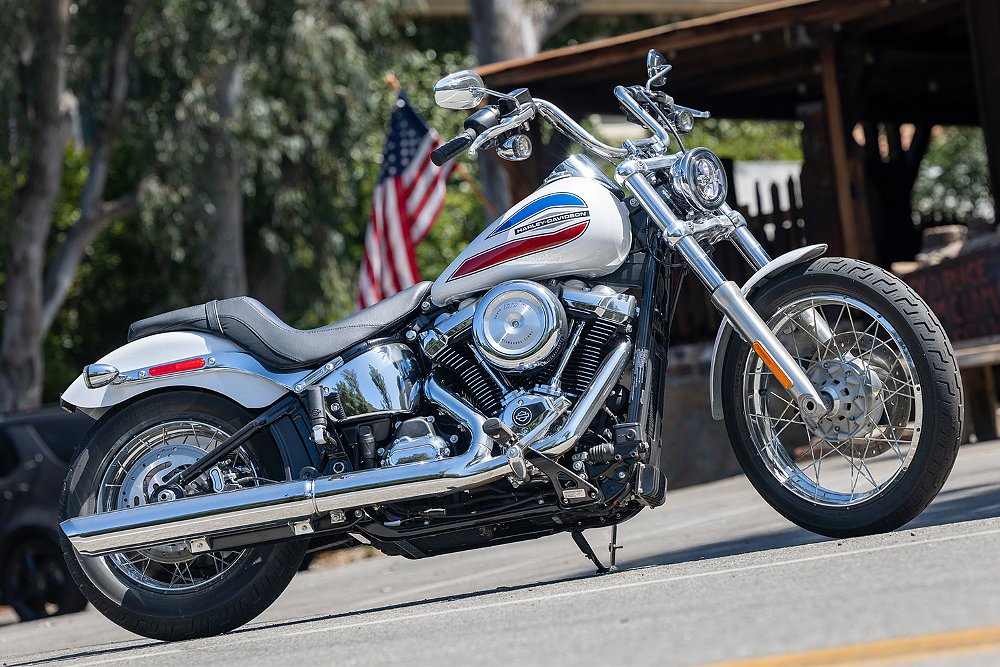
Creative liberties
When H-D originally launched the Super Glide in 1971, it didn’t just introduce a new model. It introduced a whole new category. At the time, the firm’s road-going lineup consisted of fully dressed Electra Glides and Ironhead-powered Sportsters. The former constituted the FL line. The latter, the XL line. By packaging the FL’s Shovelhead V-twin and touring-friendly frame with the XL’s narrow front end, Harley designers created the FX platform. Thus, the Super Glide was born.
The Big Twin cruiser may have rewritten the structure of the Bar and Shield’s range, but it also arrived as the company’s first-ever factory custom. Designed by the iconoclastic Willie G. Davidson, the Super Glide leaned into the aftermarket trends of the day. Hence, the boat-tail rear end, two-into-one peashooter exhaust, and '70s-styled paint scheme. It’s remained a source of inspiration ever since.
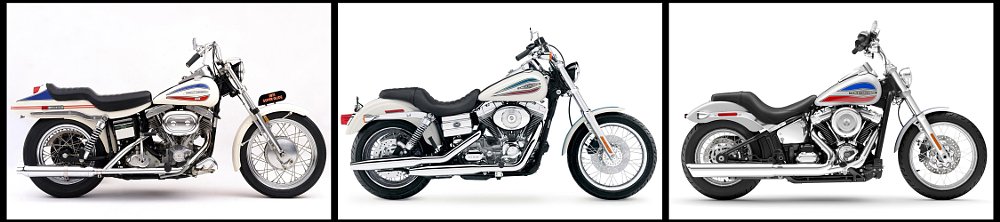
Harley first honored the mold-breaking model for its 35th anniversary in 2006. Built on the FXD Dyna platform, the Super Glide returned in a more conventional guise. The chrome finishes remained. So too did the red, white, and blue livery. However, the boat-tail fender and Sportster fork were nowhere to be found. It’s a similar story with the 2026 Super Glide.
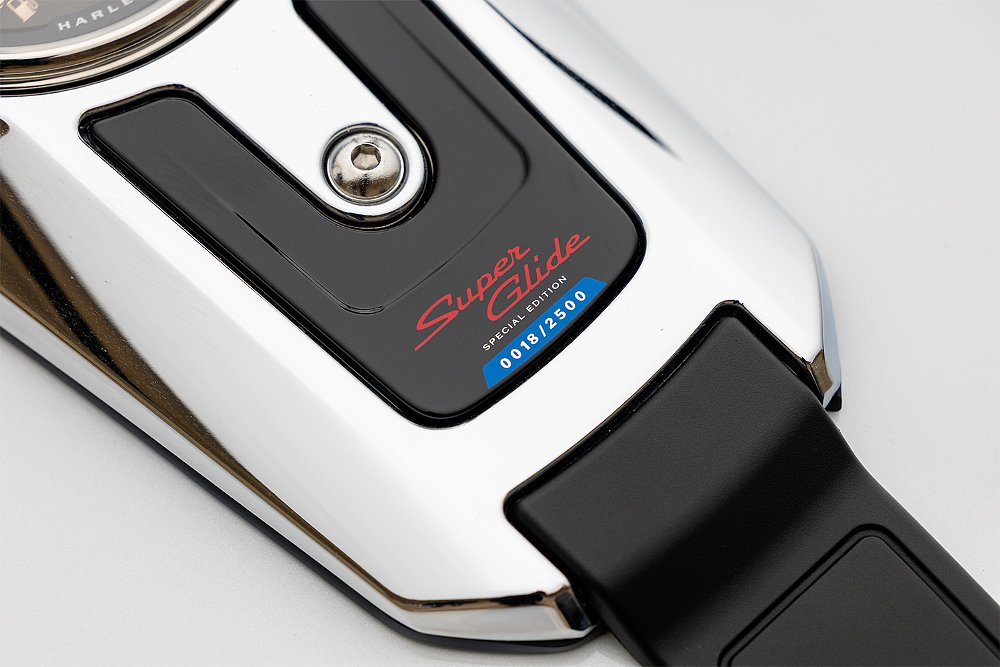
Now based on the Milwaukee-Eight Softail series, the “factory custom” is closer to a parts bin special than ever before. That’s because the Super Glide is only a few steps removed from the base model in the Softail family, the Street Bob. Both house the Motor Company’s Classic-tuned 117 ci (1,923 cc) M8 V-twin. Both boast mini-apes and “chopped” rear fenders. Even their rake, trail, and wheelbases are identical. What distinguishes the limited-run Softail from its bobbed brother is a five-gallon gas tank. Otherwise, the Super Glide is, for all intents and purposes, a Street Bob with trim-specific paint and a boatload of chrome. That’s not such a bad thing — at least where the ride is considered.
Freedom of maneuver
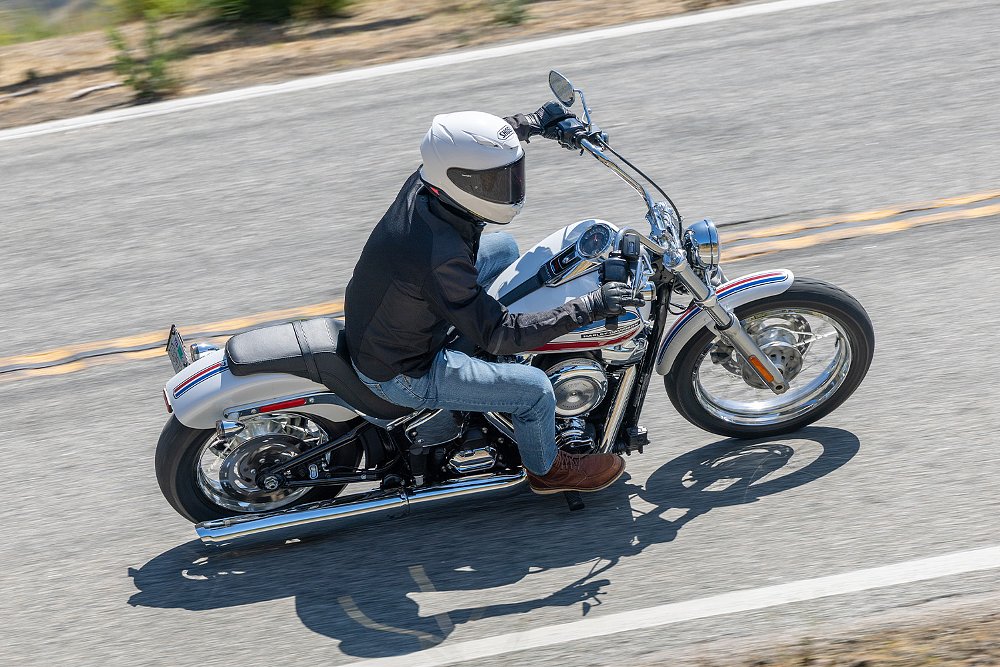
Like the bobber it’s based on, the Super Glide is a cruiser in the strictest sense. Void of all the luggage, all the performance upgrades, all the bells and whistles that define its stablemates, this Softail is prepped less for mile munching and more for Main Street strutting. Its nearly two-liter V-twin aligns with those motives, too.
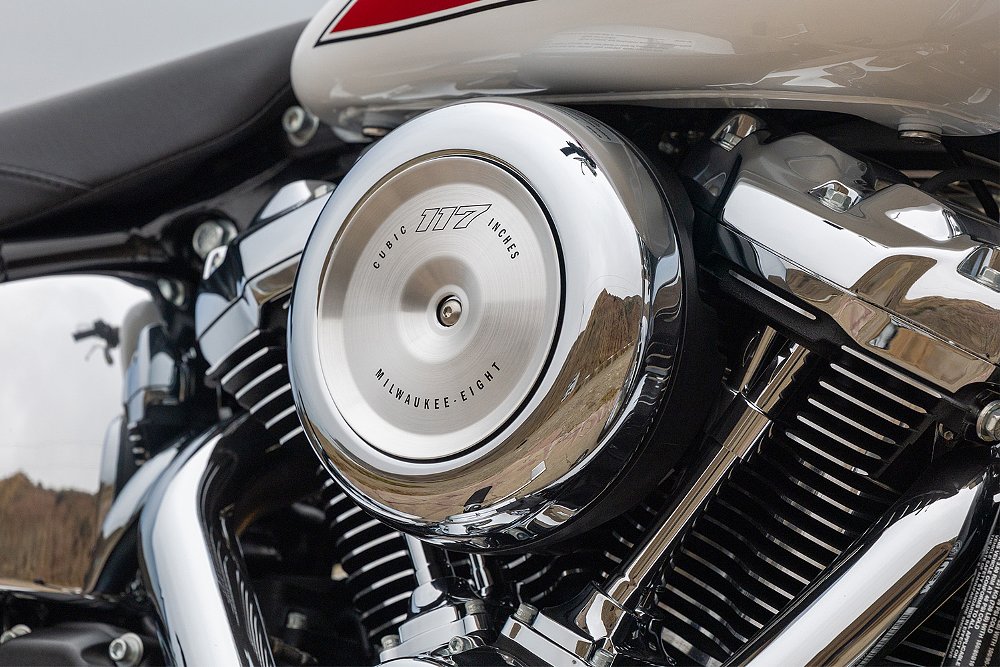
The Classic version of H-D’s 117 Milwaukee-Eight is as meat-and-potatoes as it gets. Listed at 98 horsepower (at 4,600 rpm) and 120 foot-pounds (at 2,500 rpm), the torque-rich mill preserves the “Classic” cruiser experience. That’s how it’s painted on paper, at least. In the saddle, the Super Glide only piles on the torque after the digital tach surpasses 3,000 rpm. Throttle response is crisp and immediate above that threshold. Below it, the M8 feels corked up, for lack of a better term.
That power profile may not please the light-to-light drag race crowd, but it perfectly suits those with slightly milder pursuits, be they Sunday joy rides or quick canyon runs. The Super Glide is equally at home on the highway. Well, at least its engine is. I say that because the V-twin makes light work of interstate duty, maintaining 75 mph at 2,750 rpm in top gear. The riding position is another story.
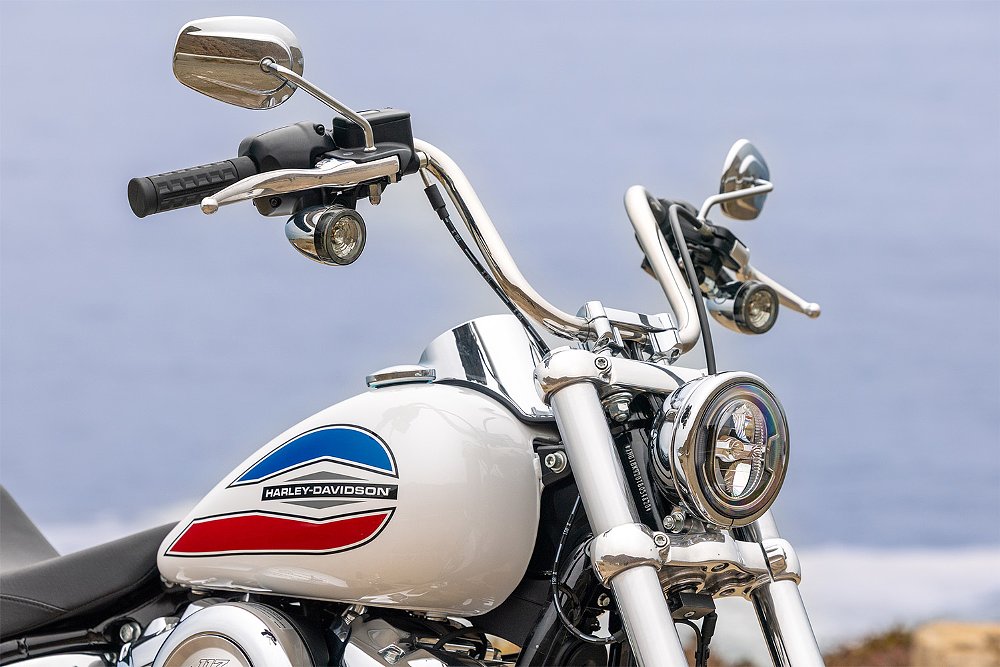
I’ll front-load this disclaimer: I’ve never been an ape hangers kind of guy. Maybe it’s their looping bends. Maybe it’s how they place my hands high and wide. Maybe it’s how the wind isn’t dancing on my shoulders but under my armpits. Maybe it’s all of those things. But mainly, it’s because ape hangers — including the Super Glide’s mini-apes — turn the rider into a sail on the open highway.
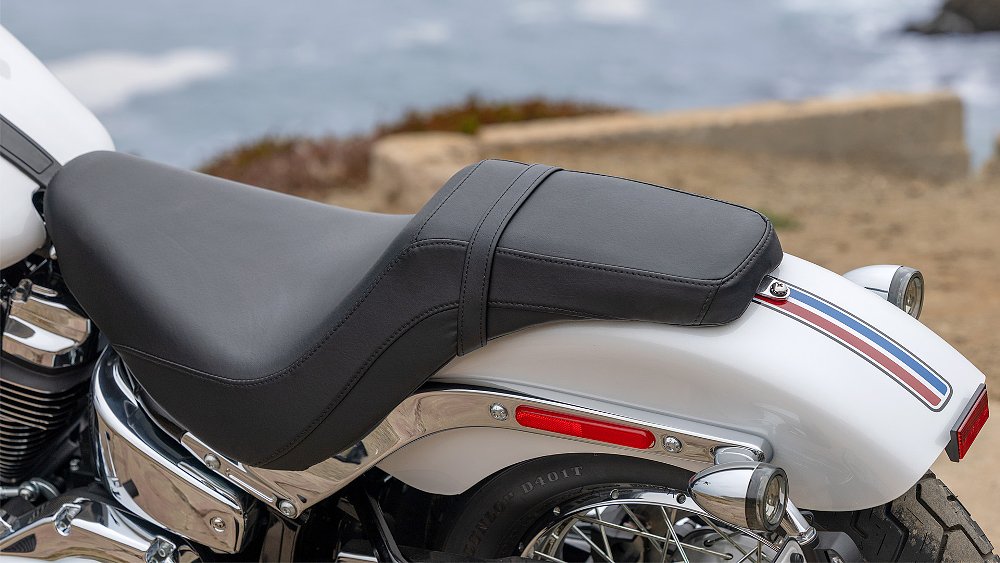
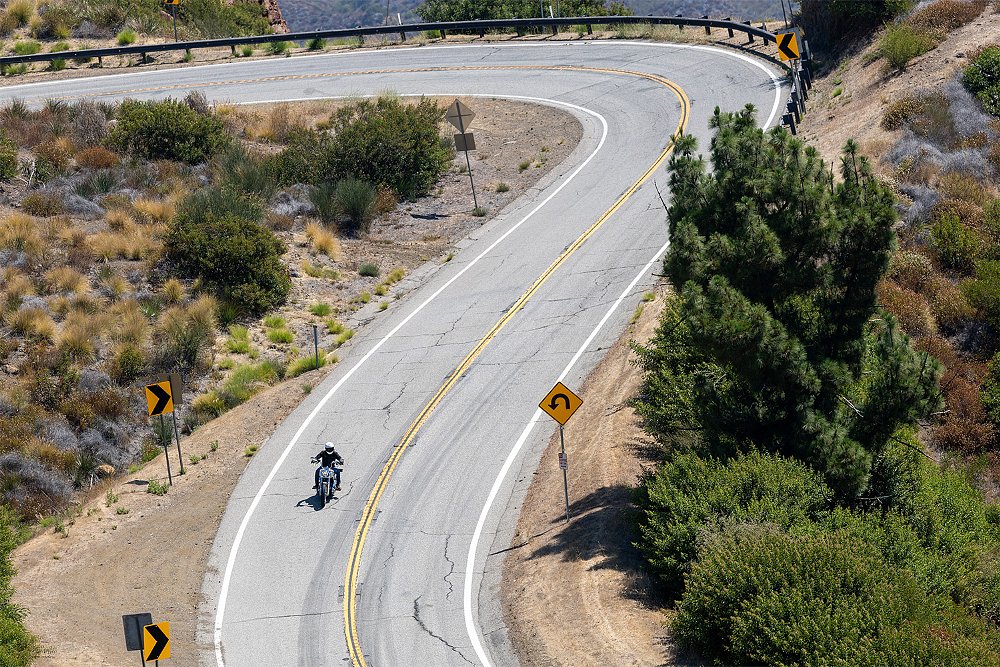
I managed my interstate use for that very reason. I didn’t go as far as avoiding the on-ramp, but I certainly didn’t venture beyond my intended exit, either. Much of my time aboard the Super Glide was spent in the canyons of Malibu. That’s where the mini-apes provide more steering leverage than wind resistance, where the M8’s 98 ponies are free to gallop, where the limited suspension travel isn’t as punishing. It’s also where the Super Glide puts its fluid handling on full display.
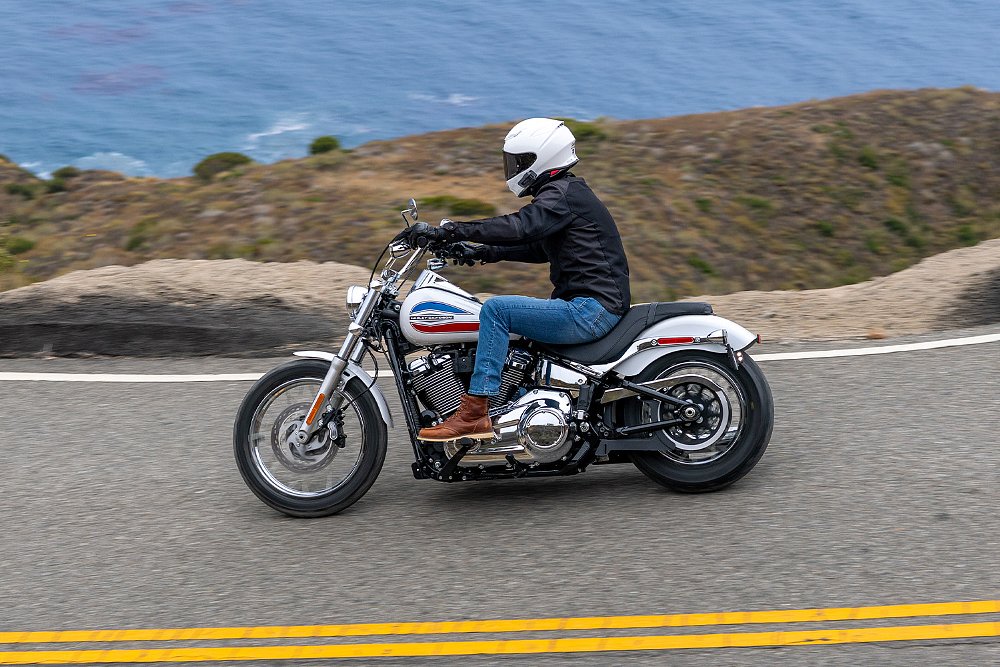
Unlike the 180-section rear on the Low Rider S/ST or the comically wide two-forty found on the Fat Boy and Breakout, the Super Glide sports a slim 150-section rear tire. Pair that with its 100/90 front, and you have one quick-cornering cruiser. Initiating a turn isn’t just effortless; it’s instinctive. Finding the chassis’ limits is just as effortless, unfortunately.
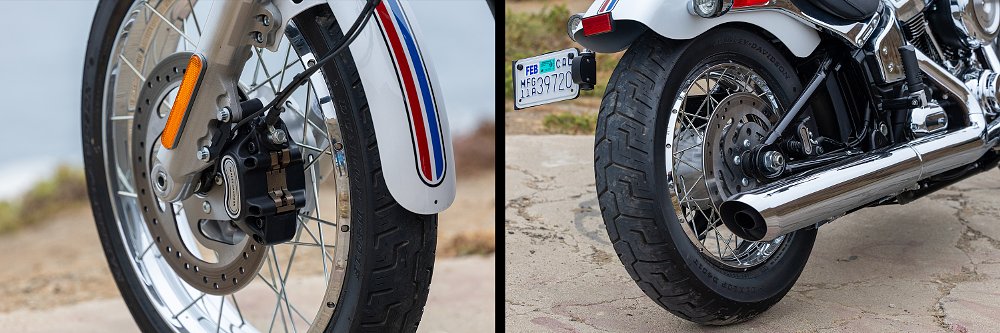
That’s because the single-disc front braking system all but requires the assistance of the rear brake. The model’s 28.5-degree maximum lean angle is just as hindering, with my boot heel regularly touching down mid-corner.
Yes, the celebratory Softail can glide through the twists and turns with speed and grace, but the real draw here, the real return on investment, is the Super Glide’s handsome styling. It’s nostalgic, it’s classic, with a dash of the stars and stripes sprinkled right in. As looks go, there’s little room for improvement, if any at all. In some ways, that might actually work against the chrome-clad Hog.
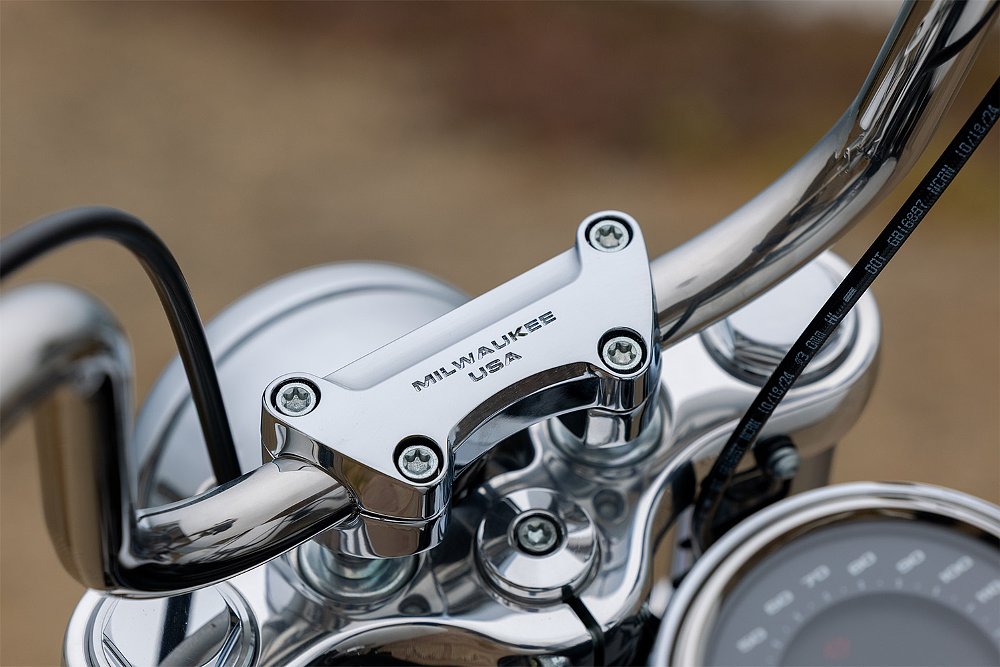
Illusion of freedom?
Half the fun of owning a Harley is customizing it. I should know. That was a major reason I purchased a Low Rider in 2018. Even though I was an early adopter, there was already an ample aftermarket for the recently revamped Softail line. I made good use of it, too, upgrading practically every part on the bike.
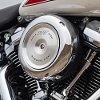
A full exhaust system and an S&S Teardrop air cleaner were all but mandatory. So was a professionally tuned Power Commander 6. I replaced the handlebar, mirrors, grips, and foot controls. I fitted the fork with an Öhlins NIX cartridges and swapped in an Öhlins STX shock. I had the bike stripped and repainted. I even got the seat reupholstered. Yes, it was a money pit. No, I didn’t recoup my investment when I sold the bike. But every dollar spent was worth the memories made. I’m not so sure Super Glide owners will share that same experience.
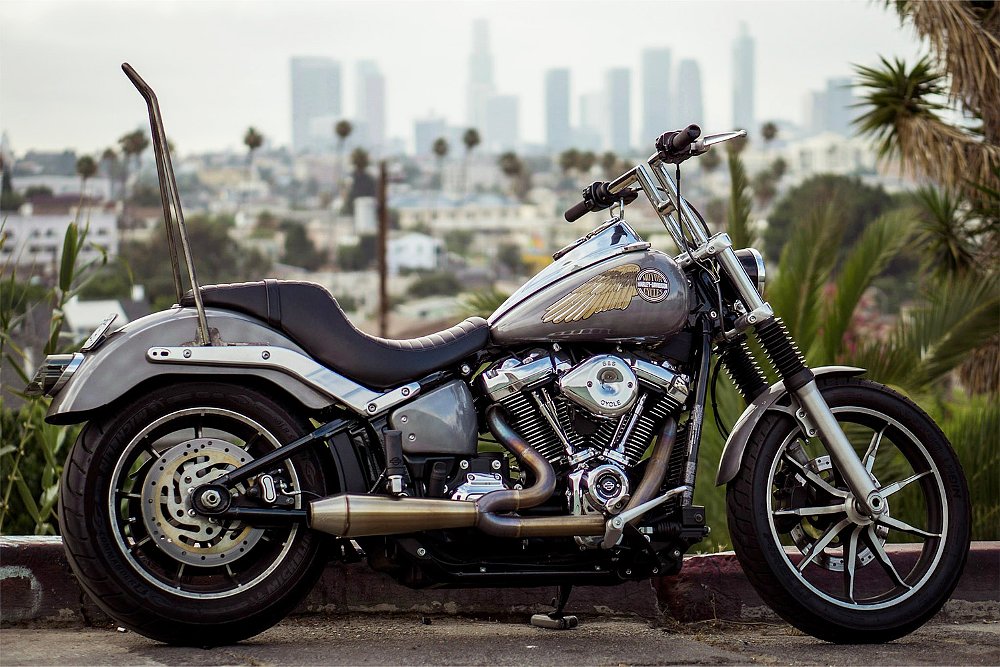
For one, this Softail is a limited-production model. Something tells me prospective buyers aren’t itching for a custom paint job, especially with just 2,500 units split between the United States and Canada. Maybe more important is that the Super Glide already arrives as a cohesive package. Performance-unlocking farkles need not apply. Given my earlier criticisms, I might swap out the mini-apes for buckhorn handlebars (both for comfort and historical accuracy), but that would be the extent of my modifications.
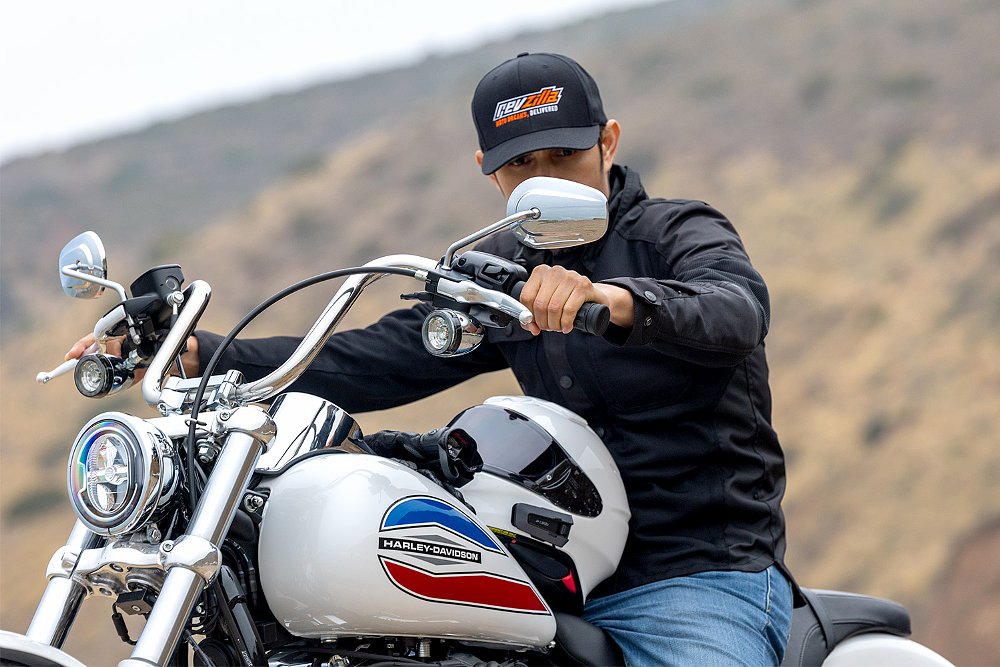
The 2026 Super Glide doesn’t lend itself to builds or projects. It isn’t a canvas for customizations. In that way, it is a factory custom — even if its core components are borrowed parts. The Super Glide is elemental yet elevated. It’s basic supreme. It’s priced as such, too. As the saying goes, freedom isn’t free, but at $15,999, this special-edition “freedom machine” remains accessible to the masses. That might be its greatest strength.
| 2026 Harley-Davidson Super Glide | |
|---|---|
| Price (MSRP) | $15,999 |
| Engine | 1,923 cc, air/oil-cooled, eight-valve, V-twin |
|
Transmission, final drive |
Six-speed, belt |
| Claimed horsepower | 98 @ 4,600 rpm |
| Claimed torque | 120 foot-pounds @ 2,500 rpm |
| Frame | Steel tubular |
| Front suspension | 49 mm fork; 5.1 inches of travel |
| Rear suspension | Monoshock, adjustable for spring preload; 3.4 inches of travel |
| Front brake | Four-piston caliper, 300 mm disc with ABS |
| Rear brake | Two-piston caliper, 292 mm disc with ABS |
| Rake, trail | 30.0 degrees, 6.2 inches |
| Wheelbase | 64.2 inches |
| Seat height | 26.2 inches |
| Fuel capacity | 5.0 gallons |
| Tires | Dunlop® Harley-Davidson Series, 100/90B19 front, 150/80B16 rear |
| Measured weight | 657 pounds |
| Available | Now |
| Warranty | 24 months |
| More info | harley-davidson.com |




![Shoei RF-1400 Helmet White / MD [Open Box]](https://www.jpcycles.com/_a/product_images/2415/4327/shoei_rf1400_helmet_white_md_open_box_white_300x300.jpg)
