




 Riders Preferred Membership
 Shop by Vehicle
 Track Order
 Contact Us

A big-bore, air-cooled V-twin. A double cradle frame. A teardrop gas tank. Pushrods. Cooling fins. Floorboards. And of course, a booming sound system. This is everything a traditional bagger is.
This is everything the Honda Rebel 1100T is not.
Visions of a Harley-Davidson Road Glide materialize whenever the word “bagger” fills the air. Even something like the Indian Sport Scout RT might come to mind. Chances are, the 1100T doesn’t. In a landscape of American V-twin options, the Rebel is just that — a rebel.
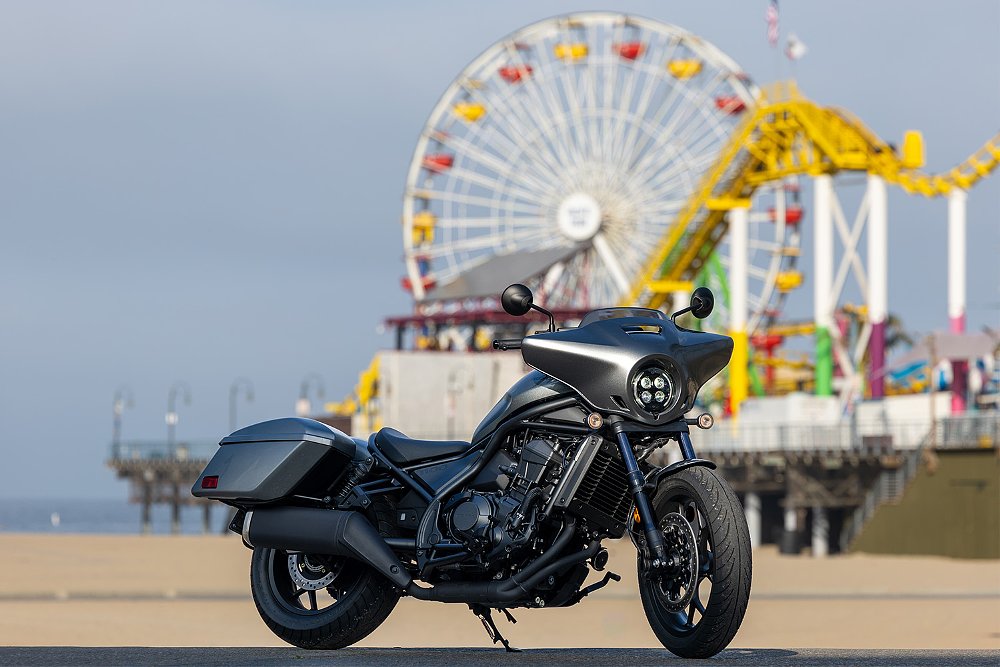
Its parallel-twin engine isn’t just liquid-cooled; it’s also a stressed member of the steel diamond frame. Honda’s styling is far from the bagger norm, too, much closer to a naked bike, in fact. Said plainly, the 1100T is the alternative. It challenges conformity. It subverts the class conventions. Both for better and for worse.
For better
Honda originally designed and developed its 1,084 cc p-twin for the Africa Twin, not the Rebel 1100T. Did Big Red re-tune the mill for cruiser applications? Sure. Does its 270-degree crank mimic the firing pulses of a V-twin. Theoretically, yes. Even so, the powerplant’s adventure-bike roots still break through the surface.
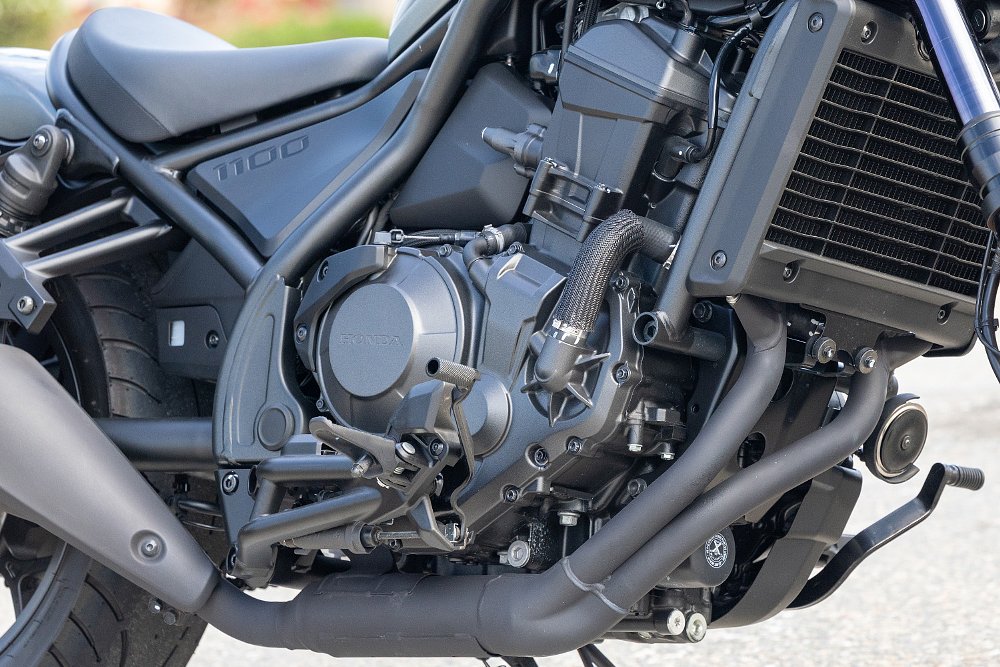
American Honda lists neither horsepower nor torque figures for the 1100T. Honda U.K. does, though. According to its website, Britain-bound Rebel 1100s produce 87 horsepower (at 7,250 rpm) and 72 foot-pounds of torque (at 4,750 rpm). It’s reasonable to assume that 1100Ts offered Stateside sit somewhere in that vicinity. The more important detail, however, is where those peaks arrive in the rev range.
Good luck finding an air-cooled V-twin that spins up to 8,000 rpm. Most American-made cruisers are running out of steam by the time the 1100T reaches its maximum torque output. That’s just one advantage of Honda’s parallel twin. Another is its meaty midrange, even if that comes at the expense of low-down torque. It’s an effect that’s even more pronounced in the saddle.
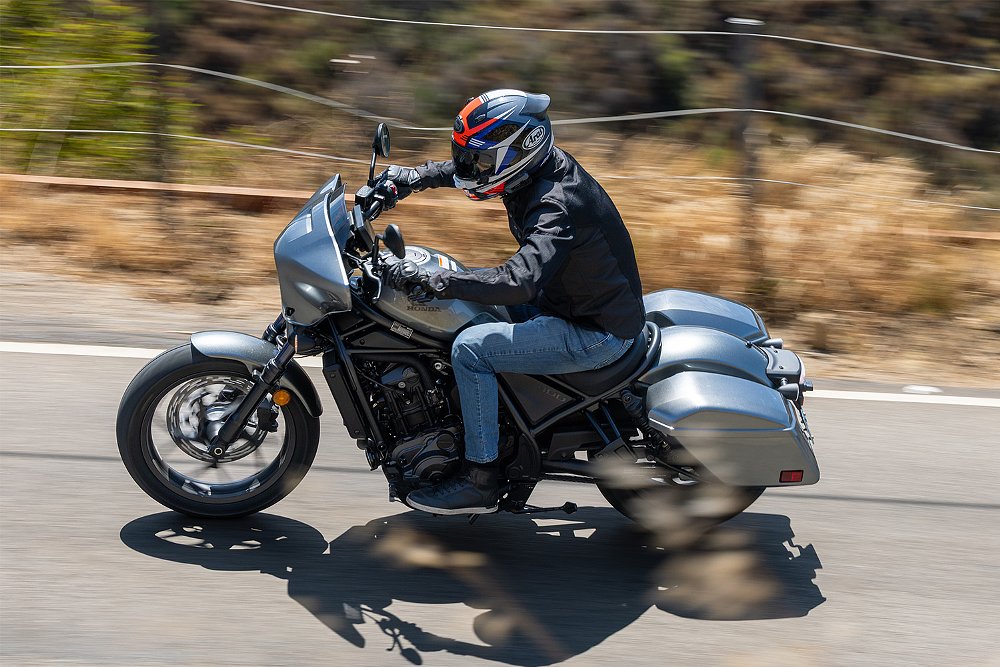
Open the throttle, and the tiny tourer rolls smoothly away from a stop, but it’s beyond 4,000 rpm where the Rebel’s real rewards lie. That’s when the throttle response goes from soft to direct, from progressive to dynamic. The only pebble in the Rebel’s shoe is the engine vibes that reverberate through the pegs starting around 6,000 rpm. It’s an endurable hindrance if you’re hustling the bike through a set of corners, but otherwise, it’s a shift-prompting nuisance.
Luckily, the Unicam twin spins at 4,500 rpm when maintaining 75 mph in top gear — or right in engine’s 2,000-rpm sweet spot, where throttle pickup remains lively yet linear. The Rebel’s roll-on acceleration is even more potent in Sport mode. Maybe too potent for most applications. That’s because throttle response is slightly snatchy for navigating urban traffic. Standard was my go-to mode in such situations, allowing me to reserve Sport for instances when my resolve matched its hair-trigger.
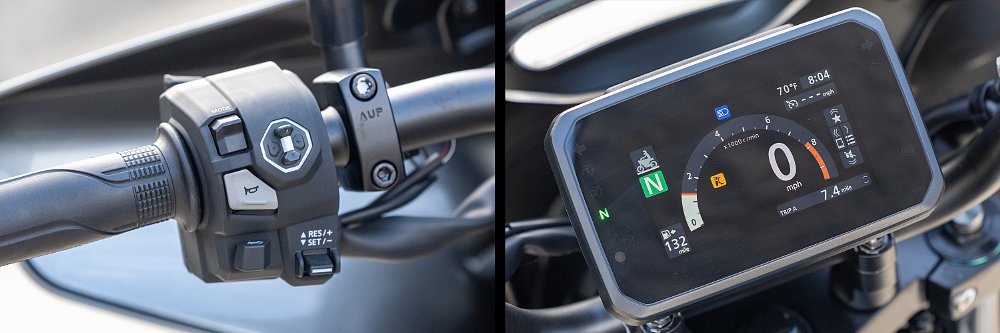
By bagger standards, the 1100T isn’t just quick, it’s fast. Part of that is owed to the model’s weight-conscious build. Tipping RevZilla’s scales at 525 pounds (three pounds under Honda’s claimed weight, I might add), the 1100T is the babiest of baggers. That much is reflected in its compact chassis.
Versus the cylinder-spreading footprint of a V-twin, a parallel twin’s space-saving layout conserves front-to-rear real estate. The Rebel takes full advantage of that quality, too, with its wheelbase measuring just under 60 inches. Match that with a 28-degree rake and a 4.3-inch trail, and you have a chassis built for agility, all without sacrificing stability. The 1100T performs as such when it's leaned on its side.
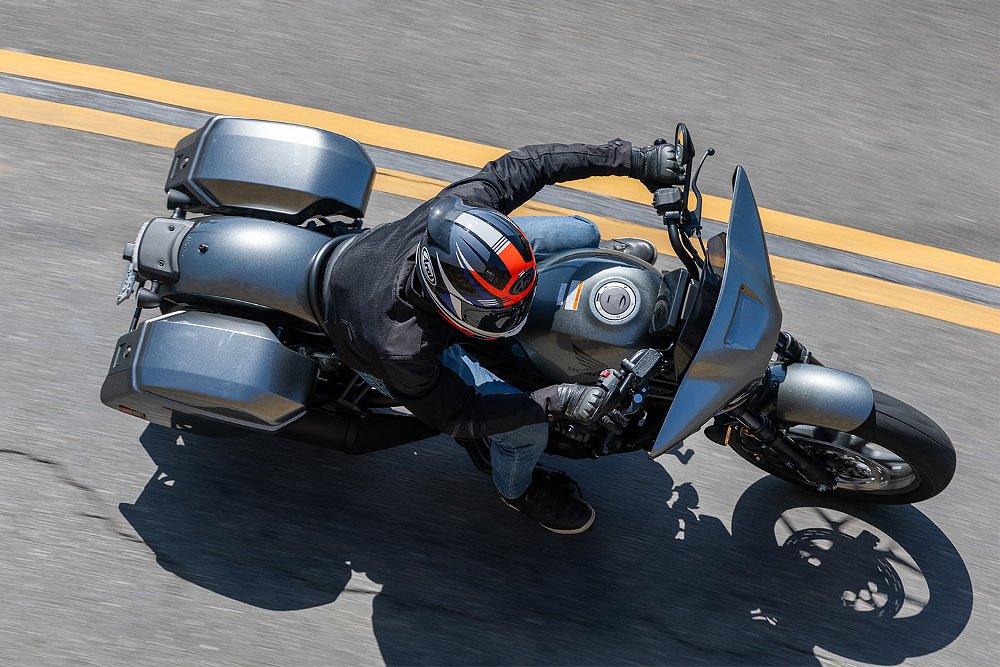
The Rebel is light on the spec sheet, it’s light off the kickstand, but it’s also light everywhere else. Whether you're pushing it around the garage or pushing it through a third-gear sweeper, this Honda changes direction with the slightest of inputs. If a traditional bagger rounds the corner like a pulling guard, the Rebel hits the same hole like a sharp-cutting halfback.
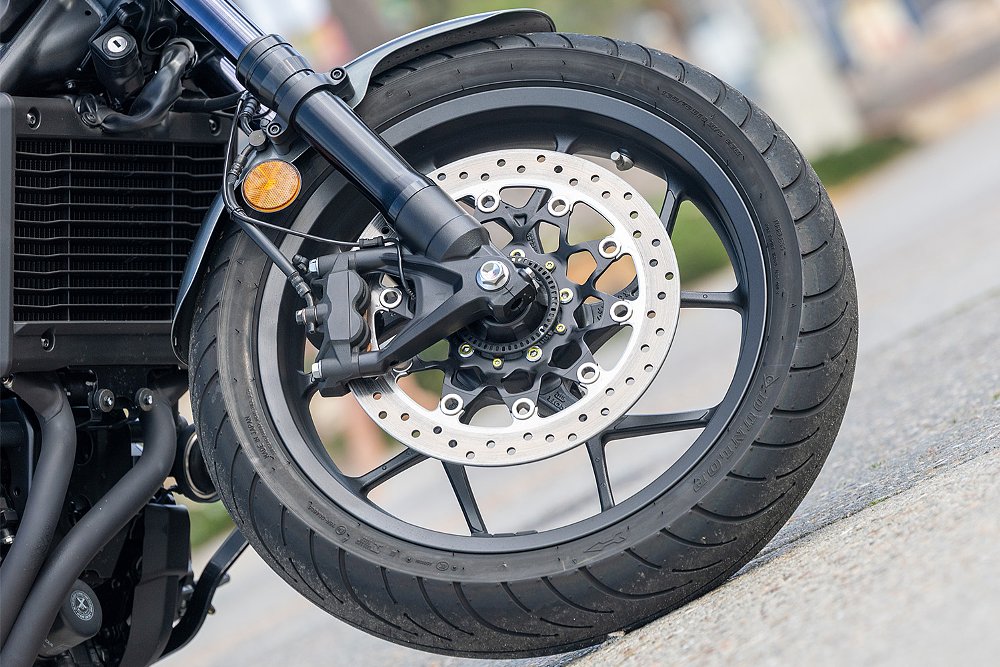
Still, the travel-minded Rebel can’t escape the flaw afflicting all baggers: cornering clearance. Immediately subduing the bike’s darting disposition is the grating of metal on pavement. It’s a shame, too, because it’s the model’s available lean angle that keeps it from realizing its full handling potential, not the rider. Even if its engine is sportier, even if its steering is sharper, the 1100T is a bagger, after all. It may outshine its rivals on the performance front, but what it doesn’t excel at are the quintessential touring tasks.
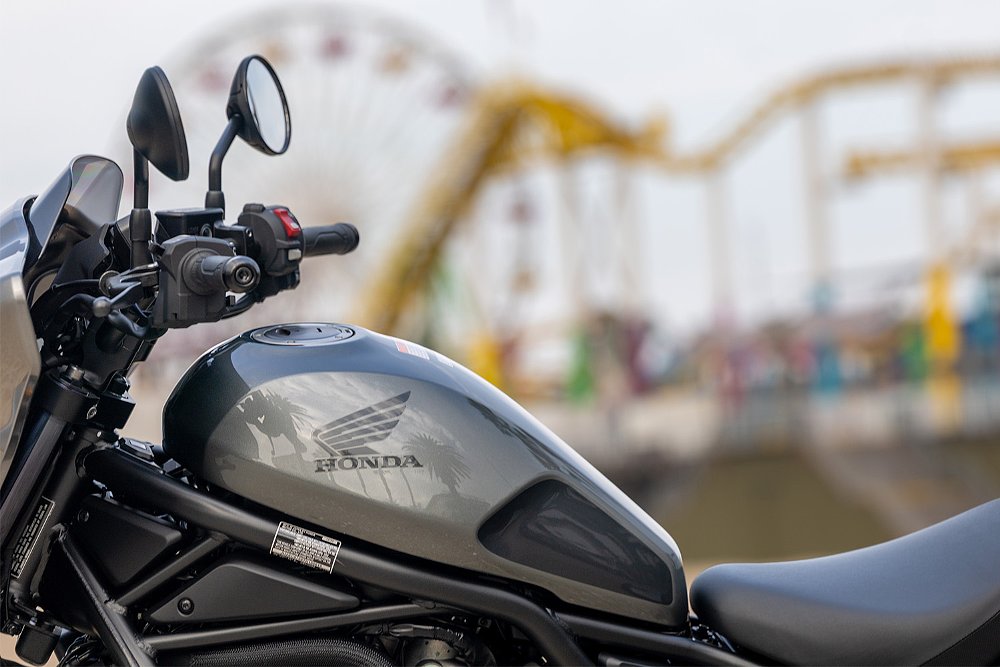
For worse
I’ve complained a lot about wind protection lately. I issued similar criticisms at BMW’s R 12 S and Harley’s Super Glide in recent reviews. The main difference is that those bikes don’t have a “T” in their names. The Rebel does. Presumably, it’s equipped for capital-T Touring. It’s supposed to be travel-friendly. The fork-mounted fairing suggests so, too. If only it provided more refuge from the wind at interstate speeds.
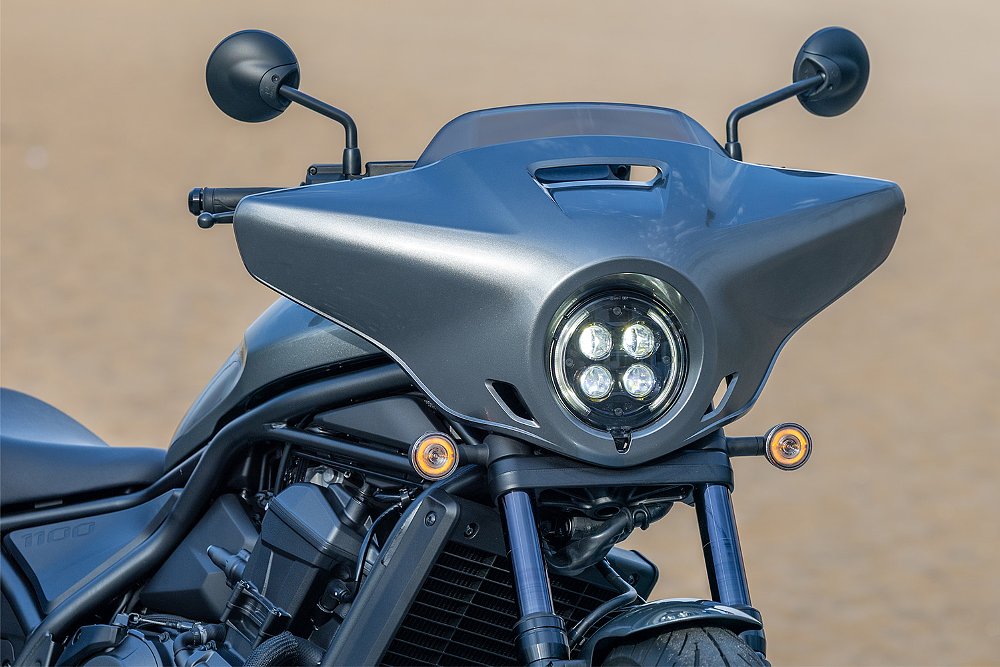
My main concern lies with the fairing’s height, or lack thereof. It’s not so much that its batwing-esque shape doesn’t deflect enough wind; it’s that it directs that wind right at the rider’s helmet. The head-tugging result is bearable under 75 mph, but sustain higher speeds, and you’re in for a neck workout akin to F1 driver training. The short seat-to-handlebar distance doesn’t help matters, either, leaving little space for the oncoming wind to dissipate before it reaches the rider. That issue speaks to the cockpit’s overall compactness.
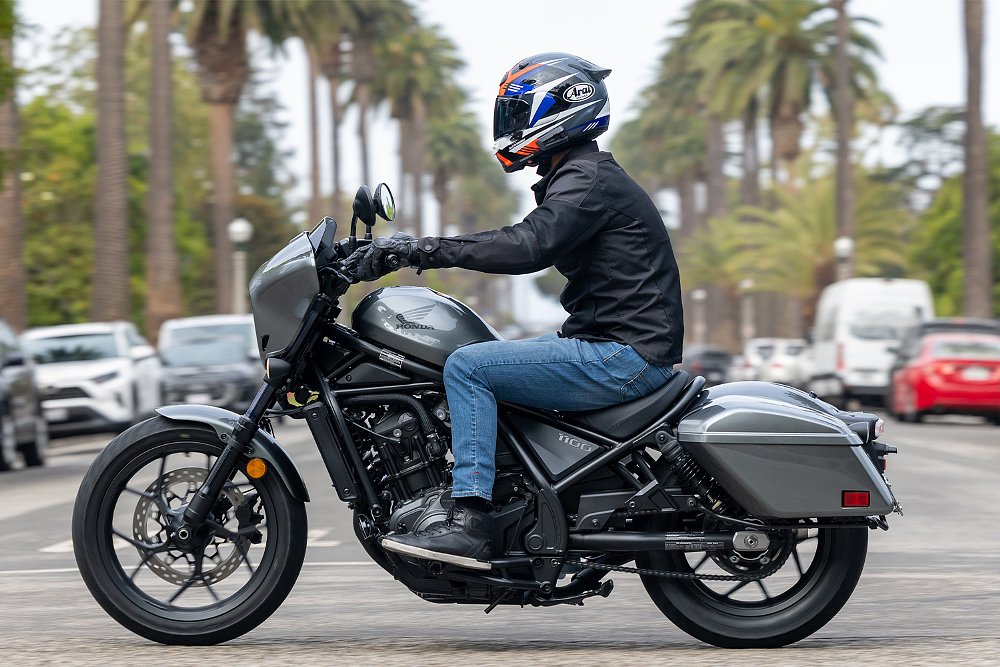
Let’s just say the rider triangle isn’t exactly American-sized. My 165-pound, five-foot-10-inch frame was already pushing its limits. I wouldn’t go as far as calling the accommodations cramped, but they sure are snug. The handlebar is narrow and the grips are close to the rider. The mid controls leave no room to stretch one’s legs. Neither does the seat, which constrains nearly all movement from front to back. The riding position isn’t uncomfortable, but it is inflexible by nature. The carrying capacity is just as restrictive.
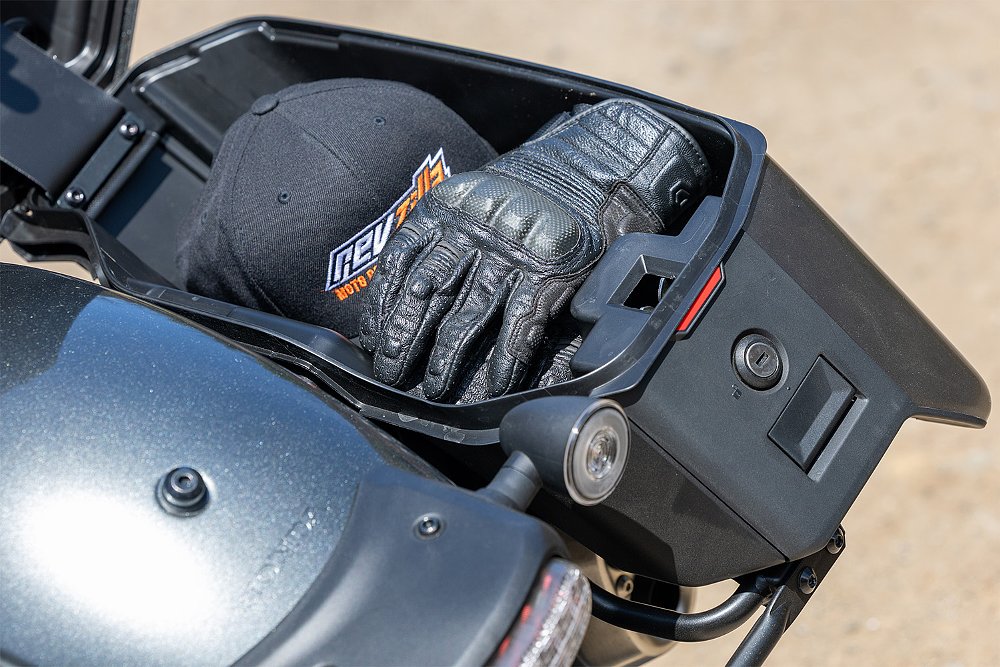
The Rebel’s fun-sized saddlebags may be limiting, but they do have a few things going for them. For one, the clamshell lids flip forward, not sideways, easing the loading and unloading process. Their shape is just as advantageous. Whereas most baggers wear shopping-bag-shaped luggage, the 1100T’s are shaped more like grocery bags. Items are easier to store and retrieve as a result.
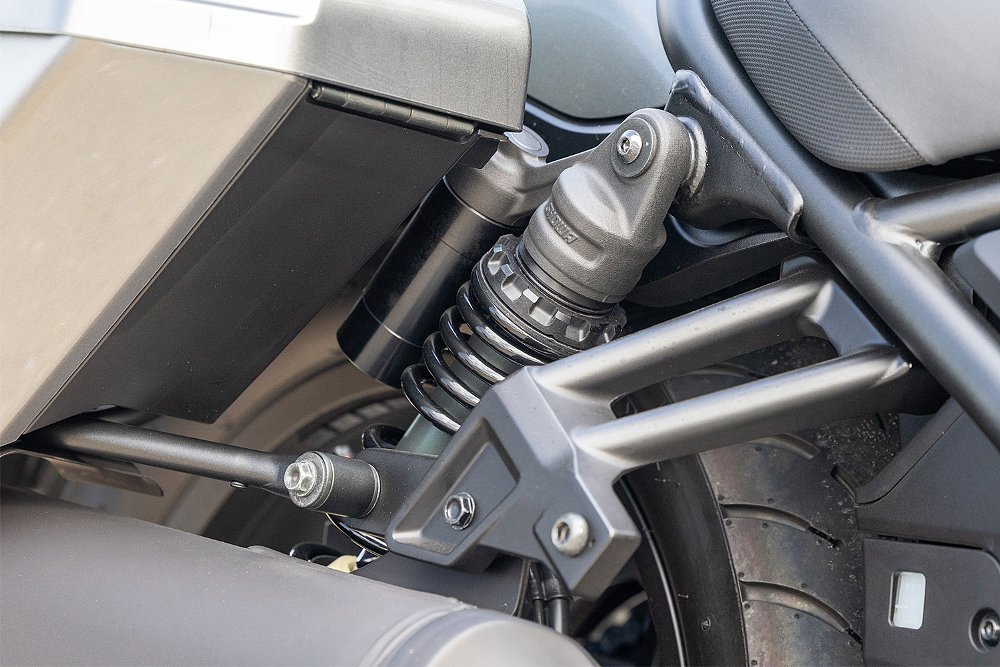
At the same time, volume is king when it comes to saddlebags. With just 35 liters of storage between the Rebel’s boxes (16 liters pipe side and 19 liters kickstand side), owners should expect to pack no more than a long-weekend's worth of provisions. If that. Still, the bags are a solid addition to the base model, offering convenient compartments for running errands around town. The question is whether that’s enough to lure buyers to Big Red’s alternative bagger.
It is what it is
A liquid-cooled, stressed-member engine. A competent and composed chassis. Lightweight. Aggressively agile. Sharply sculpted and styled. This is everything the Rebel 1100T is. In many ways, it’s everything a modern bagger could be. In some ways, it’s everything a modern bagger should be. That doesn’t mean Honda’s baby bagger is for everyone. The bike’s slight build, unconventional aesthetics, and rev-happy p-twin are largely responsible for that limited appeal.
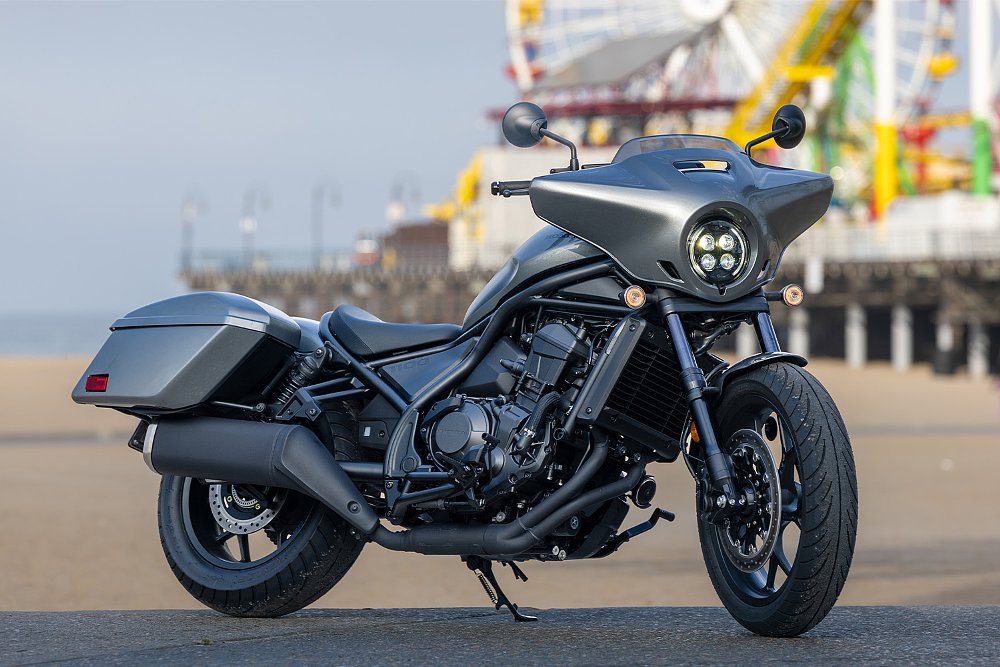
The bagger landscape reminds me of the pick-up truck market, which consists of body-on-frame and unibody models. The former includes your Ford F-150s, your Chevy Silverados. The latter, your Ford Mavericks, and if we’re staying on-brand, your Honda Ridgelines. If the Rebel 1100T were a truck, it’d fall into the unibody category. It’s smaller. It’s radically designed. It won’t sell like its heavyweight counterparts, but for the right rider, it’s an excellent option. When it comes down to it, that’s what the Rebel 1100T really is.
| 2026 Honda Rebel 1100T | |
|---|---|
| Price (MSRP) | $10,899 |
| Engine | 1,084 cc, liquid-cooled, eight-valve, parallel twin |
|
Transmission, final drive |
Six-speed, chain |
| Claimed horsepower | N/A |
| Claimed torque | N/A |
| Frame | Tubular-steel double cradle |
| Front suspension | Showa 43 mm fork, adjustable for spring preload, 5.5 inches of travel |
| Rear suspension | Dual Showa shocks, adjustable for spring preload, 3.7 inches of travel |
| Front brake | Single Nissin four-piston caliper, 330 mm disc with ABS |
| Rear brake | Single Nissin single-piston caliper, 256 mm disc with ABS |
| Rake, trail | 28.0 degrees, 4.3 inches |
| Wheelbase | 59.8 inches |
| Seat height | 27.9 inches |
| Fuel capacity | 3.6 gallons |
| Tires | Dunlop D428, 130/70-18 front, 180/65-16 rear |
| Measured weight | 525 pounds |
| Available | Now |
| Warranty | 12 months, unlimited miles |
| More info | powersports.honda.com |