





 Riders Preferred Membership
 Shop by Vehicle
 Track Order
 Contact Us
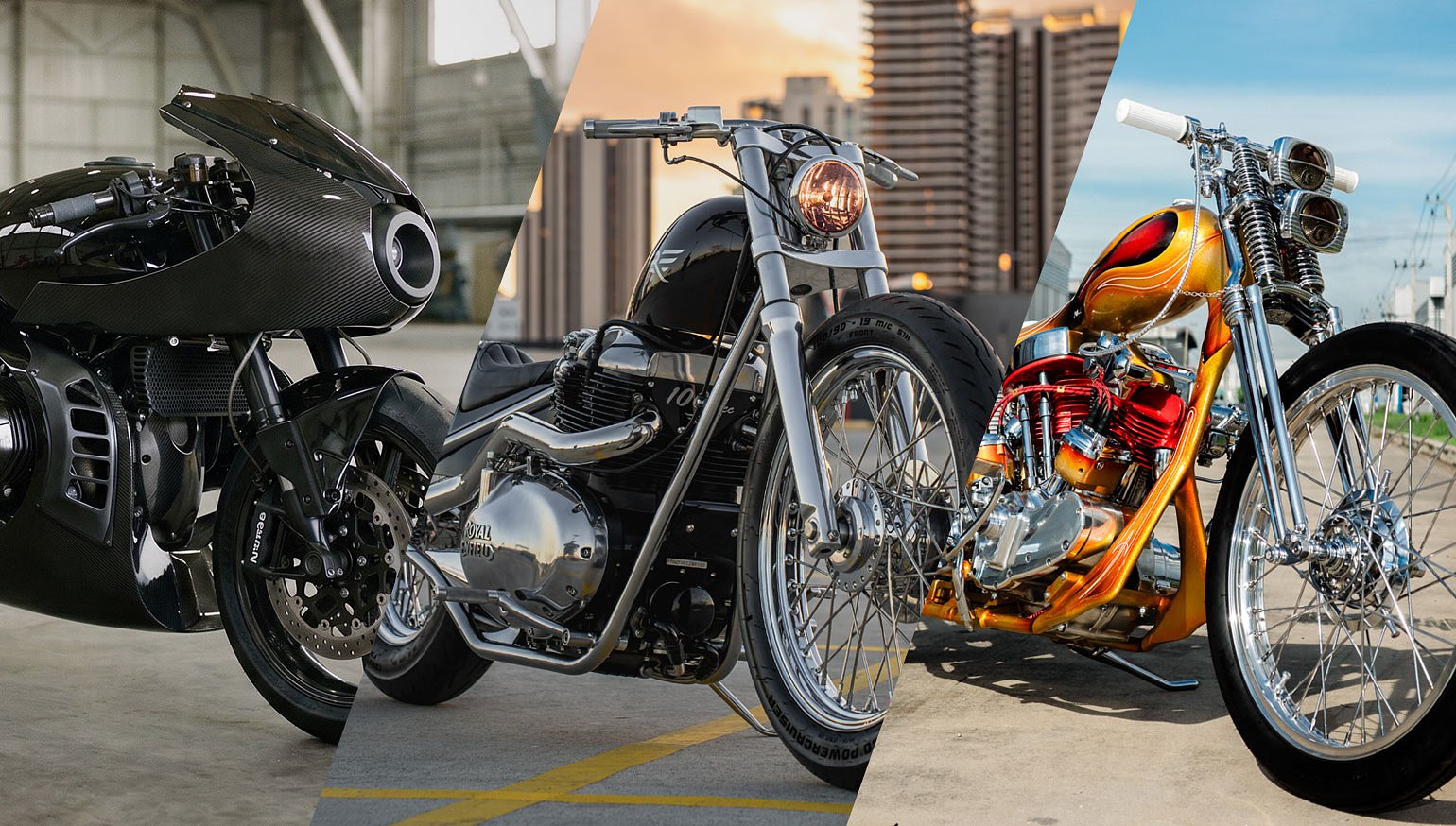
Whether your taste leans toward cutting-edge tech, old-school craftsmanship, or something that blurs the line between the two, this month's roundup has something for everyone. We kick things off with a strikingly modern BMW R nineT inspired by a water drop and finish off with a period-style chopper powered by a time-warping V-twin. And wedged between them is a modern Royal Enfield parallel twin hiding beneath a studiously hand-sculpted retro facade.
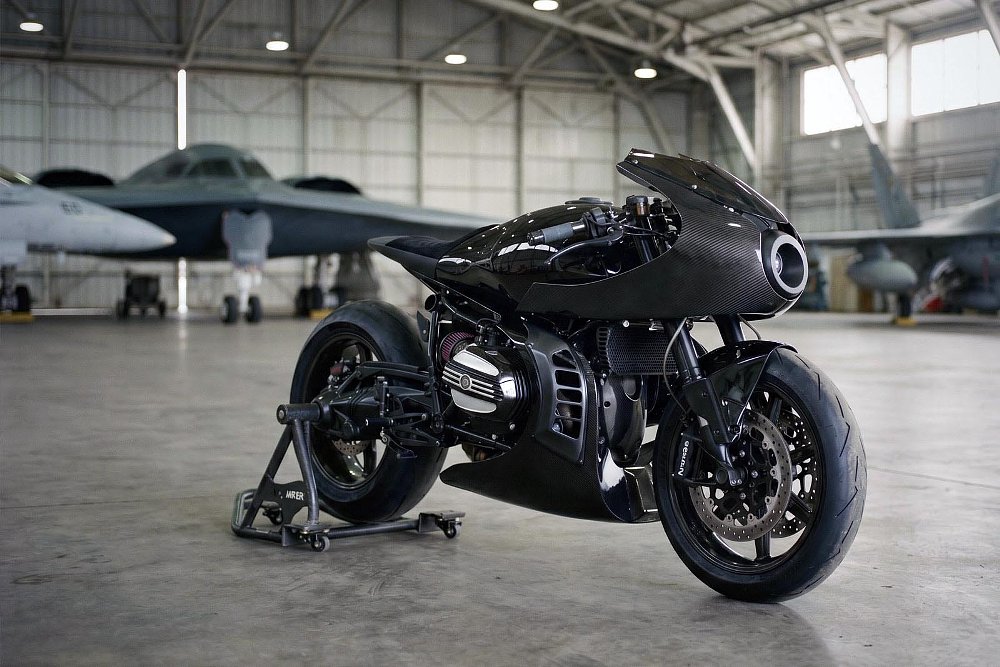
Chucha Garage BMW Earo Drop R
Located in Ho Chi Minh City, Chucha Garage specializes in motorcycle customization and aftermarket bodywork design. Alongside running the workshop, founder Lee Nguyen is an architect and photographer. Raised in Australia, Lee returned to his birthplace of Vietnam, where his passion for motorcycles took a whole new direction.
"Everything started when I moved back to Vietnam," Lee recalls. "At the time, I was photographing motorcycles for a local custom and classic bike workshop. As I became more involved in the custom world, I kept asking myself one question: Why do we always buy aftermarket parts from other brands? Why not create something completely original ourselves?"
That simple question became the foundation of Chucha Garage.
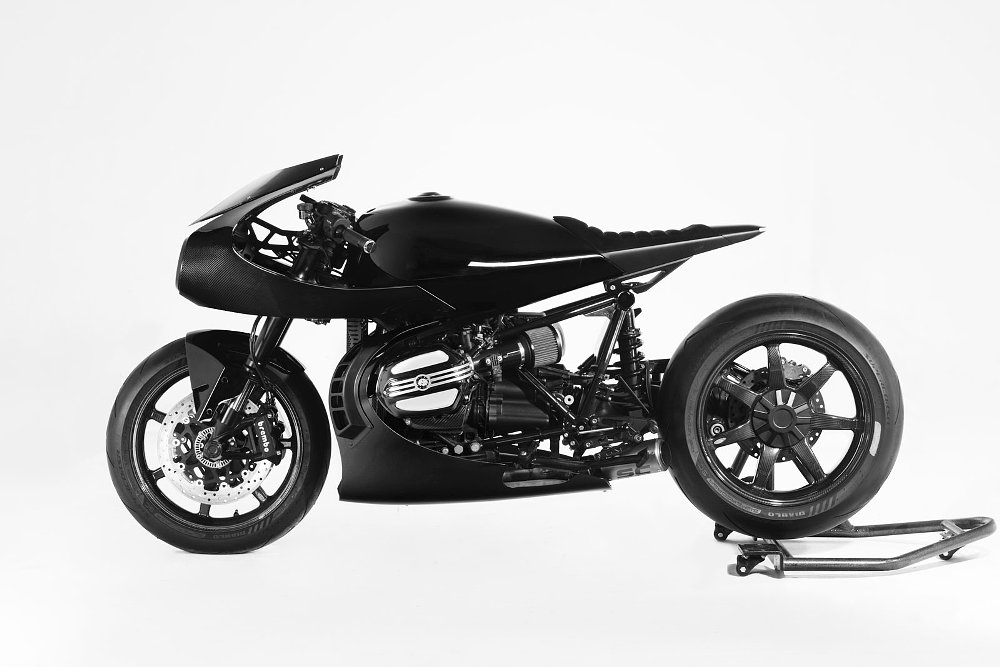
The Earo Drop R is Chucha Garage's finest work to date. The heavily modified 2019 BMW R nineT was Lee's personal ride before becoming a two-year-long design study and custom parts test bed. The design process started with simple pencil sketches, which Lee then translated into 3D digital renders. From there, he set about pulling together a dream team of skilled craftsmen to make his vision a reality.
"The inspiration came from something incredibly simple, a single drop of water," he says. "I was fascinated by its pure, flowing shape and wanted to capture that same simplicity and movement in a motorcycle."
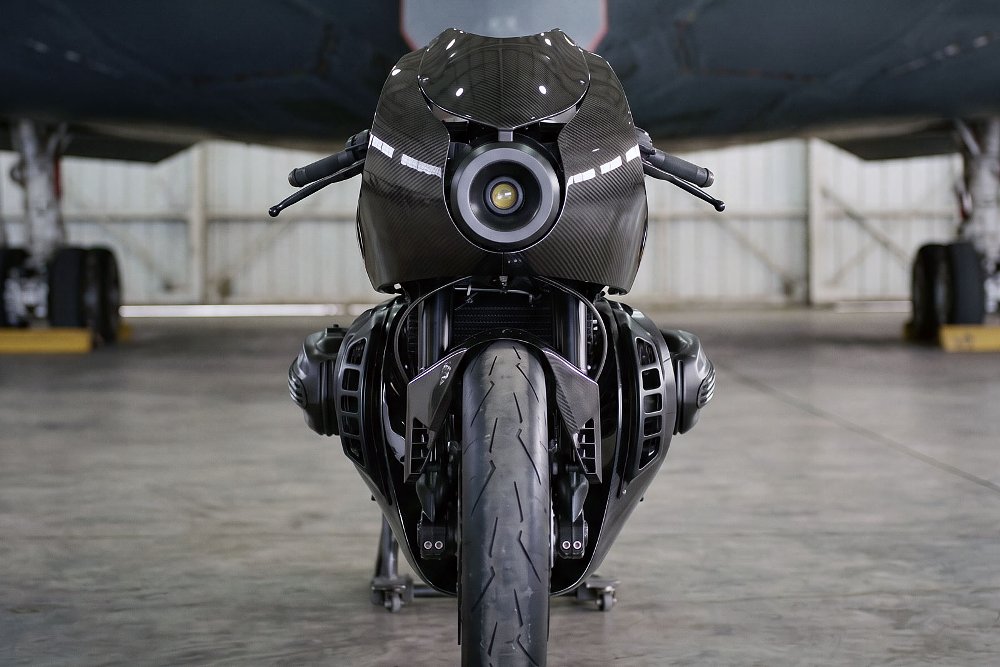
Bucking the customary trend of making motorcycles appear more aggressive, Lee opted for a more elegant approach with this project. As he explains, "A single drop of water is one of nature's simplest forms," and that insight is what led to the aerodynamic silhouette of his R nineT.
From an engineering perspective, the Earo Drop R remains true to BMW's design. The factory chassis, front and rear suspension, and braking system have been kept to ensure the bike retains its praised, confidence-inspiring handling. But beyond those parts, this R nineT is something altogether different.
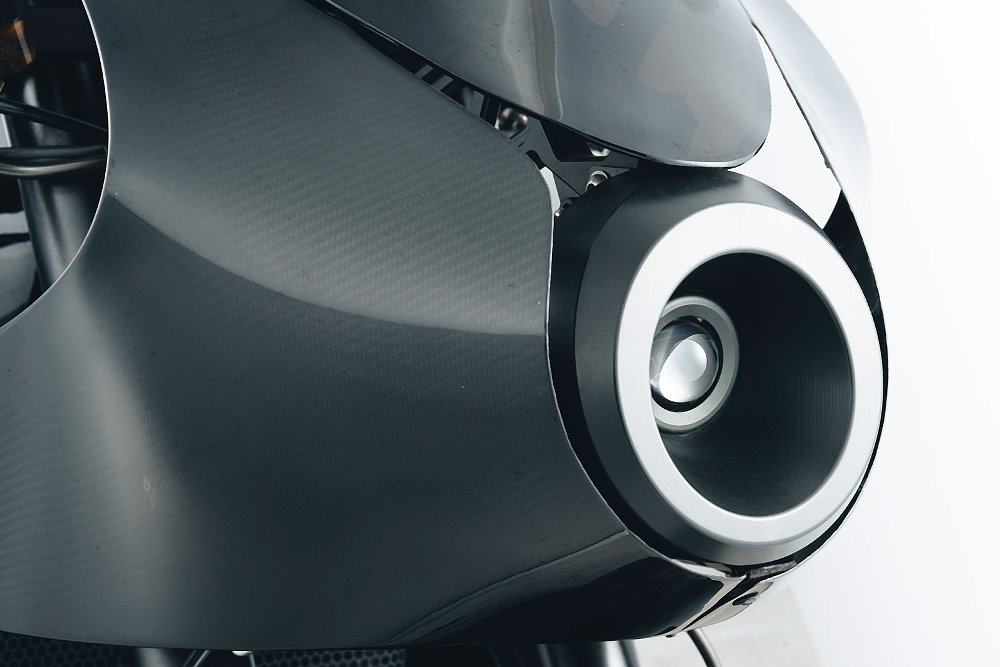
Created to Lee's exacting vision, every piece of the new bodywork was prototyped using 3D printers, a process that presented some unexpected challenges.
"We relied heavily on large-scale 3D printing," Lee says. "Depending on room temperature and humidity, each printed part would shrink differently, so every component often had to be printed three to five times before it fit perfectly."
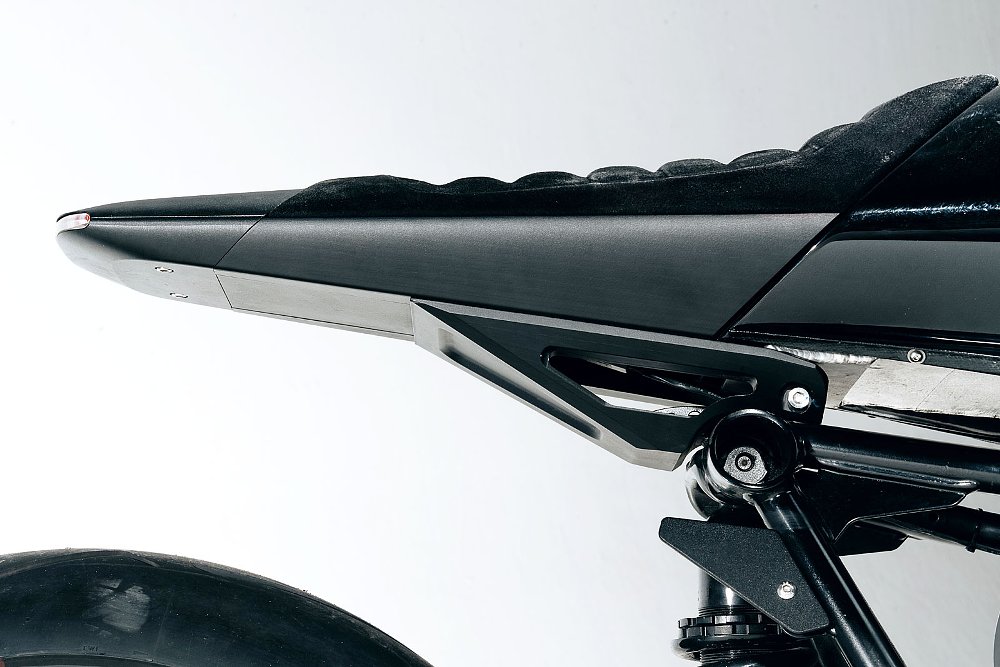
Once the right fit was achieved, Lee's team produced molds from the prototypes which were used to manufacture the final parts. The complete list includes the front fairing, fuel tank cover, side panels, seat unit, belly pan, and tailpiece. And for those who like the look, Chucha Garage offers all of these parts and the necessary lighting components as an R nineT bolt-on conversion kit in either fiberglass or carbon fiber.
Beyond the body kit, Lee treated his R nineT to a host of additional upgrades, including a Motogadget speedometer, bar-end turn signals, and a keyless ignition system. The engine breathes freely thanks to K&N air filters and an SC Project exhaust. And finally, to take the build to another level, Lee fitted a set of BST carbon fiber wheels, finished off with a CNC-machined rear hub cover for a cleaner, more cohesive look.
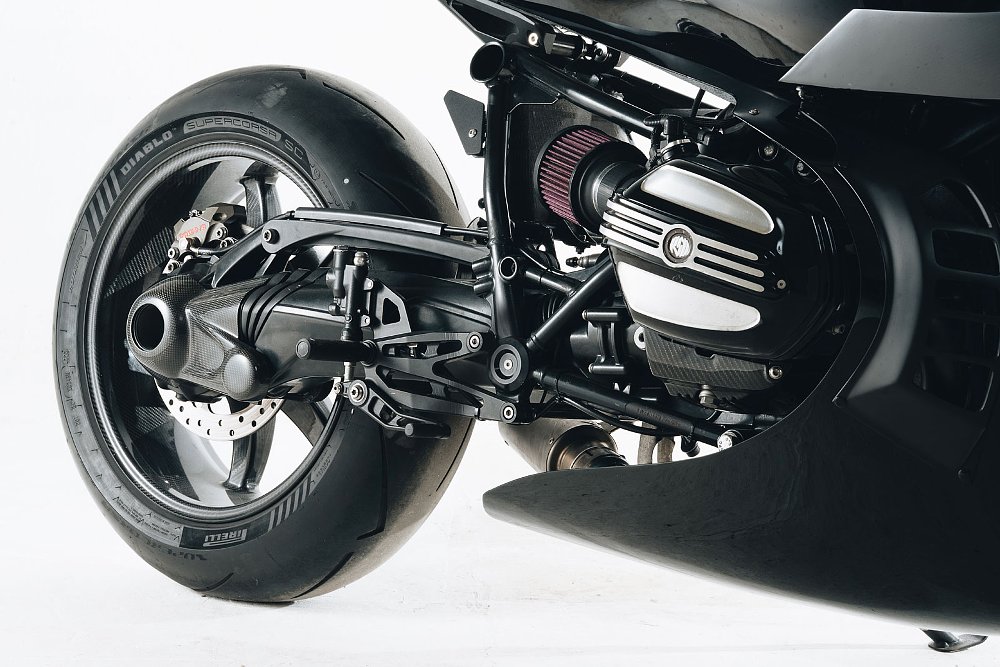
Lee set out to build an R nineT that reflected his own tastes, and the result speaks for itself. Rather than reinventing BMW's modern classic, he's refined it and, in the process, created a motorcycle that's as satisfying to admire as it is to ride.
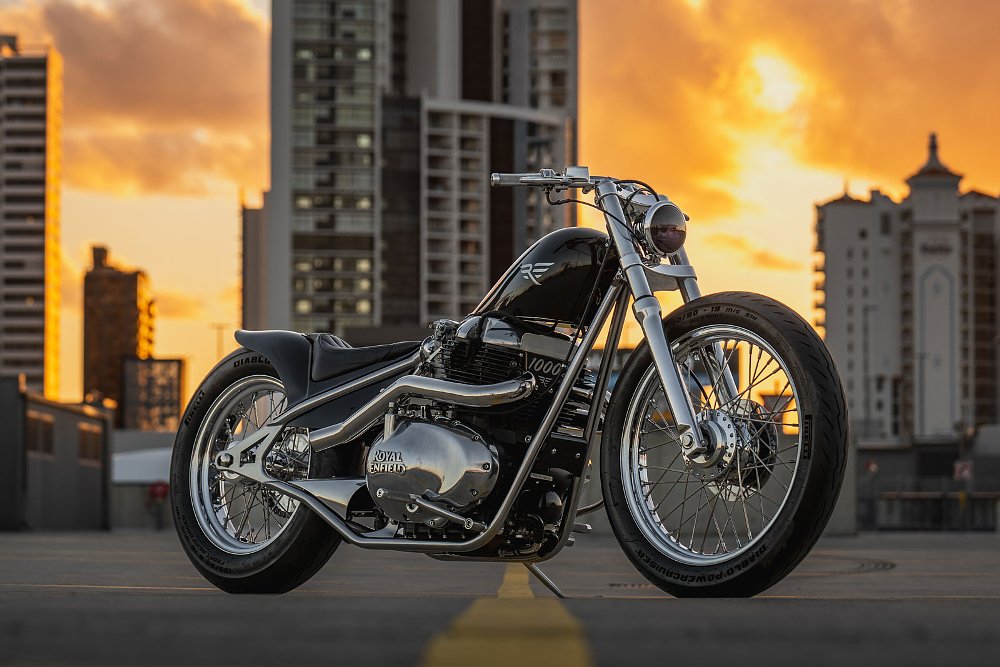
Brawldonny Metalworks RE1000
Now in its third season, the Royal Enfield Busted Knuckles Build Off pits official dealerships from across Australia against one another in a no-holds-barred, six-month custom motorcycle challenge. This year, five dealerships were handed a Shotgun 650 and granted carte blanche to transform them into whatever they could conjure up. The resulting motorcycles were all impressive in their own right, but when the covers came off, one bike stood head and shoulders above the rest.
That bike was built by Dylan Brown of Brawldonny Metalworks (Instagram), operating out of the Grid Motorcycles dealership in Burleigh Heads, Queensland.
A fabricator, welder, fitter and machinist by trade, Dylan's passion for motorcycles began on the family farm at an early age. Since then, his career has seen him work on everything from trains and cars to sidecars, motorcycles, and all manner of structural engineering projects. But for the past two years, his focus has been squarely on building custom motorcycles under the Brawldonny Metalworks banner.
After Grid received the invitation to take part in Busted Knuckles, they enlisted Dylan's help to design and build their entry. After accepting the offer, Dylan sat down with his good friend and engine expert Jesse Robinson of Robinson Engines to develop a concept.
"The inspiration behind most of my custom work comes from racing bikes of the '70s, '80s, '90s, drag racing and Japanese craftsmanship," says Dylan. "So when I'm given full control over a build, this is the direction things tend to head in."
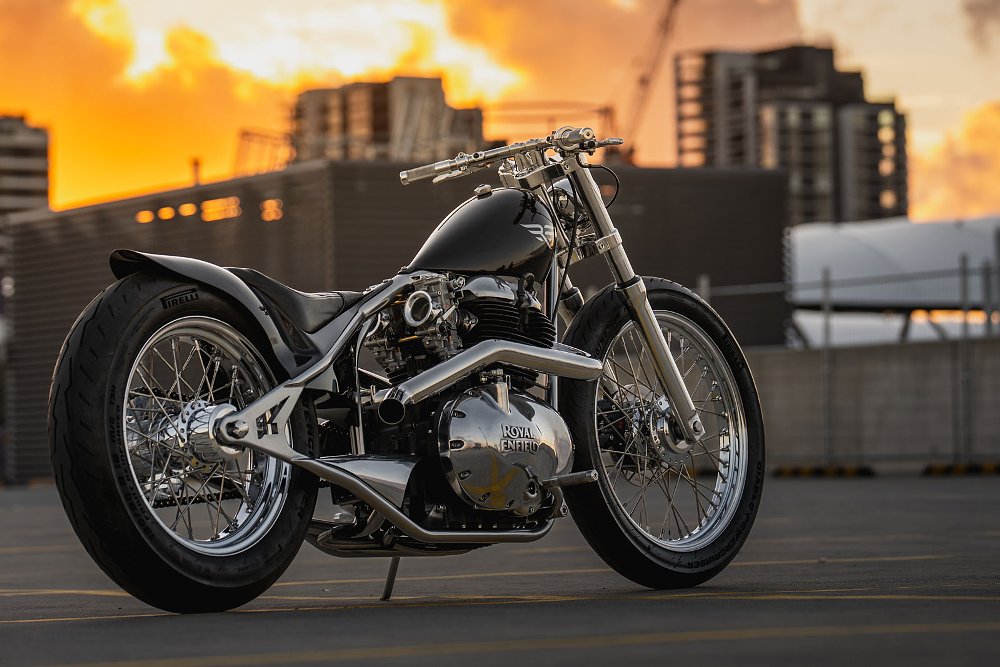
After Grid approved Dylan's concept, he wasted no time getting to work. With only six months to complete the build, Dylan knew he had his work cut out for him, as this was no bolt-on affair. "Literally everything you see on the bike has been handmade aside from the wheels and front suspension," he explains, and that's no exaggeration. Along with devising a concept that required re-engineering most of the motorcycle, he also had to work within a shoestring budget, making hand fabrication the only way to achieve his goal.
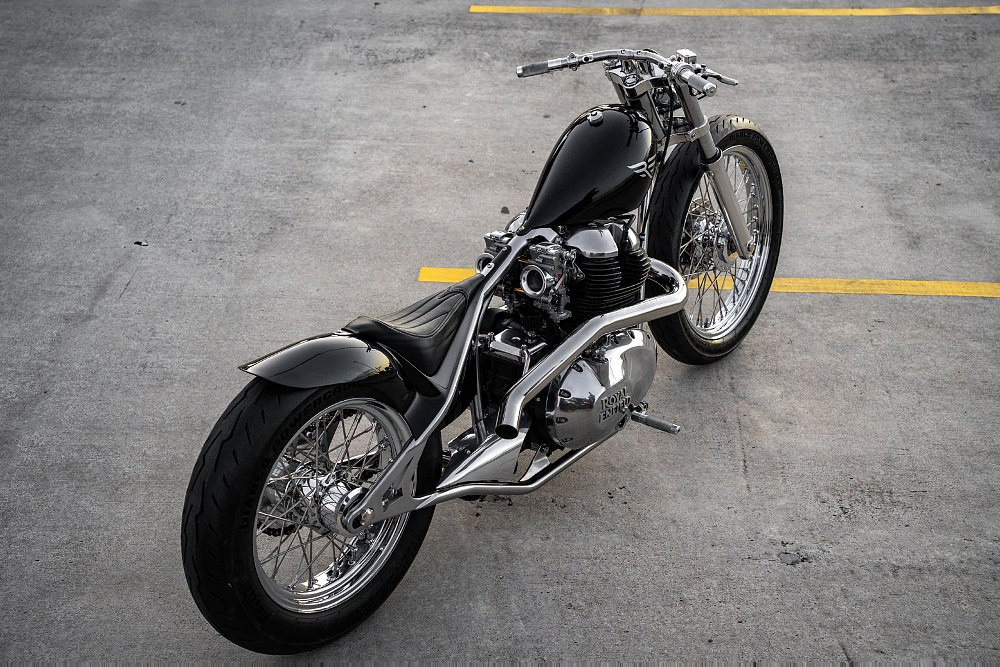
Starting with the frame, Dylan built the entire structure from 4130 chromoly steel. The new design transforms the Shotgun 650 into a hardtail, and it's been polished by hand to a mirror shine. The remaining suspension consists of the original Shotgun fork, also polished to match the theme, mounted in custom-made triple clamps and finished with custom handlebar, switches, and knurled grips.
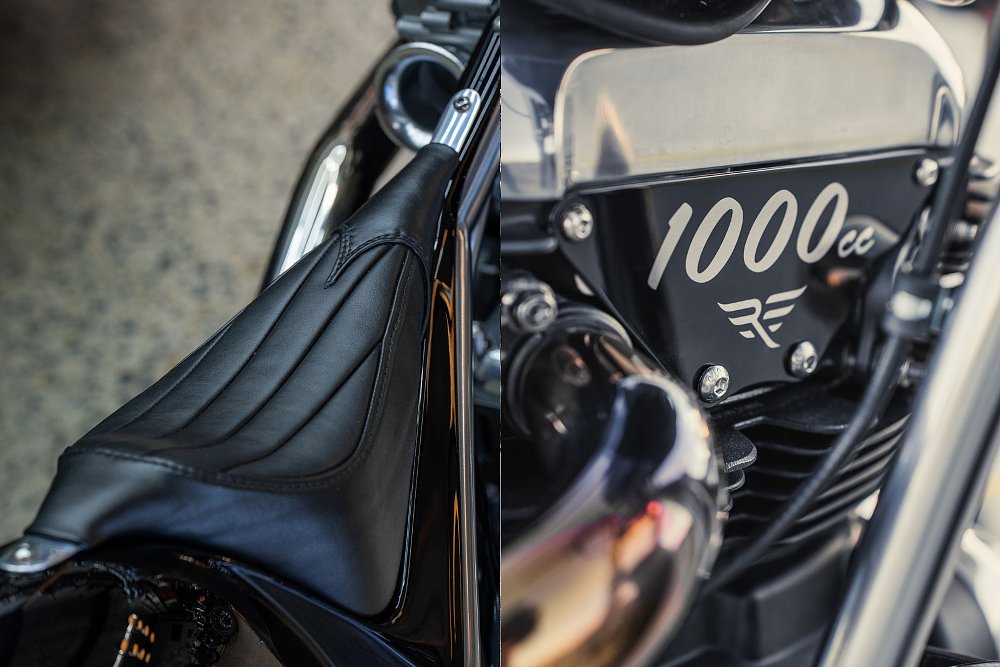
For the bodywork, Dylan took an old-school approach, using traditional metalworking techniques to shape the aluminum fuel tank, rear fender, and seat pan. To complete the look, Justin Holmes from Pop Bang Classics laid the sleek black paintwork while Timeless Auto Trimming upholstered the seat.
While Dylan chipped away at the fabrication side of the project, Jesse got to work on the engine. From the get-go, the pair agreed to pursue a significant jump in capacity. Despite a modest 648 cc starting point, Jesse set his sights on achieving a 1,000 cc conversion. Amazingly, he's done just that, increasing the engine's capacity by 54 percent to 1,002 cc, making this version of Royal Enfield's parallel twin a world first.
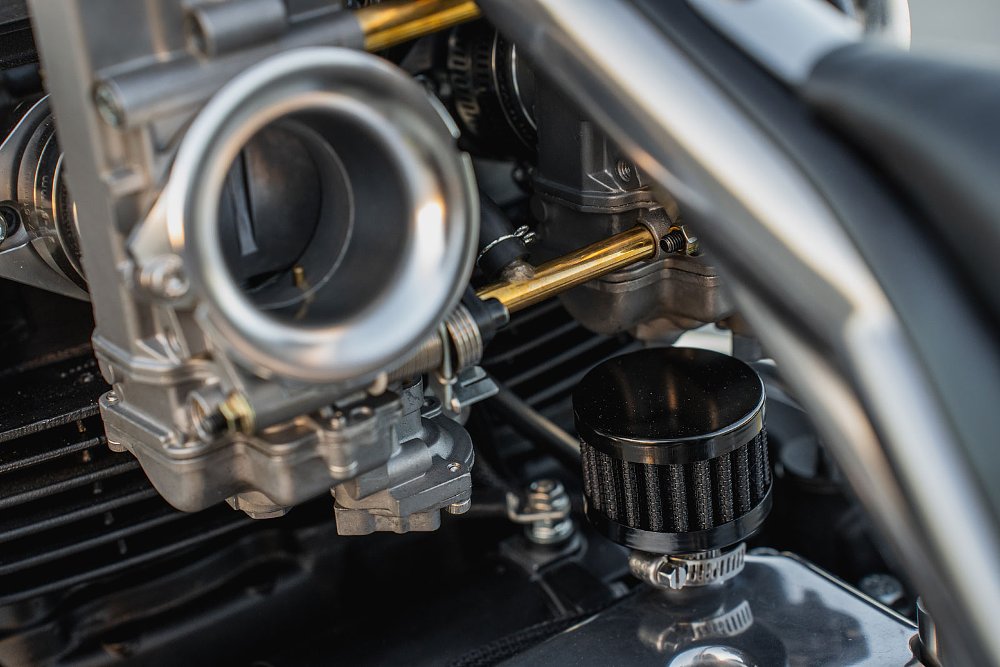
During the build, Jesse also replaced the factory electronic fuel injection with Keihin FCR carburetors to complement the motorcycle's old-school style. A custom straight-through exhaust and an oil cooler mounted behind an air scoop at the rear of the engine complete things. Jesse admits there isn't much material left in the barrels, and he was a little nervous about the first start-up. Fortunately, when the moment of truth arrived, the parallel twin burst into life without hesitation.
With well over 350 hours invested in this ground-up build, it came as little surprise when the judges awarded the RE1000 Best in Show. It's safe to say that the bar for future entrants in the Busted Knuckle Build Off has been considerably raised.
Bomb's Harley-Davidson Bangkok Boy
This year, Bangkok's seminal custom culture event, the Bangkok Custom Hotrod Show (Instagram), celebrated its 10th anniversary. Marking the milestone, the show featured more than 400 custom cars and motorcycles built by Thai enthusiasts and workshops. Beyond the machines, the event also offered art exhibitions, pinstriping demonstrations, trade vendors, a pin-up competition, live band performances, and Q&A sessions with international guests.
To commemorate the milestone anniversary, Bangkok Custom Hotrod Show creator Nanthapat Unpikul, better known as Bomb, and his team unveiled a special custom. The resulting motorcycle, nicknamed Bangkok Boy, served two purposes. First, it became the poster child for the event. And second, it was destined for display at the 33rd Yokohama Hot Rod Custom Show in Japan to showcase Thailand's custom scene to an international audience.
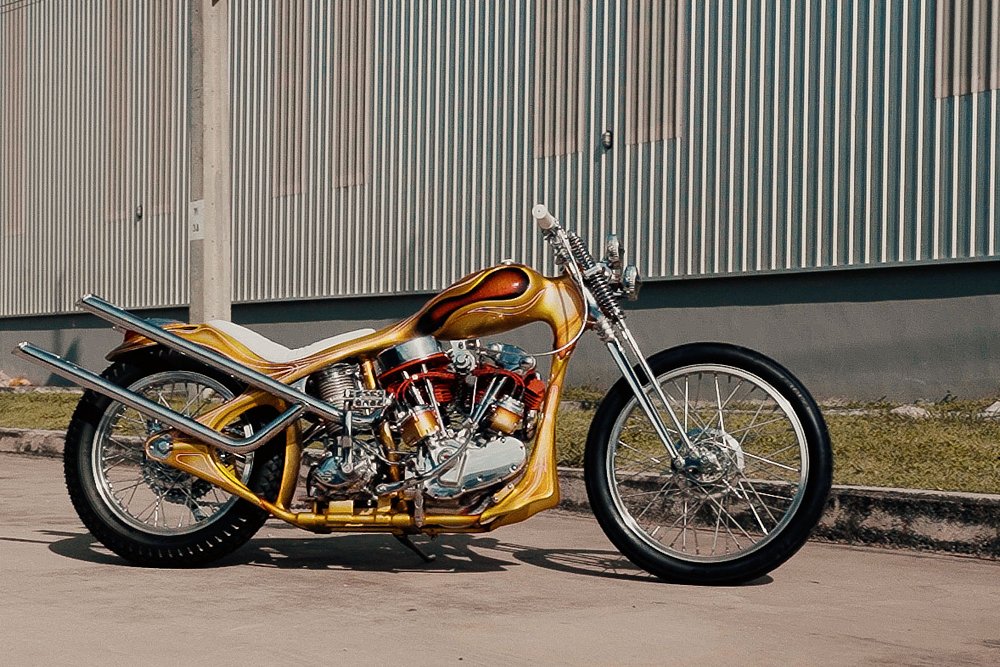
The creation of Bangkok Boy was a collaborative effort between Bomb, Harley-Davidson Thailand, and local workshop Fatboy Design. Rather than simply building another custom Harley, the team wanted this project to embody the character of the Thai people. The vision was to fuse beauty, confidence, and craftsmanship with a classic V-twin engine and, as Bomb explains, "We believe the world knows that Thai people have a heart of gold and we've tried to reflect that with this project."
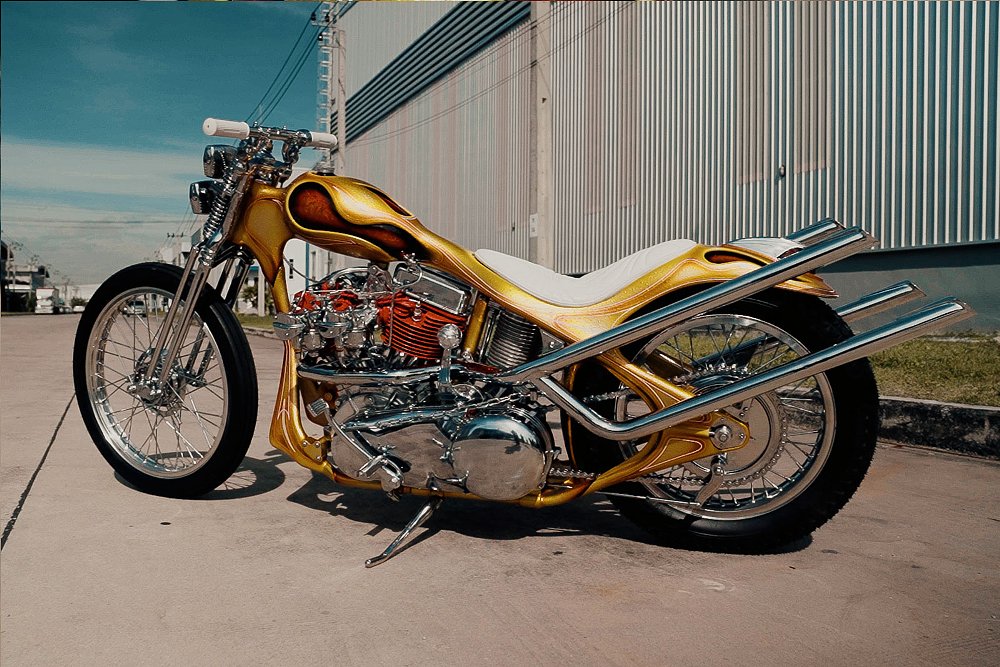
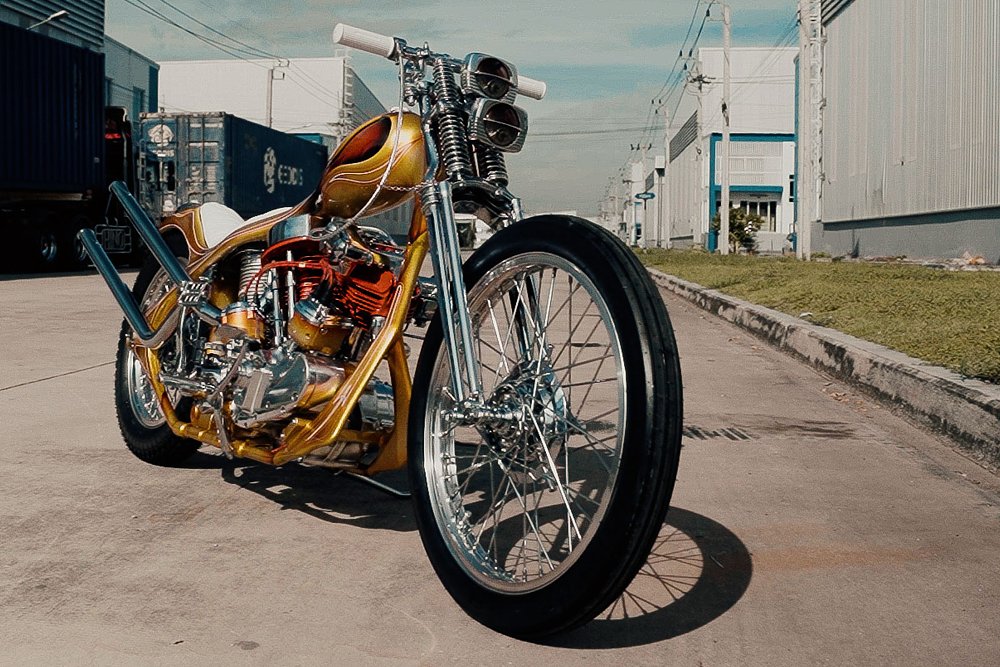
Stylistically Bangkok Boy has the unmistakable look of a '70s American chopper. Using a classic body molding, or bondo bike, approach, the team created a flowing, one-piece structure that merges the frame with the fuel tank, seat pan, and rear fender to form a single uninterrupted body. Up front, a traditional springer fork wearing a narrow, straight handlebar and a pair of Chicago auto art-deco-style headlamps reinforces the vintage aesthetic. To further enhance its period-correct character, Bangkok Boy's braking system uses a hand-built drum brake and suicide clutch setup. And although CNC machining was leveraged to create some of the parts used, the majority of this motorcycle was built entirely by hand.
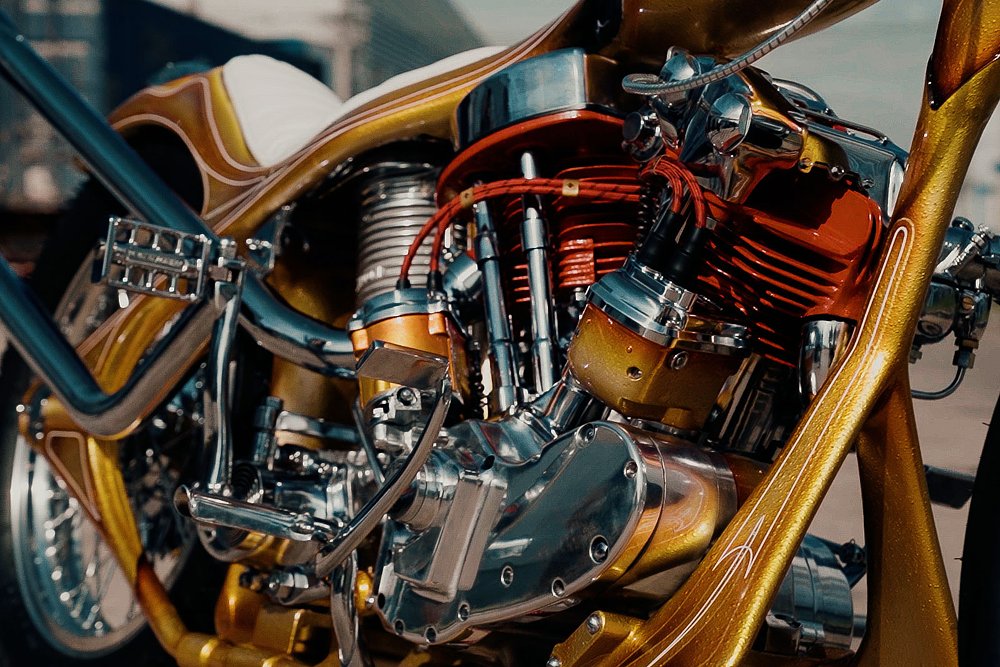
From the outset, Bangkok Boy's engine was to be a defining feature of the build. Bomb set his sights on creating a unique powerplant using three of Harley-Davidson's most iconic V-twins, the Knucklehead, Panhead, and Pan/Shovel. It's an admirable goal, but it wasn't without its challenges.
Since those engines were developed decades apart, simply bolting them together isn't an option, and to add to the challenge, many of the required parts are now quite rare. However, with some diligent digging the team pulled together what was needed and began the process of painstakingly modifying them to work as one cohesive package. The finished engine features both Pan- and Knuckle-style heads, a twin-magneto ignition system, twin Linkert carbs and a handmade two-into-four exhaust. Internally, the transmission was re-engineered around a classic four-speed ratchet gearbox.
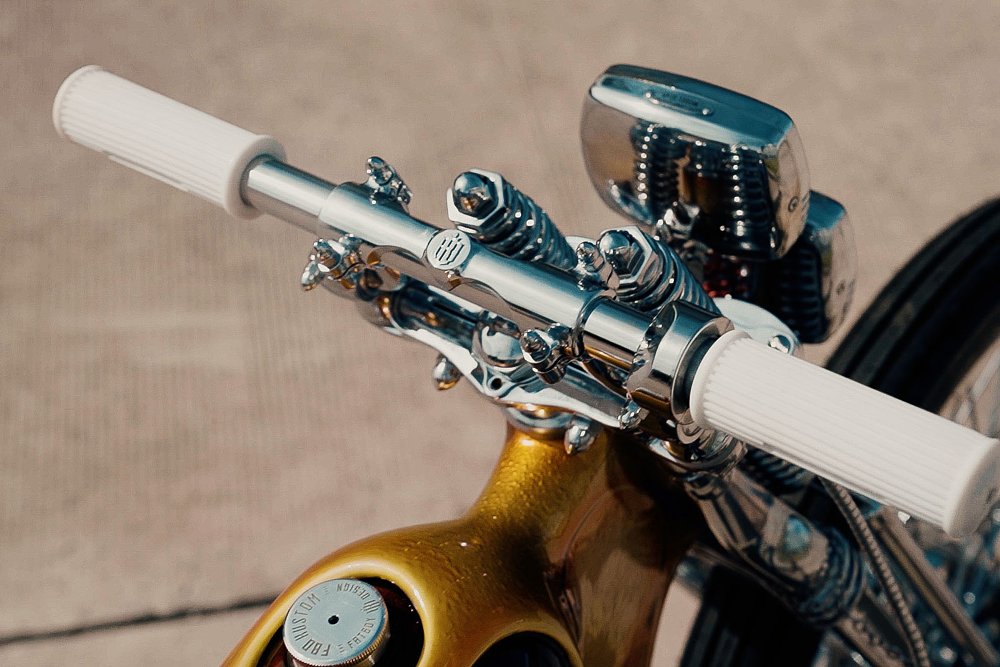
The paintwork was an equally important part of this build. Bomb wanted it to express the project's Thai identity so gold became the dominant color. Symbolizing Thailand's rich cultural heritage and the warmth of its people, the flaked gold paint sits under 10 coats of clear. Splashes of red resin in the clear create depth and the pinstriping was added to help draw your eye around the entire bike.
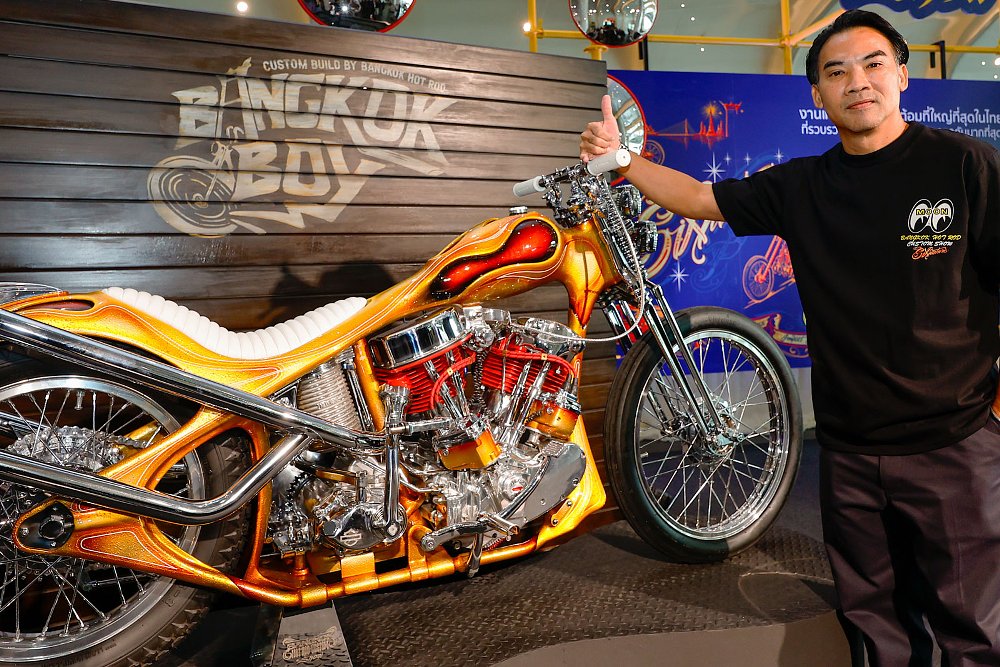
Bangkok Boy blends three generations of Harley-Davidson engineering with Thai craftsmanship and 1960s American counterculture. It's a hat tip to an iconic era in motorcycle history and, thanks to Bomb and his team, an enlightening look at Thailand's thriving custom scene.