




 Riders Preferred Membership
 Shop by Vehicle
 Track Order
 Contact Us
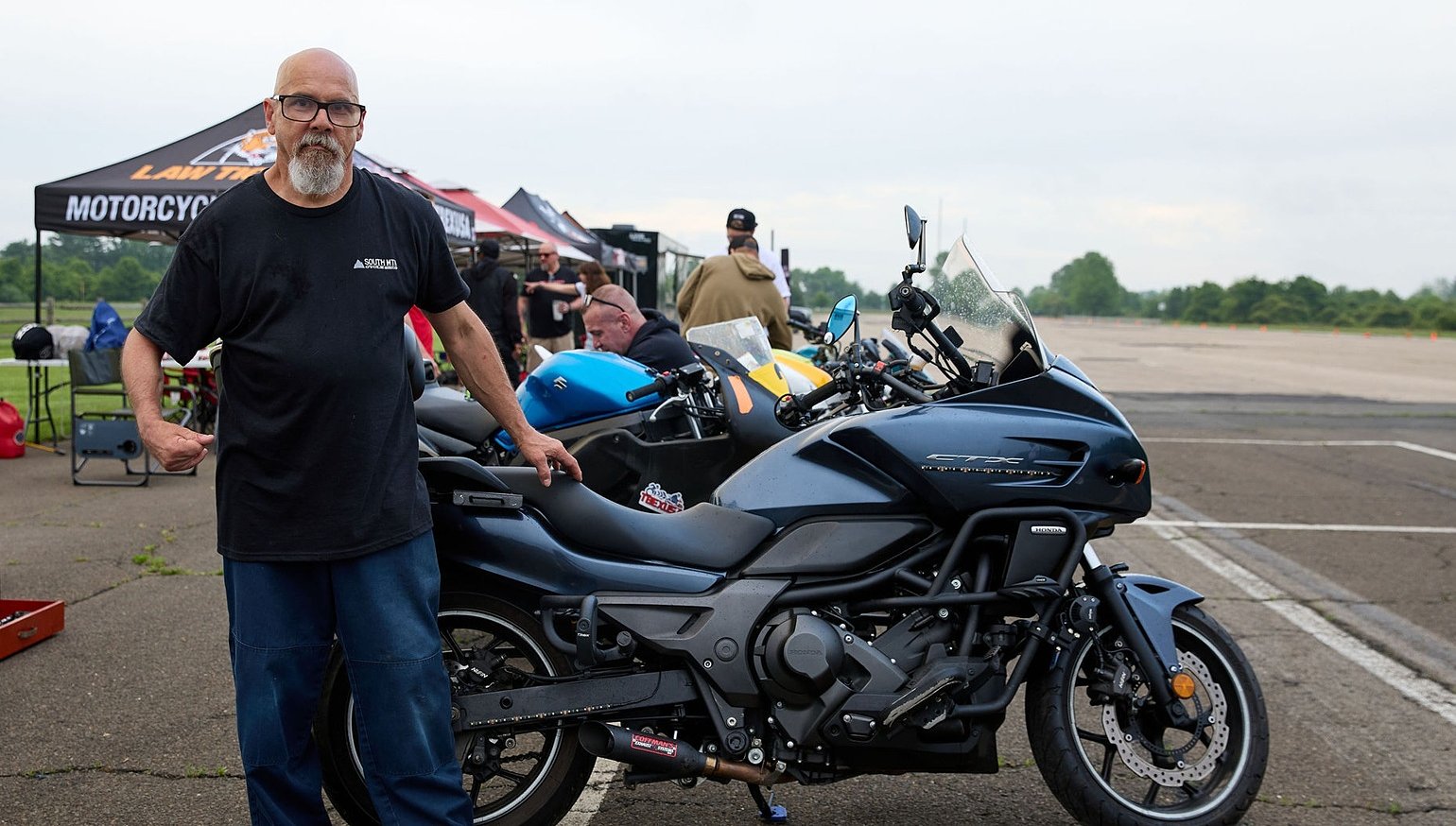
Many riders got the two-wheel itch when they were too young to ride a motorcycle. Some have to wait longer than others to scratch that itch. Bob Berrettini waited longer than most and worked harder to achieve his dream.
When Berrettini was six years old, he suffered a stroke, a loss of blood flow to the area of his brain that sent signals to the motor control nerves on his right side. His right hand and foot were affected, and he was left with a limp. Today, he says, "The best I can do with my right hand is hold a baseball bat."
With motorcycles off the table, he turned to bicycles.
"As a teenager, my end game was to be an independent individual," he says. "The bicycle became a form of transportation and the only option as a teenager without a driver's license. I got around and did everything I needed to do by bicycle. For the sake of therapy, I did 20 to 30 miles a day and got involved with the velodrome program."
About eight miles from his home was a bicycle track. "I rode to and from the track as a method of exercise, and once I realized they had a free clinic for bicycle training on the track I added them together into a deeper exercise program. I wasn't the fastest but I participated and qualified for a pro-am event. It was a goal that I set out to accomplish."
When he wasn't racking up miles at the velodrome, Berrettini got plenty of support at home. "My parents pushed me until I could push myself," he says. "When I was 12, my dad asked if I could do one pushup. I couldn't because my right side wouldn't hold me up. So he gave me an incentive. He said, 'Do one pushup, I'll give you one dollar. Two, and I'll give you four dollars. Four, eight dollars. Eight, 16 dollars,' and so on. I was able to do 63.5 pushups a year later. That was his way of encouraging me to build up my upper body strength. My mom and dad's support, and different levels of strategy, allowed me to recover what I could."
Berrettini got medical clearance for a driver's license and got a car when he was 22. Motorcycles were still on his mind, but the lack of strength and motor control in his right hand seemed to be a deal breaker. "I knew I couldn't manipulate a brake or throttle on the right side, so bikes were a hard no."
It wouldn't have mattered while he lived at home, since his mother was adamantly anti-motorcycle. But then, after her kids moved out and were on their own, Berrettini's mom did the unthinkable — she bought a motorcycle. With the no-motorcycle rule in ruins, Berrettini's brother and sister also became motorcyclists. Berrettini was missing out, but then, he recalls, "technology gave me a different option."
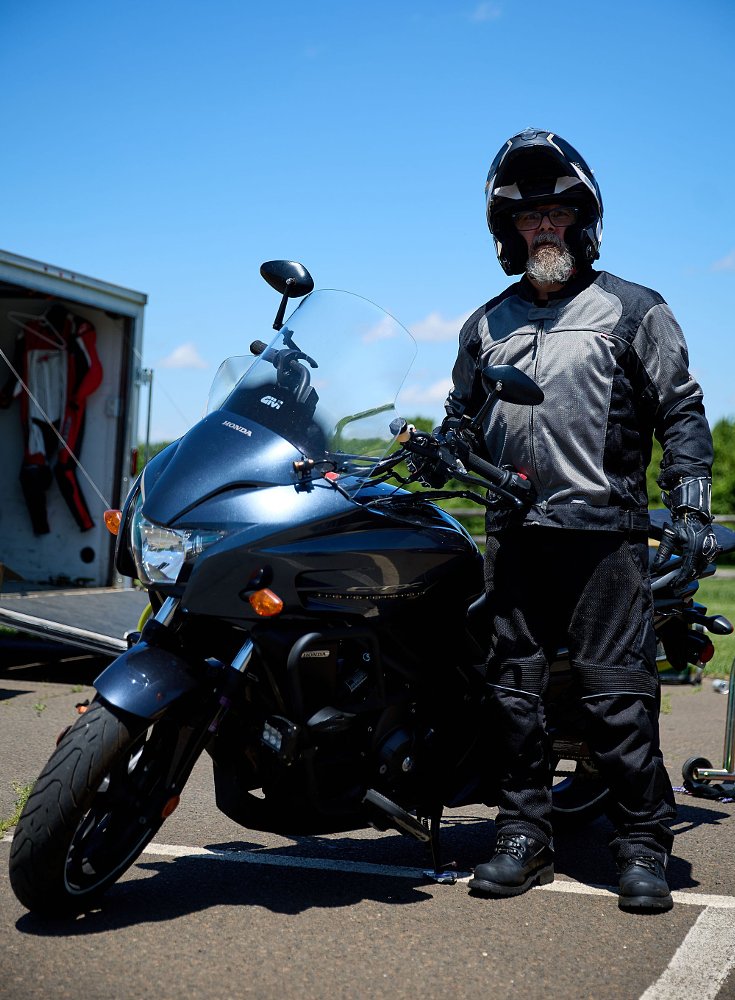
In the early months of 2025, he bought a 2015 Honda CTX700 DCT. The automatic shifting of Honda's Dual-Clutch Transmission (DCT) removed a variable from what would otherwise be a daunting set of challenges after the brake lever and throttle were moved to the left side. "I knew other riders who went ahead and did a double lever with an existing standard clutch but I thought that would be too early in the process to put that many variables in my first go-around. That's why I stayed with DCT, to reduce the variables and simplify the equation."
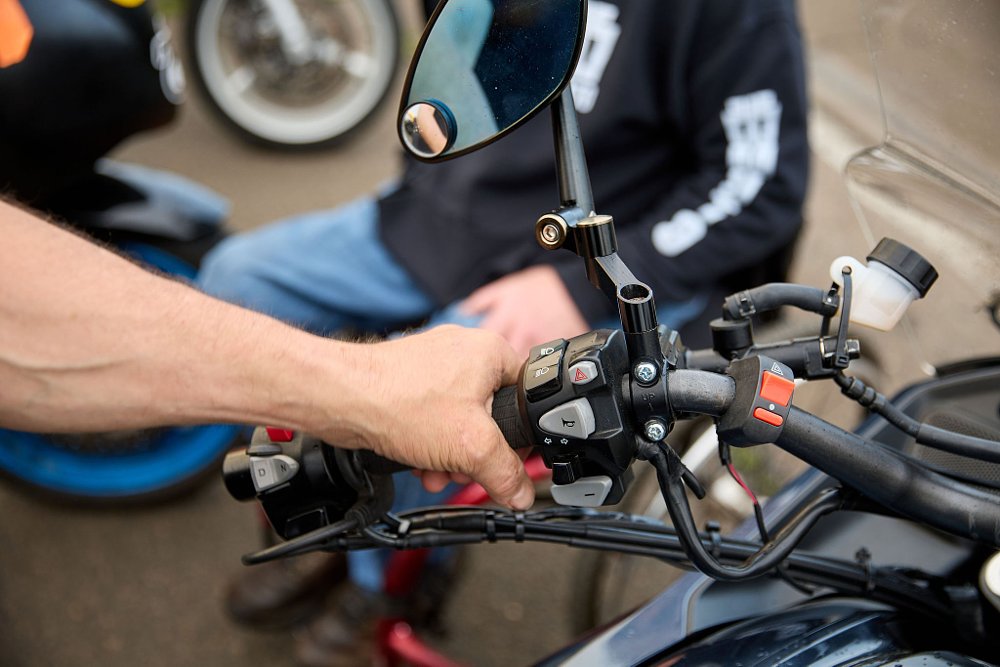
"Simple" isn't the word that comes to mind for what came next. "We took the OEM controls from the right side of the handlebar and put them on the left side, backwards." Finding a shop willing to undertake the job proved frustrating. "Everyone said no, because they didn't want the liability of modifying the controls on a motorcycle." His search up and down the East Coast finally bore fruit with a call to South Mountain Cycle Shop in Dillsburg, Pennsylvania. "Jared at South Mountain said if I was willing to take the risk, so was he." Two months later the job was done.
Berrettini had a motorcycle he could ride. Now he needed to get a motorcycle endorsement. That proved easier said than done. It took five tries and some bureaucratic acrobatics but he finally got it — 56 years to the day after his stroke.
Getting his endorsement was just the beginning. To that point, the entirety of his riding consisted of 15 miles in parking lots, taking tests to qualify for a Pennsylvania motorcycle license, at speeds barely above a walking pace. Berrettini wasn't even sure he could ride at highways speeds. He needed training.
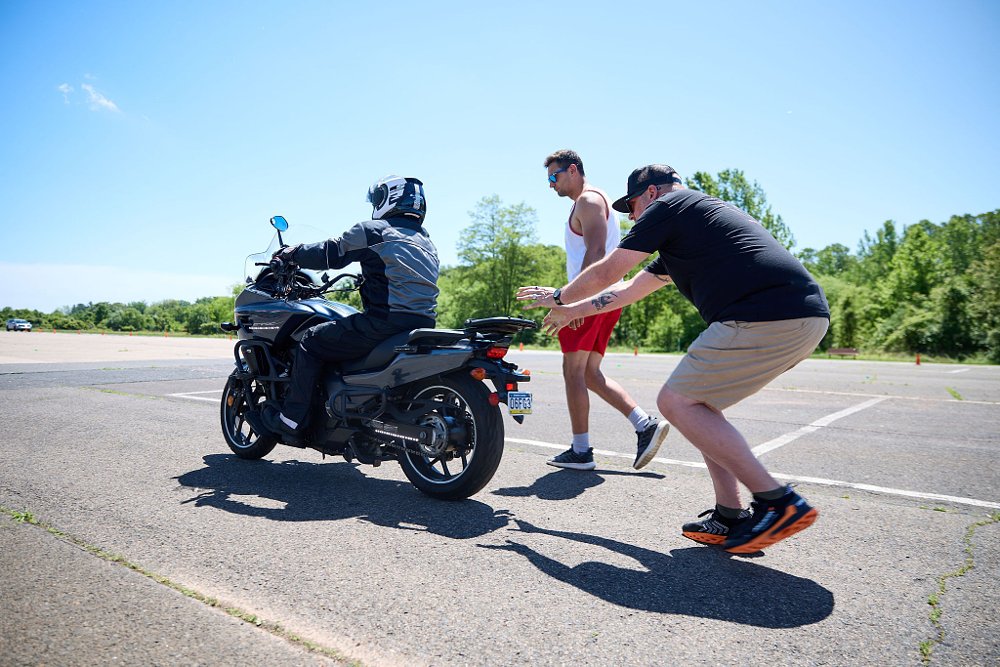
He found The Bike Experience USA (TBEXUSA), an organization founded by Mike Petrosini that partners with The Ride Again Foundation to help people with disabilities learn to ride or help injured riders get back on two wheels. Petrosini invited him to come to the organization's next track event and Berrettini finally got to ride his CTX700 at street speeds. "Not quite highway speeds," he says, "but progress."
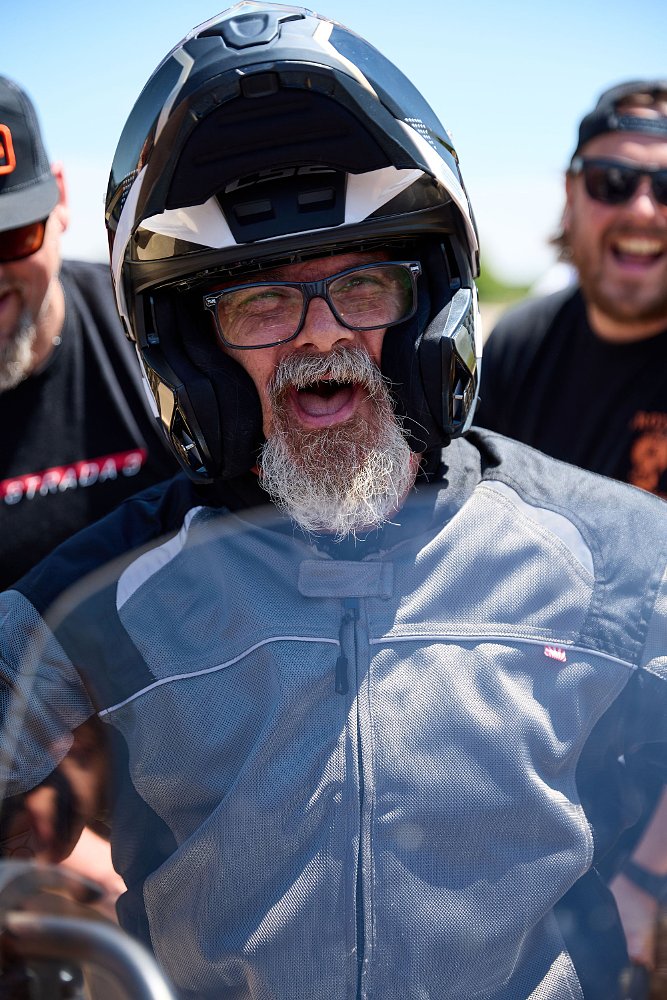
TBEXUSA also works with the Yamaha Champions Rider School, which happened to have an event a month later at New Jersey Motorsports Park. "Nick Ienatsch has the saying, 'Any rider, any bike, anywhere.' And he'd rather see a new rider early on so he had no bad habits to unlearn," Berrettini says. "I said to myself, 'Challenge accepted'." YCRS instructors worked with Berrettini on control, turning, speed, and emergency maneuvers. Then they took him onto the track. "I got through highway speeds up to 75 mph. Game, set, match."
But not game over. Berrettini works on his skills by taking the free basic, intermediate, and advanced riding courses offered by the state of Pennsylvania and he's been back to the track, as well. "I'd rather get better than worse," he says. "I try to keep my skills fresh. I'm a professional klutz by nature. I need all the help I can get."
Now 63 years old, with his riding life just beginning, Berrettini can’t get enough seat time to satisfy him. He's ridden over 7,000 miles in the short time he's owned a bike. Mainly, he hopes he can serve as an example to others who thought they could never ride a motorcycle or would never be able to ride again after a disability.
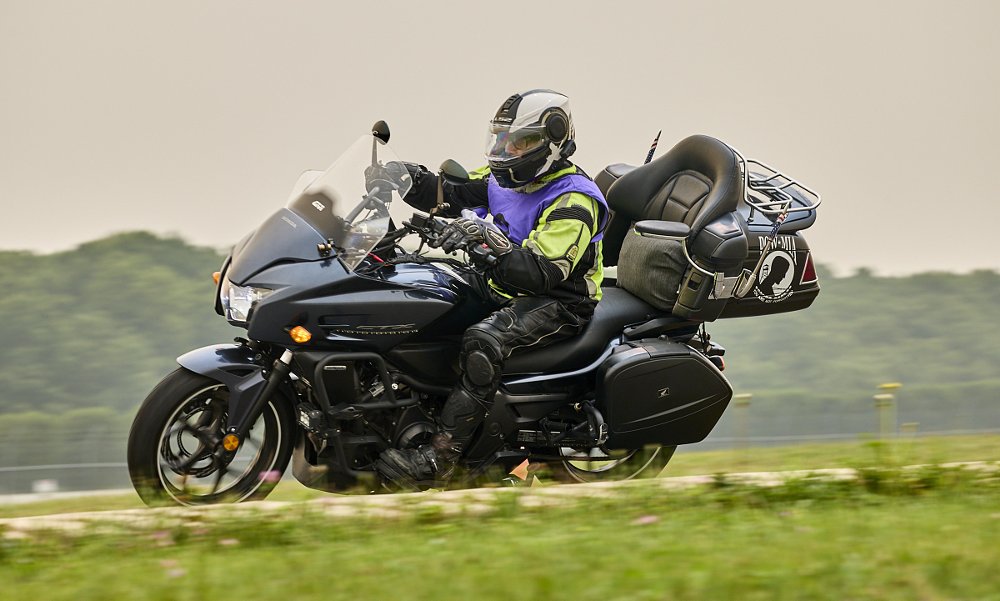
Despite a half-century delay in fulfilling his dream of riding, Berrettini is truly a motorcyclist down to his bones. You can tell because he already has his sights set on the next bike to inhabit his garage. He's scraping the floorboards on his CTX700 in corners so he's looking hard at a Honda VFR1200 DCT, a bike with more lean angle. Don't be surprised if you roll into a track day someday and see a VFR1200 with a weird collection of cables and switches on the left end of the handlebar.
Image Gallery
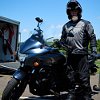
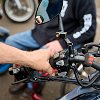
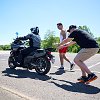
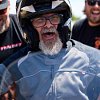
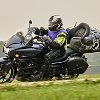
Image Gallery
