




 Riders Preferred Membership
 Shop by Vehicle
 Track Order
 Contact Us
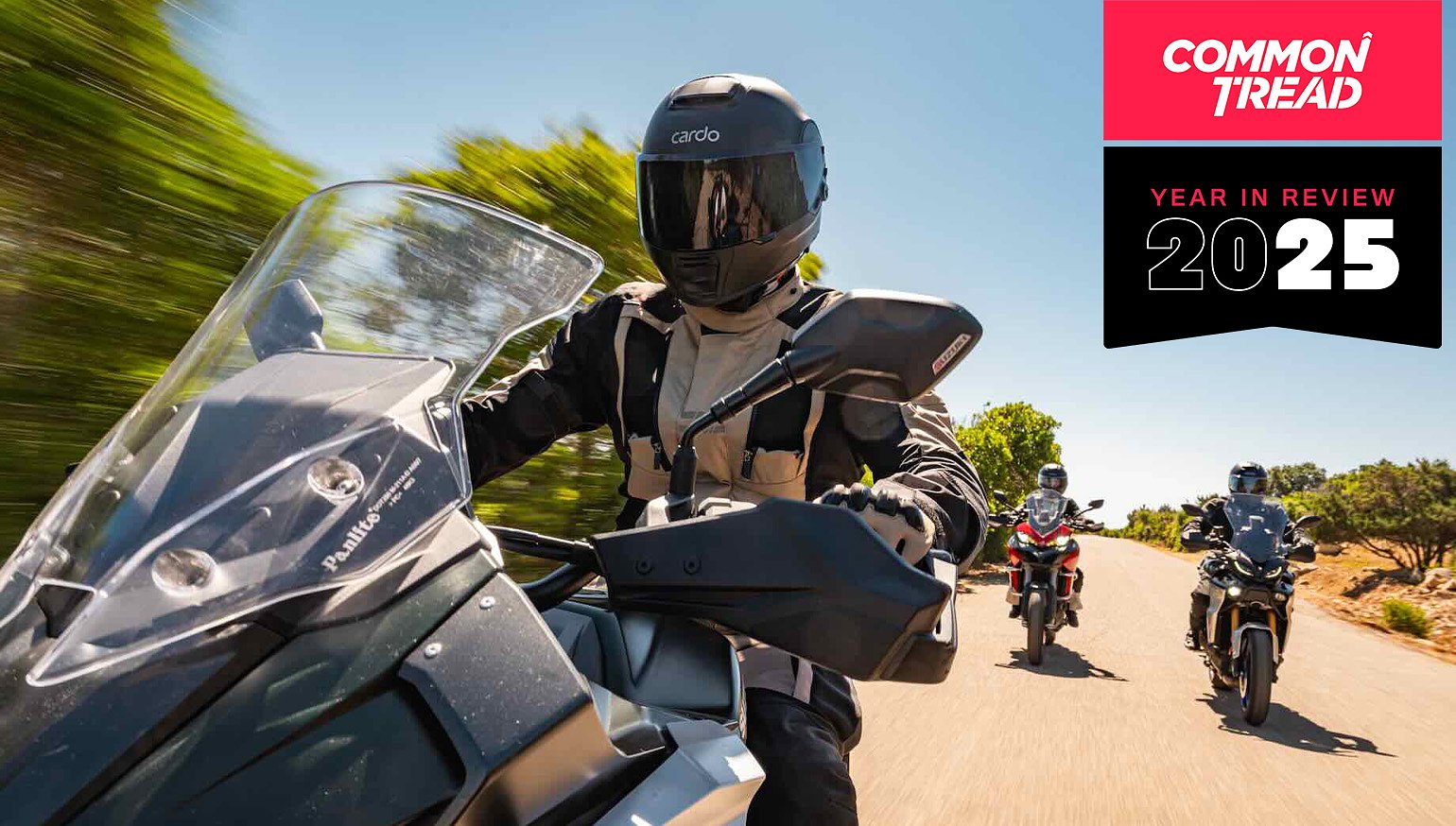
Technology can advance by leaps and bounds. It can also march forward at a steady pace. The latter is true of motorcycle gear in 2025.
Progress is often associated with novel, inventive ideas. Yet, there was no industry-disrupting product launched this year. No innovative item that rewrites rider safety. No breakthroughs in comfort or convenience. That doesn’t mean gear makers simply sat on their hands.
Instead of dreaming up the “next big thing,” manufacturers integrated existing tech into new packages. Some favor affordability, some don’t, but all increase access to today's latest tech. Ultimately, that's one form of advancement: accessibility. With new products putting more technology in more riders’ hands, these are the best motorcycle gear advancements of 2025.
Airbags for everyone
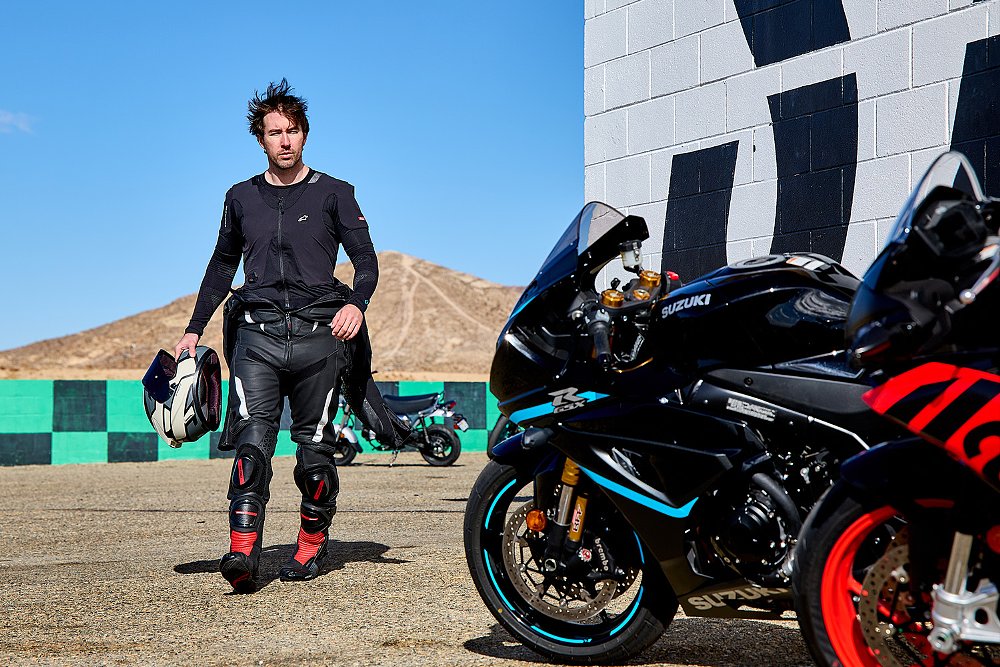
Alpinestars has spearheaded airbag development for more than a decade. That trend only continued with the introduction of the Tech-Air 5 Plasma and Tech-Air MX. The former hangs its hat on versatility, with users choosing between Street, Race, and Off-Road modes. The latter caters to dirt riders — and dirt riders alone. While there’s very little overlap between the Plasma and MX, each welcomes riders to the Tech-Air family in their own way.
Assuming the Jack-of-all-trades role is the Tech-Air 5 Plasma, with settings that suit both casual riders and die-hards alike. While those added functions steal much of the headlines, the model’s improved fit is just as strong of a selling point.
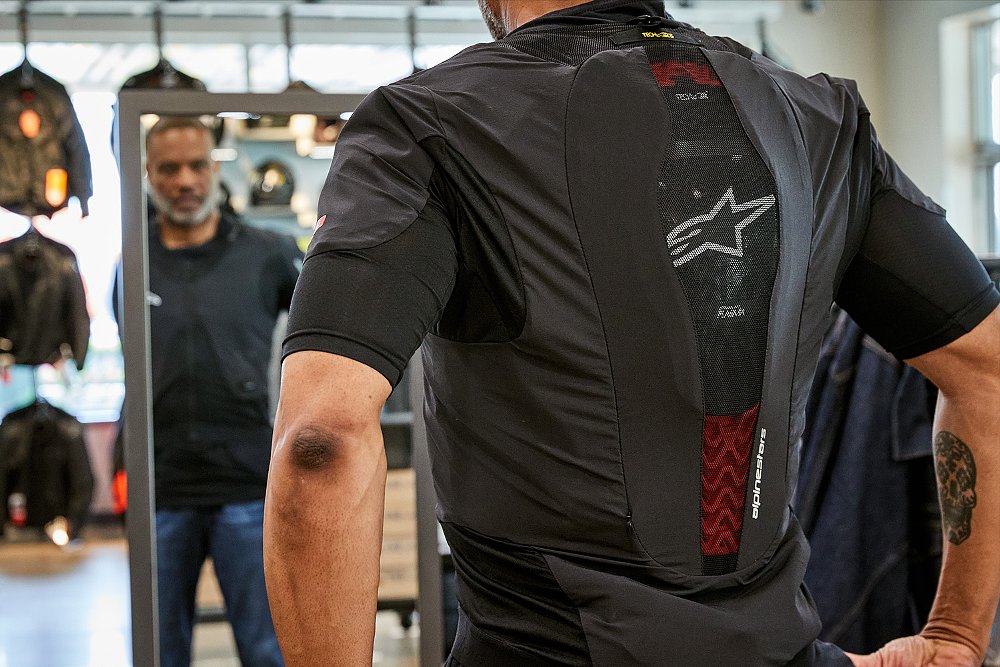
The outgoing Tech-Air 5 was big and bulky. It sagged in all the wrong places (it bunched in all the wrong places, too). The new Plasma variant addresses those issues. Its Nucleon Plasma back protector contours to the rider’s form. Its mono-layer mesh stretches at flex zones like the collar, underarms, and abdomen. Comfort isn’t the only thing it has going for it, either.
One of the Plasma’s standout features is its user-replaceable canister. Best of all, it shares that attribute with the Tech-Air MX. Both airbags now allow the rider to swap out the unit’s argon canister following each detonation. Additionally, the airbag bladder only requires Alpinestars' refurbishing services after every sixth deployment. Talk about convenient. That’s especially true for the MX, which stands to endure much tougher terrain.
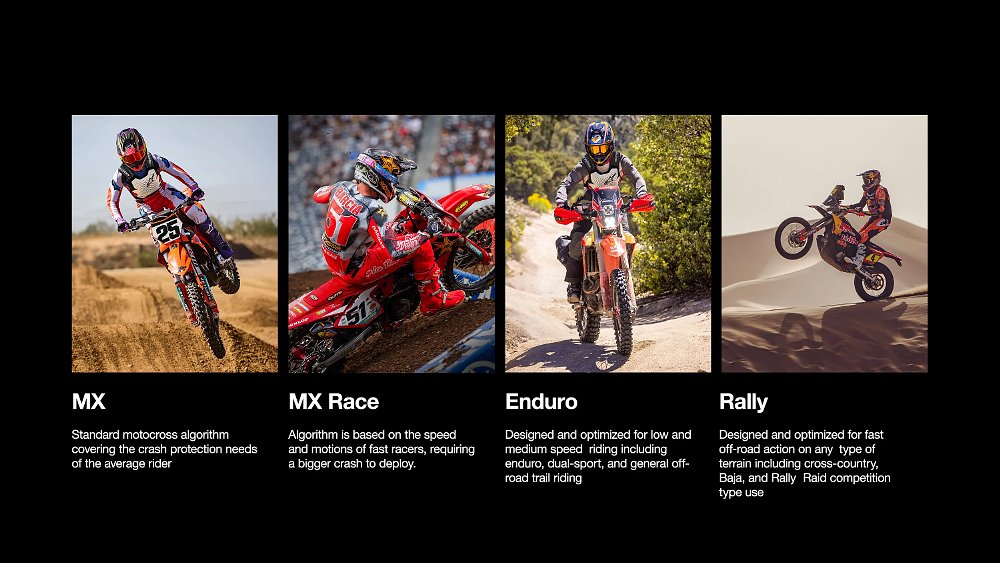
Released in October, the Tech-Air MX brings a dirt-only option to Alpinestars’ airbag troupe. Developed with data collected from 250 cc Supercross riders Austin Forkner and Jordon Smith (among others), the MX serves everyone from motocrossers to dual-sporters, from enduro riders to rally racers. What’s more impressive, the MX algorithm accounts for whoops and jumps, only deploying its airbag when a crash is imminent.
It’s clear: Airbags aren’t just more advanced than ever, they’re more accessible than ever. The Tech-Air 5 Plasma gained a host of new features, all while retailing for $869.95 (just $35 more its predecessor’s price tag). At $699.95, the Tech-Air MX is one of the more affordable models in the Tech-Air series. Yes, Alpinestars will continue developing its airbag range in the coming years, but it’s good to see more motorcyclists coming along for the ride.
More for more
Comm-integrated helmets are nothing new. Neither is much of the technology they feature. Back in 2015, Sena showed off its noise-cancelling tech. It wasted little time putting that feature into its Momentum smart helmet, which debuted in 2018. What followed was a full Sena helmet line — one that rivals Bluetooth-equipped models from Bilt, Bell, and Sedici. Now, we can add two more examples to the category with the arrival of Cardo’s Beyond GT and Beyond GTS helmets.
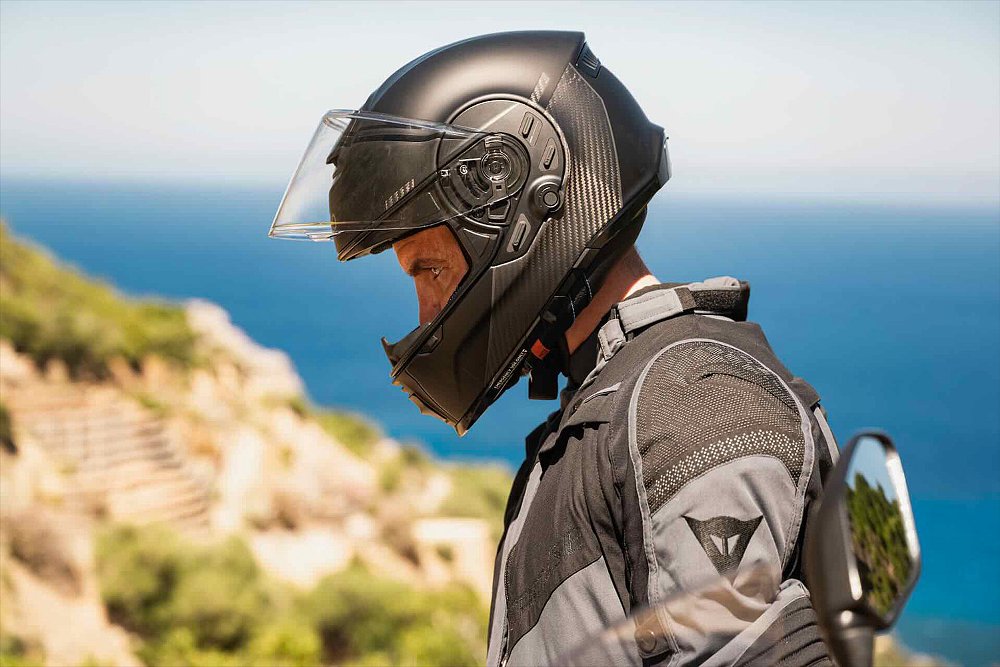
All the usual suspects are here. That includes what Cardo describes as “wind tunnel-tested aerodynamics, optimized ventilation,” and “multi-density EPS.” There are 53 mm speakers and an Active Noise Cancellation (ANC) system. There’s Bluetooth connectivity, hands-free voice control, and Dynamic Mesh Communication (DMC). Plus, the Beyond introduces a new helmet health indicator, which monitors the unit’s impact integrity throughout its lifespan. And that’s just in GT form.
In premium GTS spec, the Beyond also packs an Integrated Crash Detection sensor and an Active Brake Light into its carbon fiber shell. All that tech doesn’t come cheap, though. The GTS commands $1,199, while the GT goes for $949. Those price tags firmly position the two Cardo helmets as the big-budget offerings in the segment. That's one way to make an entrance.
The Beyond GT and Beyond GTS may arrive with hefty MSRPs, but they join a growing cadre of smart helmets on the market. Freedom of choice also includes the freedom to spend more, after all. If this year’s crop of gear proved anything, it’s that all progress isn’t made in large leaps. Sometimes, the slow and steady route can bring more folks into the fold. At least, that was the story of 2025.
Image Gallery




Image Gallery
