




 Riders Preferred Membership
 Shop by Vehicle
 Track Order
 Contact Us
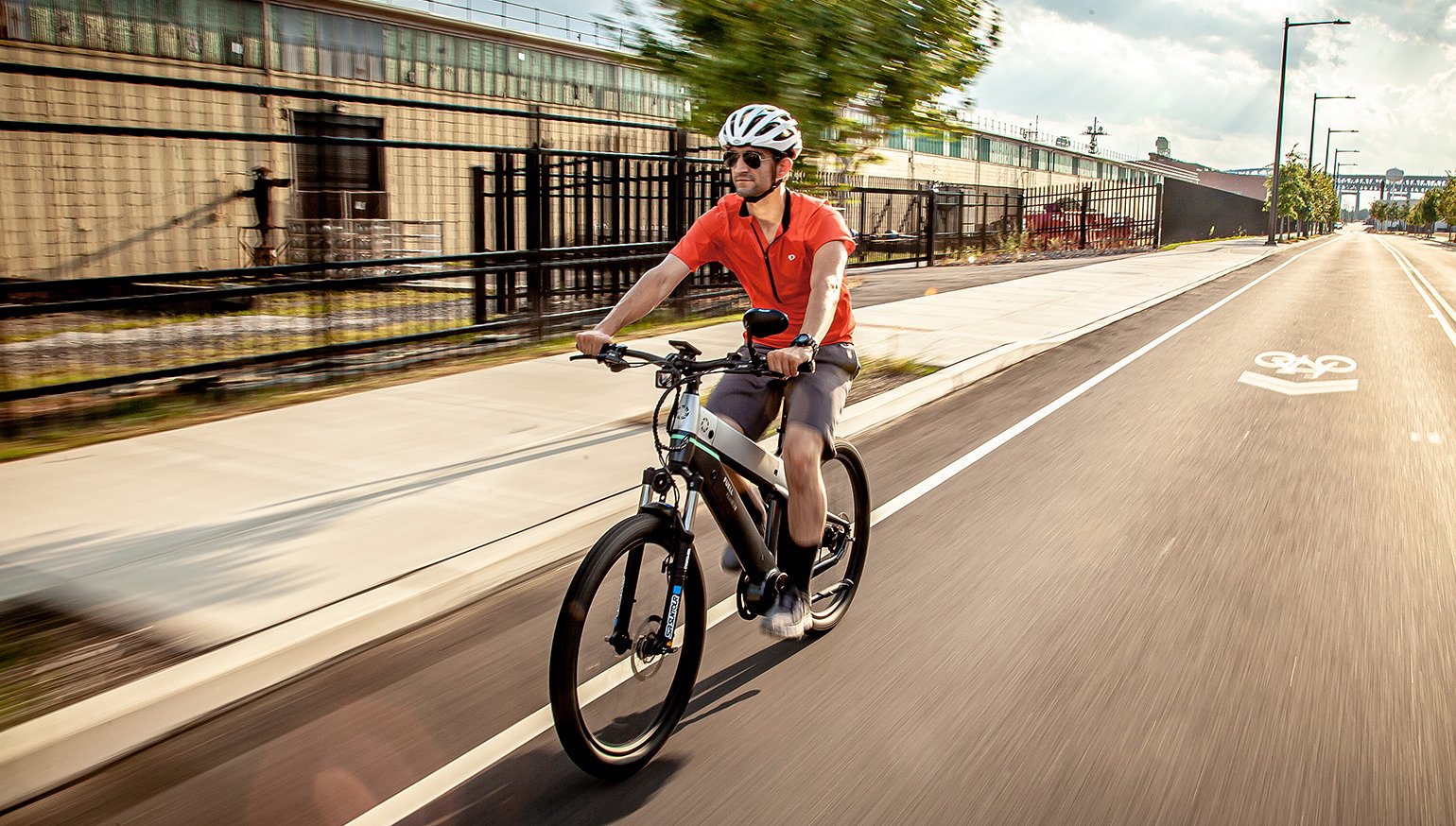
It's no secret that backlash has been growing to the spread of electric bicycles, some of which rival motorcycles in the way they are used but aren't subject to the same laws and restrictions. Each new case of a child getting hurt on a fast bicycle or a pedestrian getting run over increases demands for more regulation. States are starting to act, and New Jersey recently set a new standard.
Bicycle advocates are up in arms over the new law in New Jersey, but before we get into that, let me explain why you're reading about it on Common Tread. As the lines have blurred between electric bicycles and motorcycles, we gradually came to the conclusion that we needed to define the extent of our coverage. This is, after all, a motorcycle site, not a bicycle site. Some of us (and some of you readers) love bicycles, but covering them is someone else's job, and we ultimately settled on the general guideline that if you can pedal it using human power, it is a bicycle and therefore outside our coverage universe. That's why you'll see articles here on electric motorcycles such as the Zero XE but not on pedal-assist bikes like the Super73, for example (though you have seen coverage of electric bicycles here if you've been a really long-time reader).
The new law in New Jersey
Federal standards, which are in place for use of electric bicycles in places such as trails on U.S. Forest Service land, divide the pedal-assist bikes into three categories, but still treat them mostly like traditional bicycles. New Jersey's law, recently signed by the governor, is stricter. New Jersey divided e-bikes into two categories: "low-speed electric bicycle" that provides power assist up to a maximum speed of 20 mph, and a "motorized bicycle," which provides power assist up to a maximum speed of 28 mph. No one under age 15 would be allowed to ride either category, ages 15 or 16 would need a permit, and age 17 or above the rider must have a regular driver's license. Beyond that, the New Jersey law treats a "motorized bicycle" same as a motorcycle in many ways. It must be registered, covered by liability insurance, and the rider must wear a helmet. You can't legally park it on the sidewalk, but nor can you ride it on any road with a 50 mph speed limit or higher.
New Jersey won't be the last state to enact stricter laws on electric bicycles. The Motorcycle Industry Council (MIC) is tracking pending legislation in half a dozen other states, and that situation changes regularly. But the related question for those of us in the motorcycle business is:
How will stricter laws like New Jersey's affect motorcycles?
You generally see two perspectives. Some think that the convenience of electric bicycles (why sit in traffic in a car when you can commute on an e-bike and not break a big sweat?) will get more people on two wheels and they'll eventually move on to motorcycles, or add a motorcycle alongside the electric bicycle. The other perspective is that people who in the past would have bought a motorcycle will just buy a bicycle instead and the motorcycle industry has lost that customer forever.
It's also possible that both perspectives are true and the former will happen over the long term while the latter is happening in the short term.
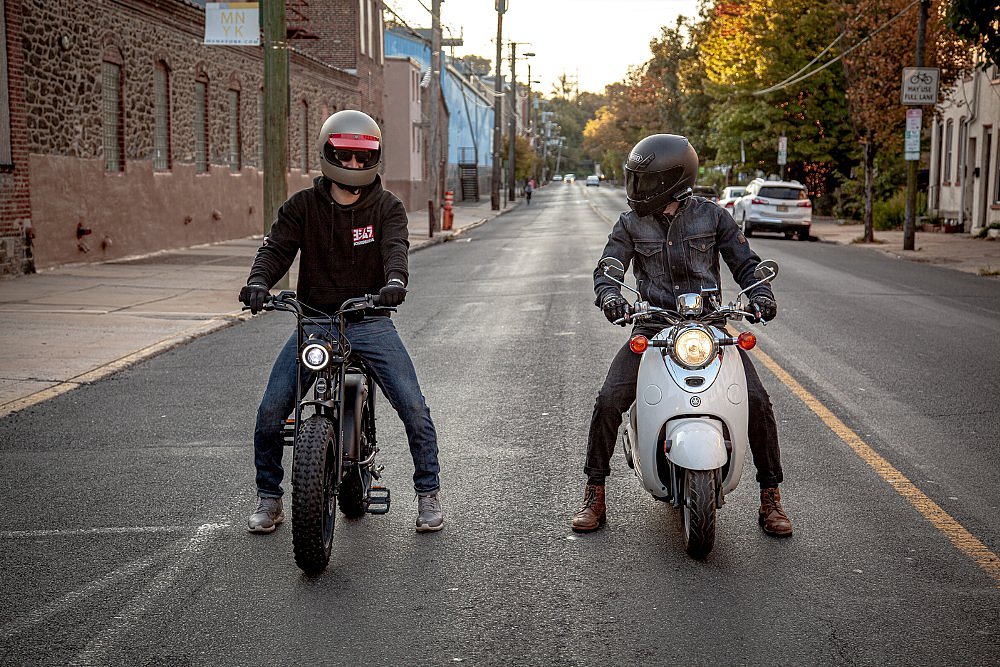
It's already easy to see the short-term impact of electric bicycles on the motorcycle market. From 2021 to 2024, U.S. sales of scooters — here we're using "scooters" in the way motorcycle riders typically do, referring to street-legal, gas-powered, step-through two-wheelers — dropped by about 47%, according to MIC data. It's easy to see why. If you're an urban commuter, would you choose a gas-powered scooter that requires a motorcycle license, registration, insurance, and a parking spot or would you get to work just as quickly on an electric bicycle that requires no paperwork, you can bring inside your apartment, if you want, and you can get away with riding on the bike path as well as on the street?
Easy decision for anyone who hasn't already made up their mind to buy a motorcycle, right?
By treating "motorized bicycles" the same as a motorcycle, in many ways, New Jersey's new law rewrites those calculations about which option makes more sense. Will other states follow? Will this increase or decrease motorcycle sales in the long run? Or will enforcement be so lax that the law will be meaningless?
There are a lot of possible outcomes, and the only thing that's certain is that electric bicycles have changed the micromobility landscape and more debate and regulations will be coming.
Image Gallery

Image Gallery
