




 Riders Preferred Membership
 Shop by Vehicle
 Track Order
 Contact Us
When riders think about gear, they're usually thinking about the slide — abrasion resistance, armor placement, and impact zones. But what about how that same gear protects your body from the weather you're riding through? Right now, as temperatures drop across the northern states and frost hits the visor, there's one factor about to change your riding game completely: cold.
Not the kind of chill you shrug off at the gas station. The kind that creeps under your gloves at 65 mph, stiffens your throttle hand, tightens your neck muscles, and numbs your judgment. Whether you're commuting at dawn or stretching the season, cold exposure wrecks control — biologically, neurologically, mechanically.
It slows your reaction time. It shrinks blood flow to your fingers and brain. It cuts your performance before you even realize you're compromised. And worst of all? You often feel fine right before things go sideways.
This isn't about "toughing it out." It's about preventing the kind of mistakes that lead to crashes. So let's dive into the science of cold exposure, how it hijacks your nervous system, and how the wrong gear makes it worse — fast. We'll also show how smart layering, modular systems, and windproof strategies can keep your reflexes sharp and your ride alive. If your gear can't fight the freeze, your control's already gone.
The ride that froze the lesson
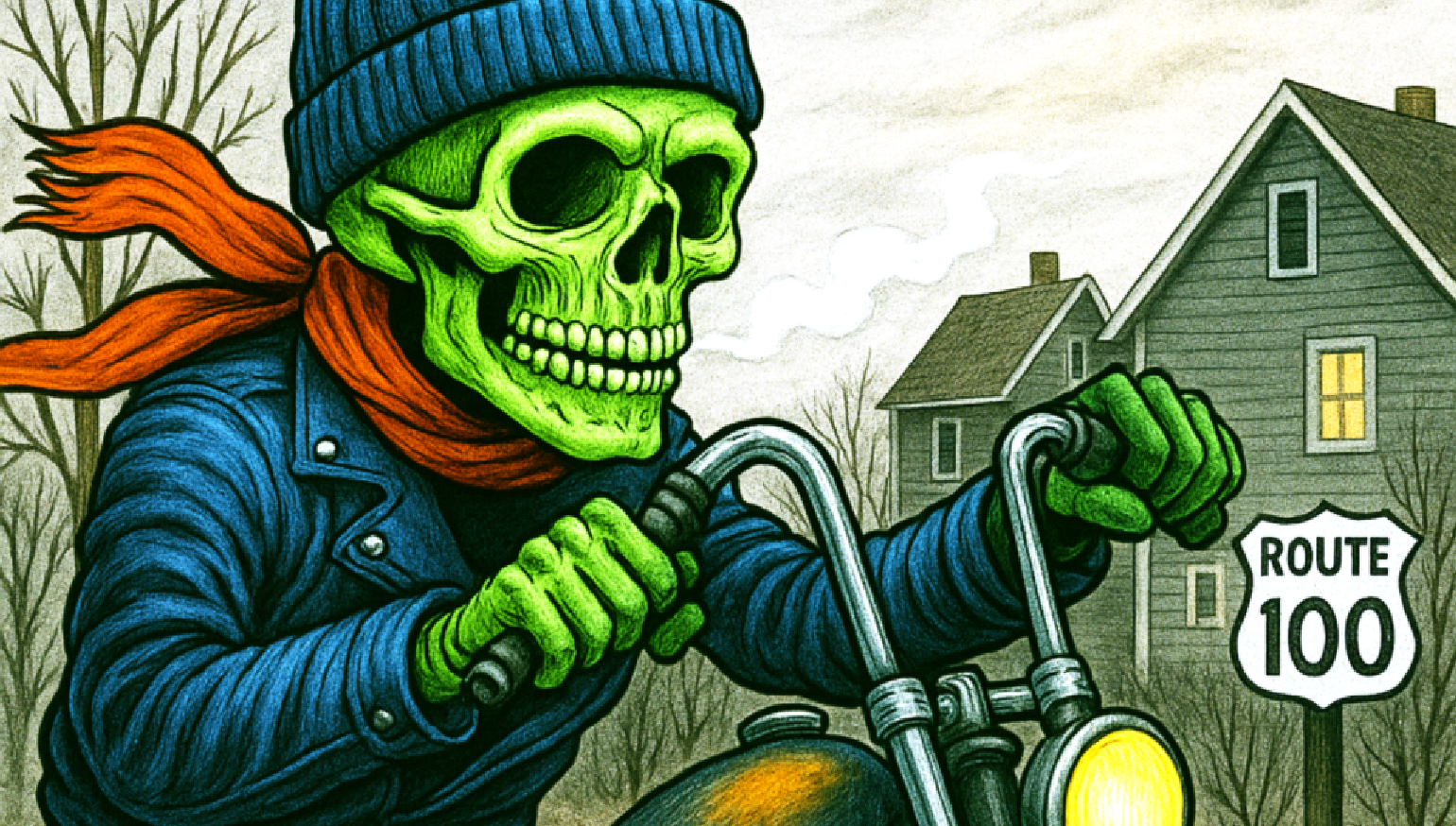
A few years back, late September, I was riding north through Vermont on Route 100, just south of Killington. I'd left Holyoke, Massachusetts, right after work — hoodie, jeans, mechanic's gloves, mid-to-high 70s, sun high, no worries. I'd spent enough time in Vermont to know better, but that warm afternoon had me fooled.
Then came the Green Mountains.

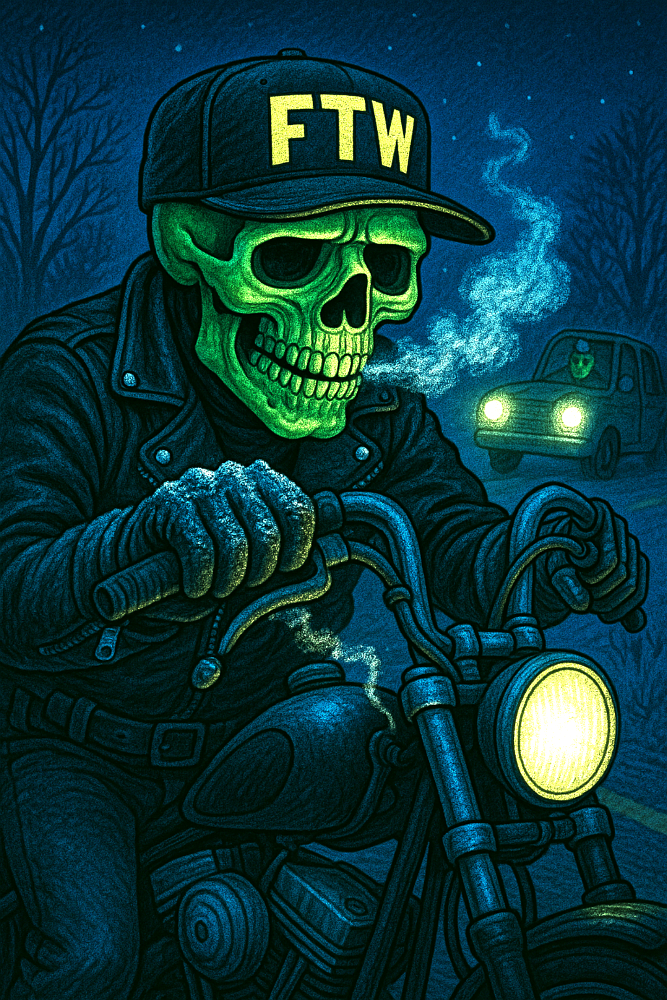
As the sun dipped behind the peaks, the temperature dropped and that crisp, pine-scented air turned damp. By halfway there it was around 50 degrees Fahrenheit — and I still had 80 miles to go. I panicked. Started speeding. Hoodie flapping as it absorbed moisture from the air. Fingers stiff. Legs locking up. I just wanted it over with. Then came the blue lights.
Pulled over. Threatened with jail for reckless driving and excessive speeding. For the first time in my life, standing there shivering on the roadside, I genuinely considered it. A jail cell sounded warm.
"How far to Granville?" I asked.
"Still a ways," the cop said.
I rode on, stopping to warm my hands on the engine. Every mile felt heavier. When I finally rolled into my buddy's driveway, I was soaked, shaking, and smoked to the bone — borderline hypothermic. My hands barely worked. I couldn't think straight.
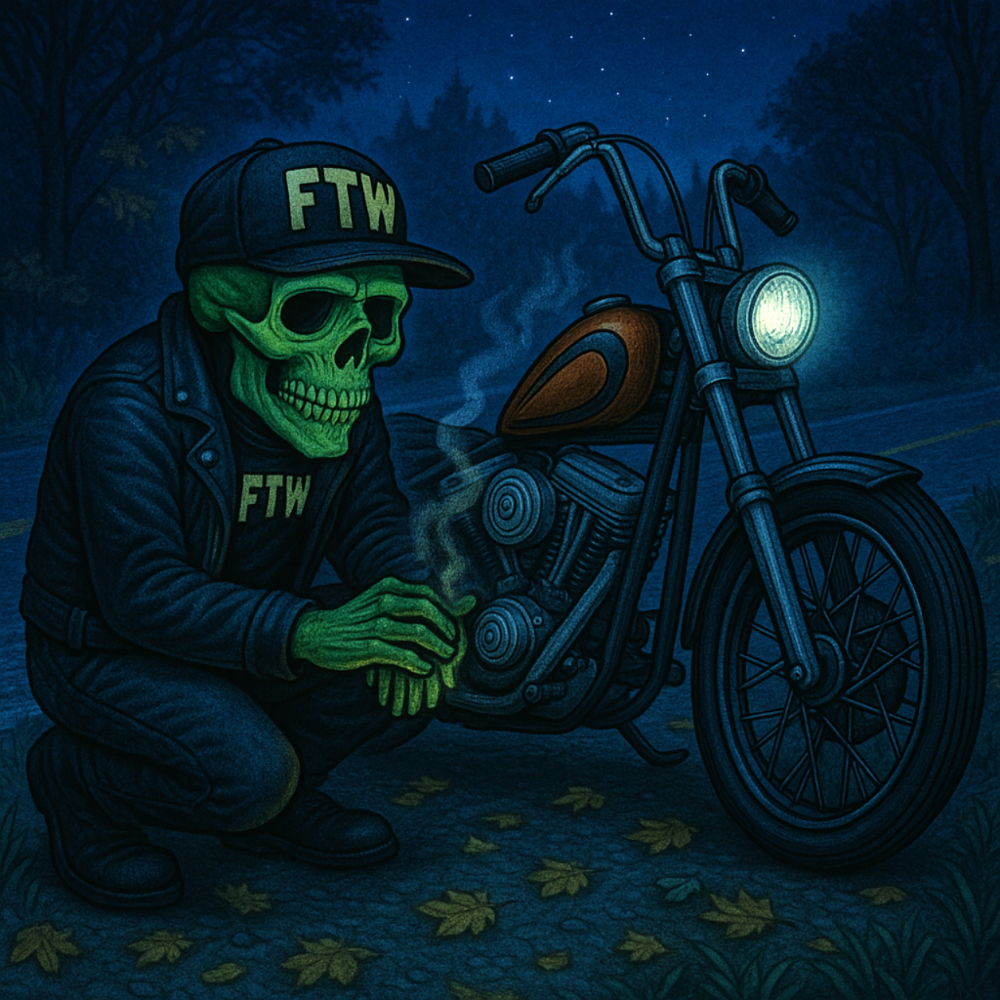
That night, I was kept warm by two things: the engine heat… and I was a little hot about the massive speeding ticket I'd just earned.
That ride taught me something I never forgot. Cold doesn't ask. It doesn't warn you. It just takes.
What the science says — and why it matters
Cold doesn't just bite — it rewires you. The research backs it up.
When skin meets cold air, especially at highway speed, the body flips a switch. Blood abandons the fingers, toes, and face, racing inward to keep your core alive. It's vasoconstriction — the first domino in a chain reaction you can't out-muscle. Neuromuscular research shows that even small drops in skin temperature slow nerve conduction. The colder the skin, the slower the signal. Which sounds academic until you're trying to modulate a lever in real time.

Cold-stressed muscles don't pull their weight, either. Controlled lab work reported in the Journal of Applied Physiology found that as muscle temperature falls, strength and responsiveness fade. That's not just frozen fingers fumbling a turn signal. That's delayed clutch response and messy coordination when precision matters most.

Cold doesn't spare the brain, either. Military and sports-physiology studies show that as core temperature drops, reaction times lengthen and tunnel vision sets in. Reaction-time loss in cold isn't theoretical — it's measurable. At 60 miles per hour, that delay means yards of lost distance before your reflex even fires. It's not just discomfort; it's a slow-motion hijacking of your nervous system.
Cold hijacks control from the inside out. That tingle in your fingers is blood flow shutting down. The shiver is your metabolism burning fuel to keep you conscious. The stiffness in your shoulders and knees is your nervous system lagging behind your intent. You start missing shifts, braking late, zoning out. You're not tired; you're temperature-blind. And you're no longer fully in control.
The chemistry of losing it
Even a small drop in your body's core temperature changes everything. Below about 95 degrees Fahrenheit (35 degrees Celsius) you're in hypothermia; as core temp drifts toward the high 80s, coordination, judgment, and fine-motor control degrade fast. You don't feel the line when you cross it — your nervous system does.

As your temperature falls, your body floods itself with survival chemistry. At first it feels like clarity, but it's really the system trying to save itself.
Norepinephrine spikes first, sharpening focus and clamping blood vessels to preserve heat. For a moment, you feel wired in — reflexes crisp, senses alive. Then cortisol takes over, stealing energy from your muscles to feed your core. The body starts choosing what to save and what to sacrifice.
Adrenaline surges next, trying to keep you moving, but each spike roughens control, every motion heavier and less precise. When dopamine drops, joy fades with it. The ride stops feeling like freedom and starts to feel like survival.
It happens quietly — a chemical cascade that feels like focus, right until it isn't. The changes that keep you alive start erasing the coordination and calm that make you a competent rider.
Outsmarting the cold
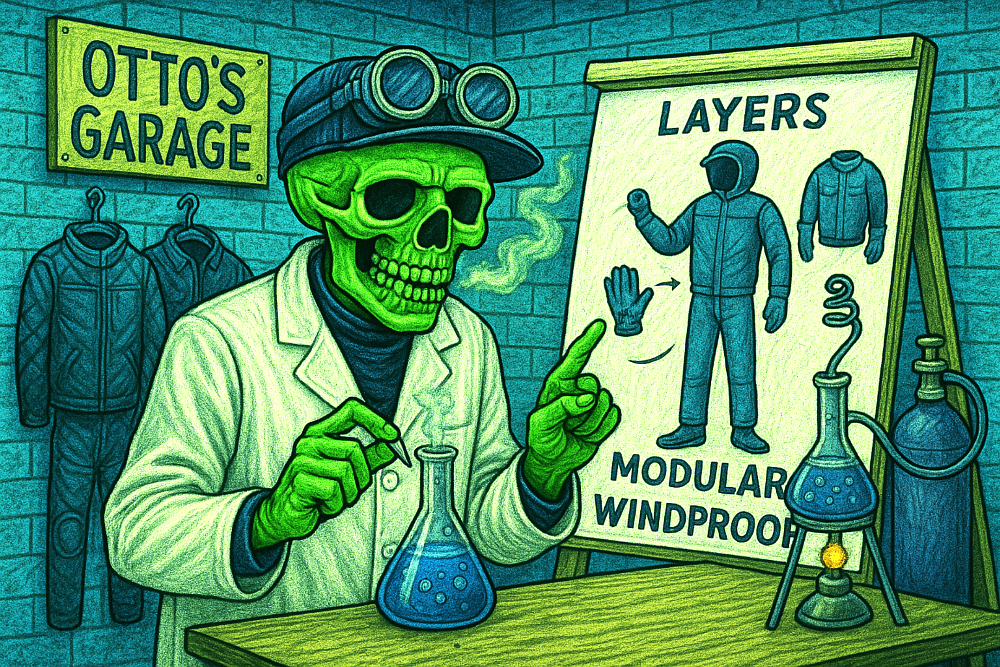
You can't out-tough the cold, but you can outsmart it. The right gear isn't about fashion — it's about keeping your nervous system online.
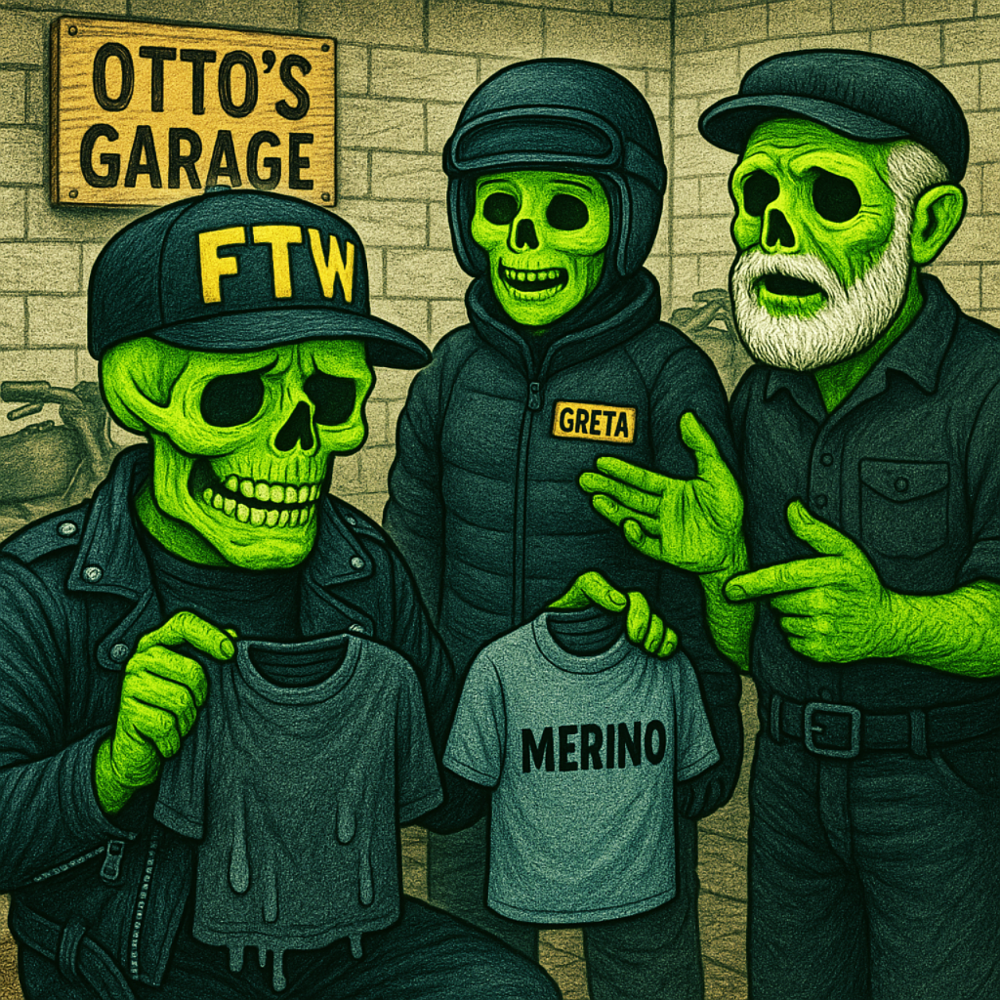
Start with a base layer that wicks instead of soaks — synthetics or Merino wool pull moisture away from the skin instead of holding it in. Add a mid-layer that traps heat without bulk. Finish with a shell that laughs at wind and rain. Gloves should feel like instruments, not oven mitts. Heated gear helps you get away with less insulating bulk, especially with your hands. Seal the neck, cover the wrists, and focus on getting the fit right. Too tight and you crush the insulation. Too loose and you build a wind tunnel inside your jacket.
Crash protection is still key, whether that means CE-rated armor built into your windproof and waterproof outer shell, or, as some prefer, armored jeans and riding shirts under outdoor-grade gear. Protect, then insulate.
Cold on paper isn't the same as cold on the road. In your driveway, 40 degrees feels brisk. At 60 mph, it feels feels like 25 on exposed skin. That's straight from NOAA's wind-chill chart. Wind strips heat faster than your body can make it. A mild autumn day can turn dangerous halfway through a mountain pass.
In the early 1980s, British ergonomist R.I. Woods wired up riders for winter test runs to see how fast the cold would creep in (Ergonomics, 1983). Even with decent gear, speed and airflow stripped warmth almost immediately. The takeaway? Cold at speed doesn't sting — it steals. Decades of research echo the same warning.
Gear for your bike can also help beat the wind. Heated grips, handguards, fairings, even a cheap windshield extension all help manage wind, the invisible thief.
The lesson in the thaw
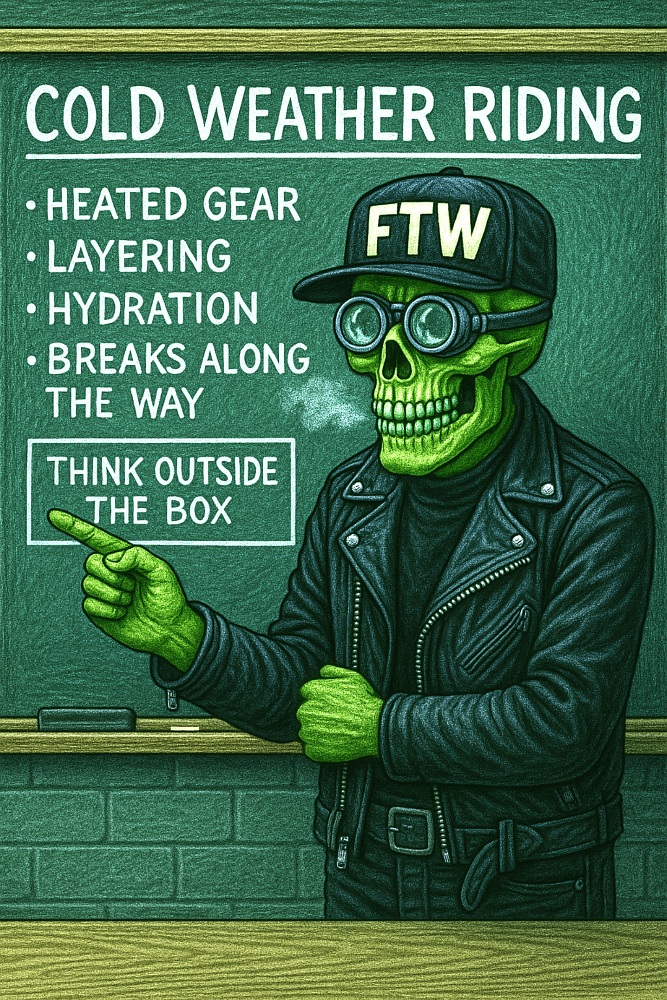
Riding in the cold isn't about courage — it's about planning and preparation. It's about chemistry. Be sure to start out comfortable and dry. Drink water even when it's freezing because dehydration hits harder in dry, cold air. Ease up on caffeine because it constricts blood flow when you need it most. Move at every stop. Swing your arms, flex your hands, restart circulation. Heated gear isn't indulgence, it's life support for your nervous system.
When the ride's over, the thaw hurts more than the chill. That's your nerves rebooting. Your body's spent half a tank of glycogen just keeping you alive. Eat. Rehydrate. While the bike tick cools, feel the heat bleeding back into your fingers. That's the real reminder of what's at stake — not the frost on your jacket, but the way your hands shake when they come back to life. Because every cold ride you survive teaches the same lesson: Control isn't permanent. It's leased, and the weather collects rent.
Stay sharp. Stay warm. And if your hands ever go numb mid-ride, remember this: You're not tough. You're timed.