




 Riders Preferred Membership
 Shop by Vehicle
 Track Order
 Contact Us
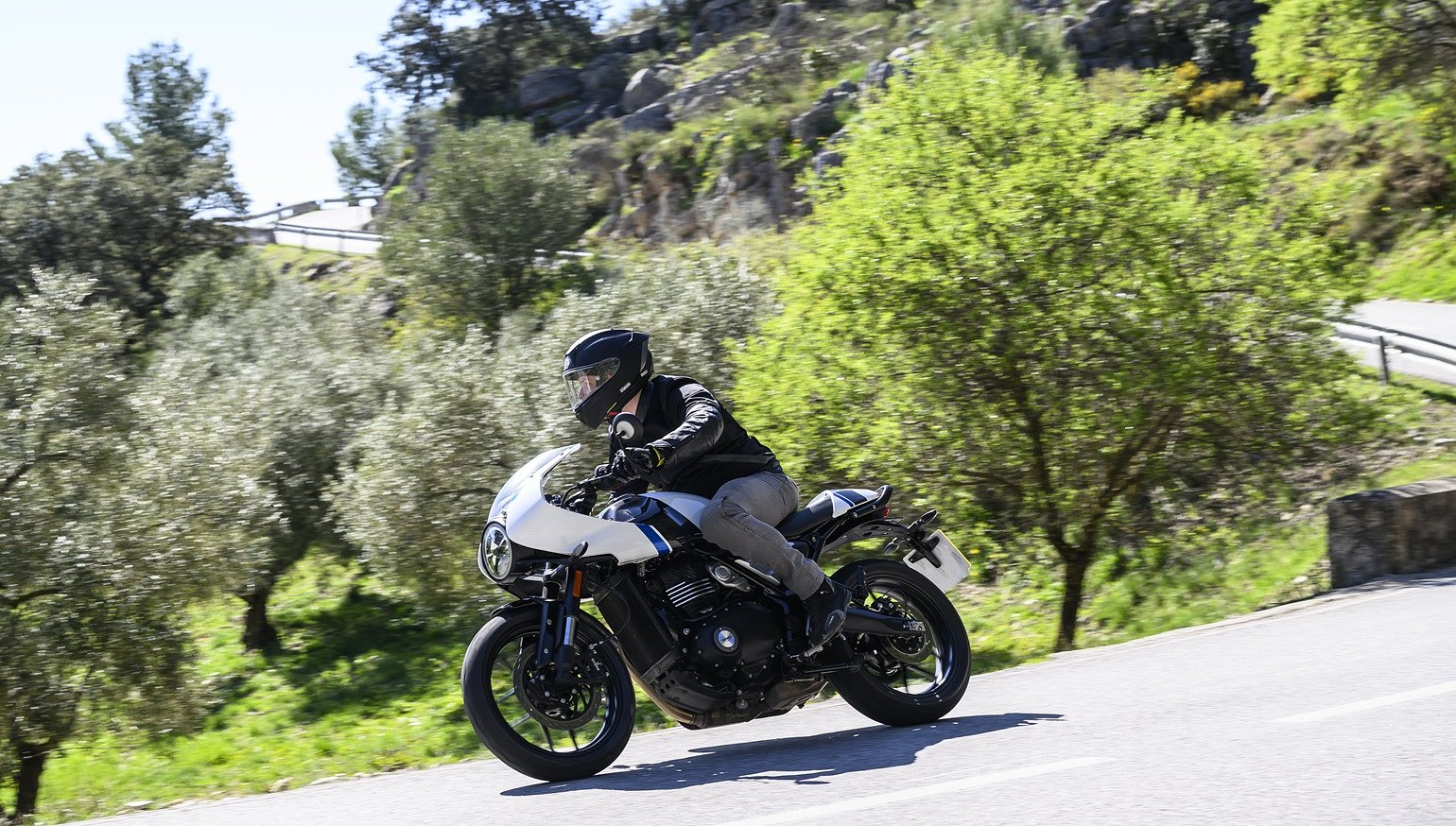
Even though retro wasn't his style, 19-year-old Robbie would have been envious if he'd known that 400-class bikes this good were coming for later generations of new riders.
Competition is improving the niche. Winning the entry-level motorcycle segment played a huge role in putting Kawasaki in the top spot in terms of year-over-year growth in the U.S. market in 2025. Now, Triumph is coming for the crown with more ammunition in the form of these two new models in its 400 cc lineup.
That much younger, less handsome Robbie would've also looked puzzled at today's Robbie if I gave him the piece of advice scribed at the end of this review. In case you don't make it there, I'll give it to you now. "You have your life to chase performance and you'll be able to buy it secondhand for less money when you're ready. But once you move beyond this class, it's going to take a helluva lot of cash to buy those butterflies."
What do I mean by that? A new rider gets those excited butterflies in the stomach much more readily. As I prepared to ride the new Triumph Tracker 400 and Thruxton 400, I was surprised to find that one of them gave me those butterflies.
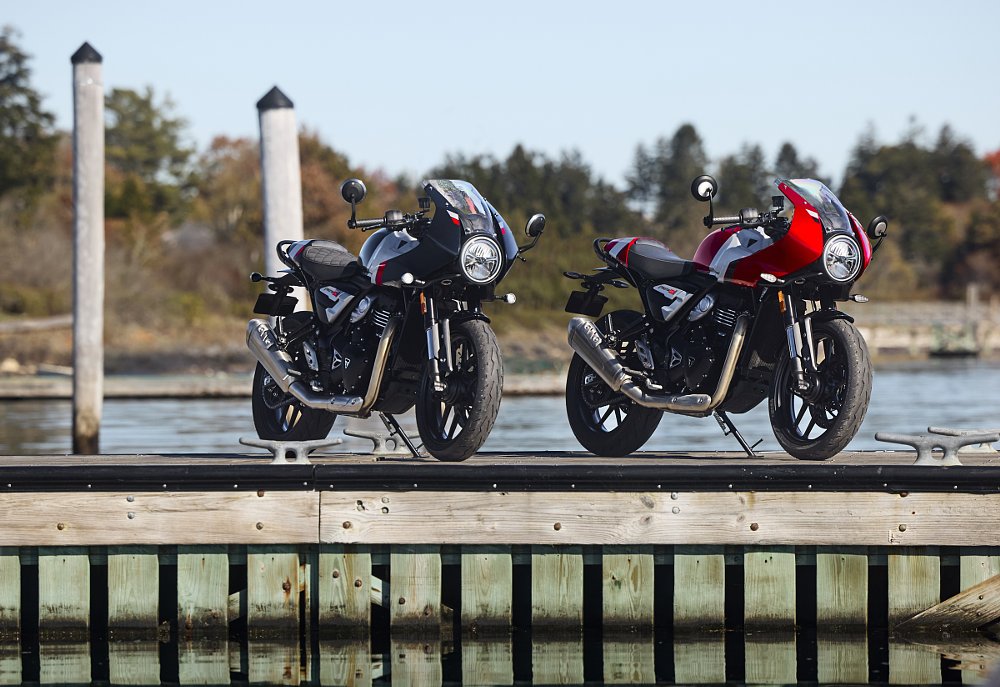
Same but different
Both the Thruxton and the Tracker share a lot with the Speed 400 and Scrambler 400 X, but Triumph employed seemingly small geometry tweaks to create big differences in the character of each of its 400s. The latest two use a new version of the TR-series 398 cc liquid-cooled DOHC single-cylinder engine, which produces 5% more horsepower than the powerplant used in the brand's other 400s.
The latest TR engine uses longer-duration intake cam timing, a higher intake valve lift, and revised mapping to achieve a claimed 41.4 horsepower at 9,000 rpm and 27.7 foot-pounds of torque at 7,500 rpm. The power bump is essentially having a new redline at 10,200 rpm, which makes the Tracker and Thruxton revvier than their siblings to the tune of 1,000 rpm. But Triumph maintains that the new powerplant produces 80% of its torque from 3,000 rpm, meaning you shouldn't need to rev the bolts loose just to get around town.
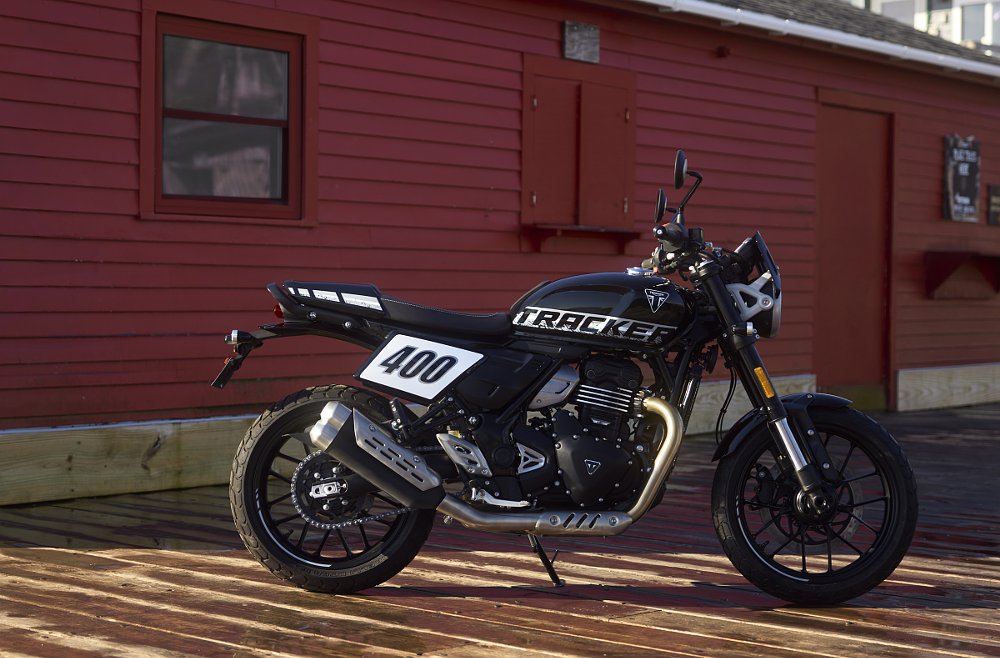
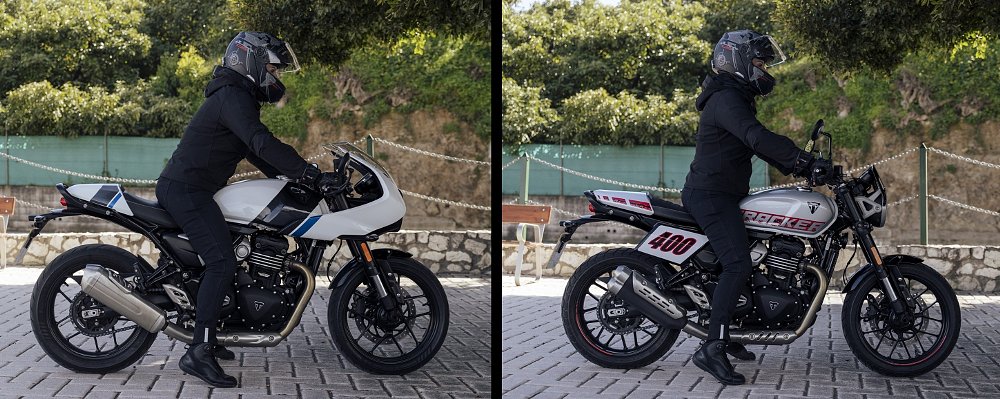
Although the engine is peppier than the other 400s — and no, the Speed and Scrambler 400s aren't getting the new powerplant, at least for the time being — it's the rider geometry that makes the most difference regarding how these bikes all feel. They all share the same hybrid spine/perimeter frame, but you wouldn't guess that if you only saw their rider triangles. The Thruxton and Tracker have the sportiest geometry out of the bunch, and there are no prizes for guessing which one takes the top spot.
Using the Speed 400 as a comparison, the Thruxton's clip-on bars are 40 mm (1.6 inches) narrower and 246 mm (9.7 inches) lower, while the footpegs were moved back by 86 mm (3.4 inches) and upwards 27 mm (1.1 inches). The Tracker's bars, on the other hand, are 43 mm (1.7 inches) wider and 134 mm (5.3 inches) lower than the Speed 400; however, the pegs are in the same position as the Thruxton's. The Thruxton has a slightly more approachable seat height, at 795 mm (31.3 inches), but the Tracker's is just 10 mm higher.
The Thruxton's 1,376 mm (54.2-inch) wheelbase is longer than the Tracker’s 1,371 mm (54.0 inches), and the rake is almost identical, with the Thruxton's sitting at 24.5 degrees while the Tracker's is 24.4 degrees. But the main difference lies in the trail, as the Thruxton's measures 101.5 mm (4.0 inches) and the Tracker's is 107.6 mm (4.2 inches). To achieve this, Triumph increased the Thruxton's triple clamp offset and reduced the fork travel from 140 mm (5.5 inches) on the Tracker to 135 mm (5.3 inches) on the Thruxton. The Thruxton's shorter trail makes it more eager to tip into a corner, but the Tracker feels more lively when changing direction, giving both unique handling characteristics, especially when paired with their wildly different rider triangles.
Both bikes use the same non-adjustable 43 mm inverted fork; however, the Thruxton’s is stiffer, thanks to different internal damping valving. At the rear, both bikes use the same preload-adjustable rear monoshock with 130 mm (5.1 inches) of travel. Both also use the same four-piston radial ByBre caliper biting into a 300 mm single disc at the front, and a single-pot floating caliper slows things down with a 230 mm disc at the rear.
All four of the machines in Triumph's 400 range share the same ride-by-wire throttle and Bosch electronic suite, which includes switchable dual-channel ABS and switchable traction control. Keeping the clutch pull easy for new riders is the brand's slip-and-assist clutch.
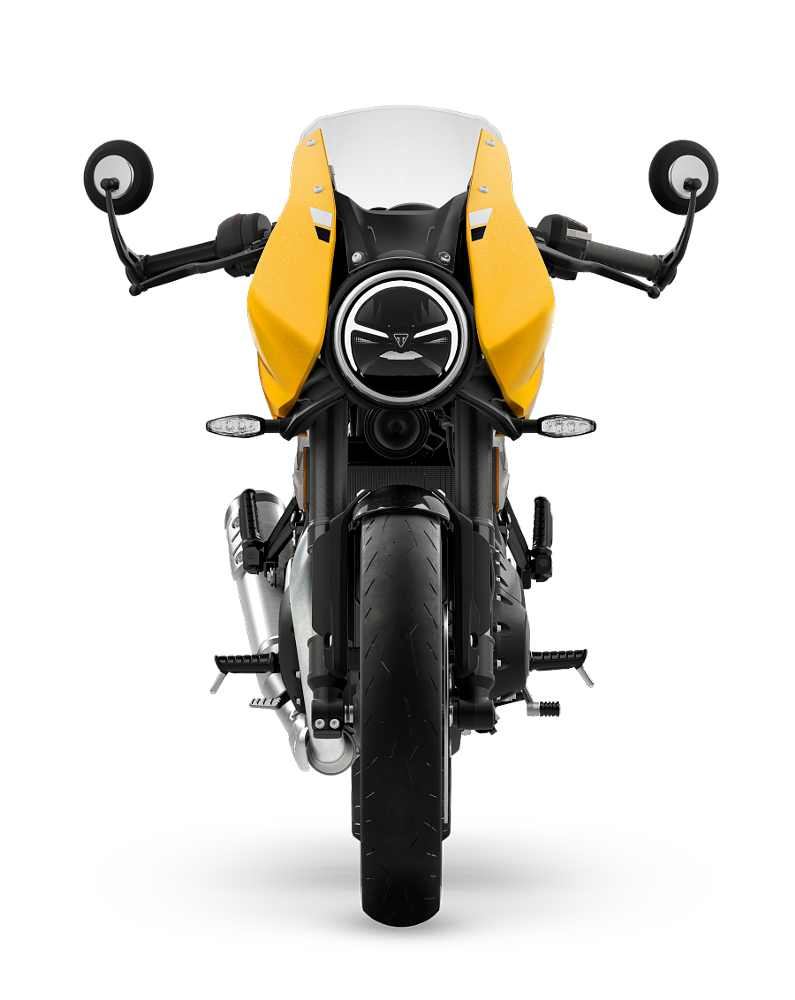
Further dividing the Thruxton's and Tracker's characteristics is their rubber, with the Thruxton wearing Pirelli Diablo Rosso IVs and the Tracker sporting Pirelli MT60 RS tires. The tires are as much about completing the looks as they are about performance, and how these bikes look is what sets them apart from the entire segment. As part of Triumph's Modern Classics range, they're meant to evoke feelings of nostalgia, while cleverly remaining firmly in the 21st century in terms of performance.
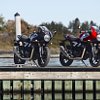
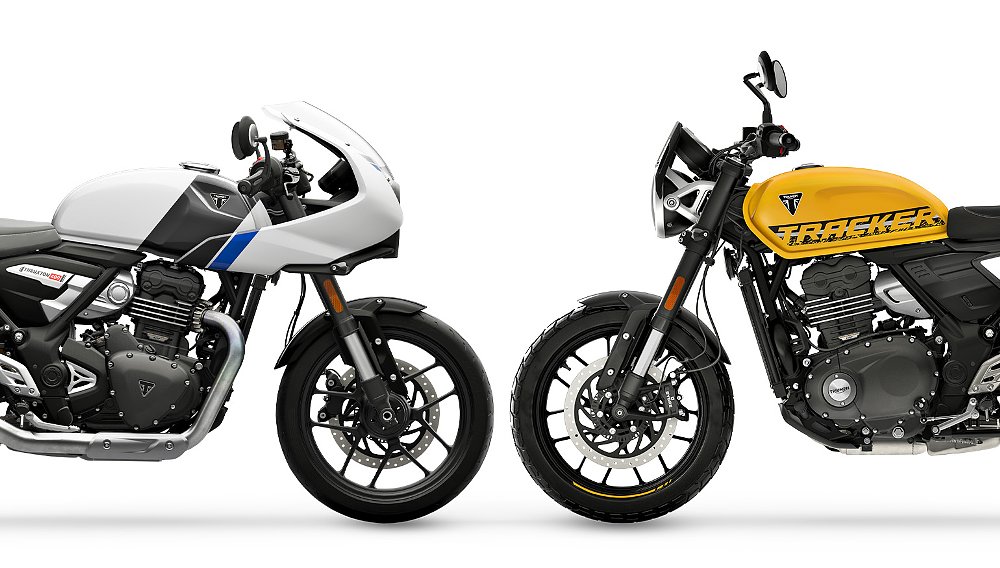
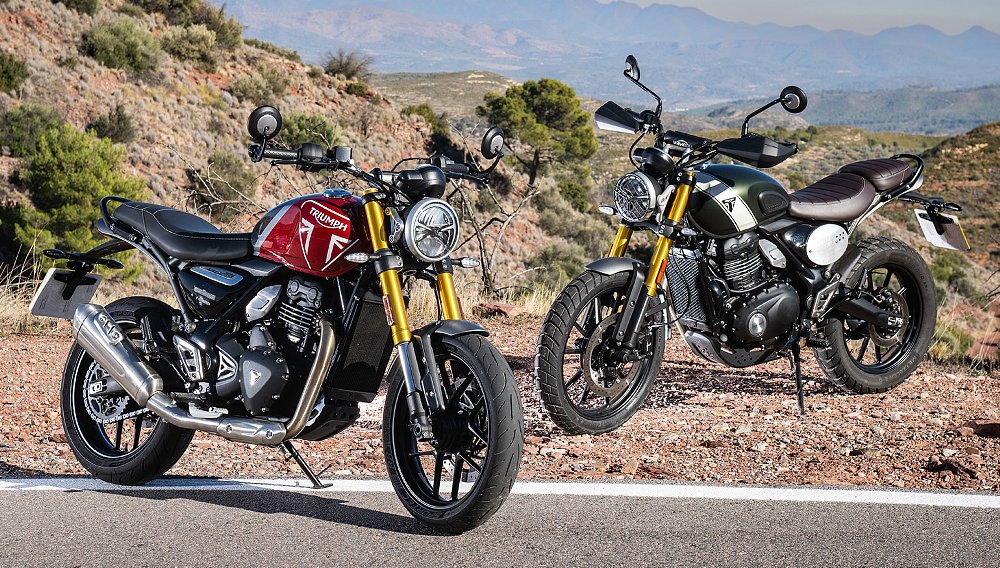
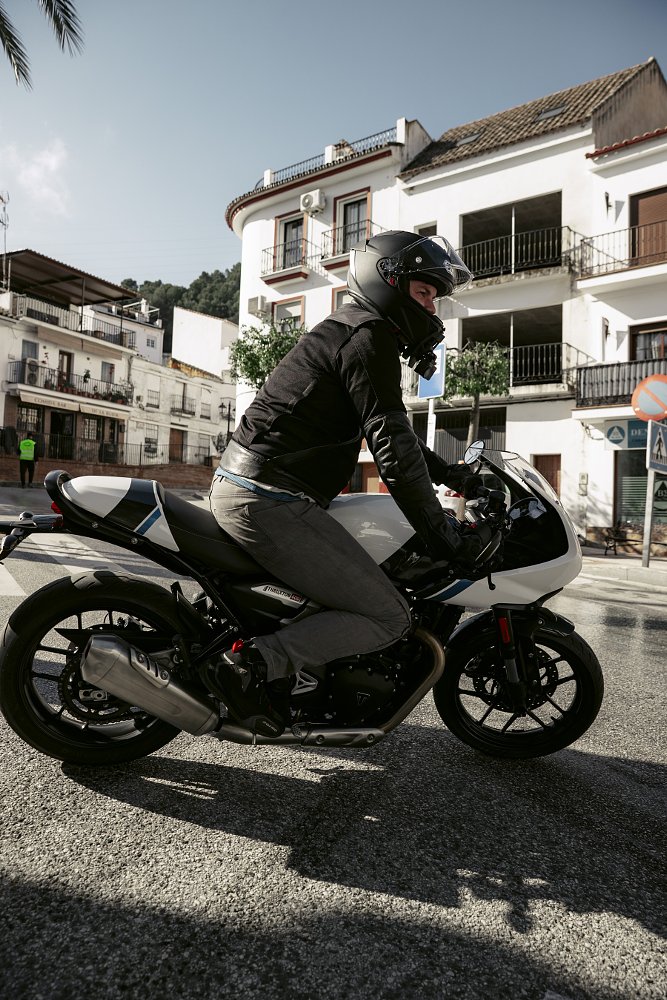
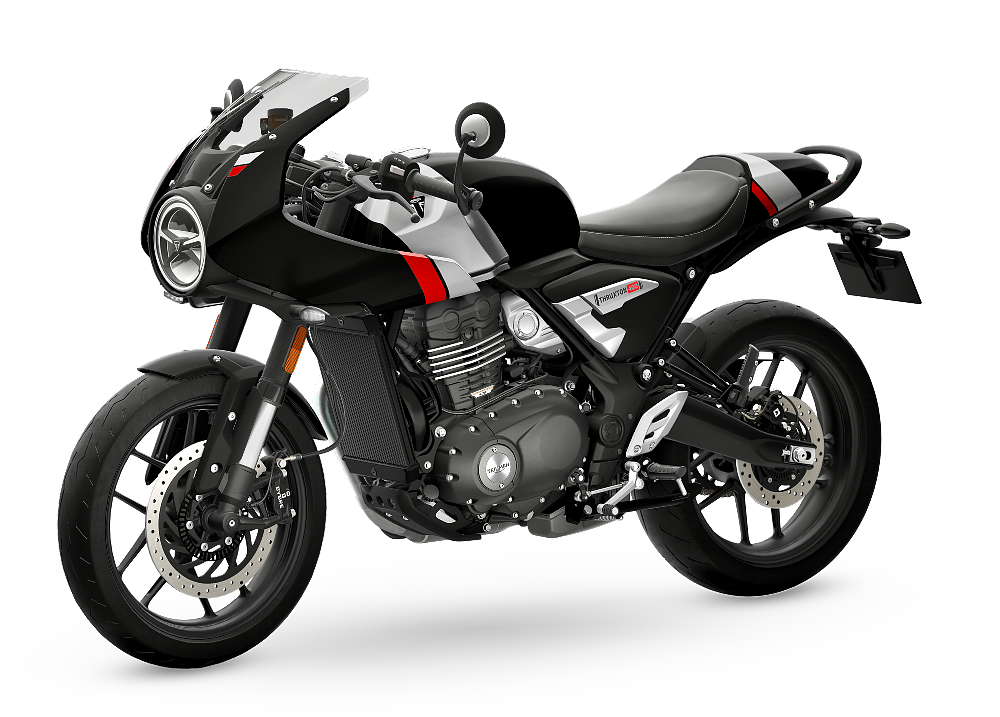
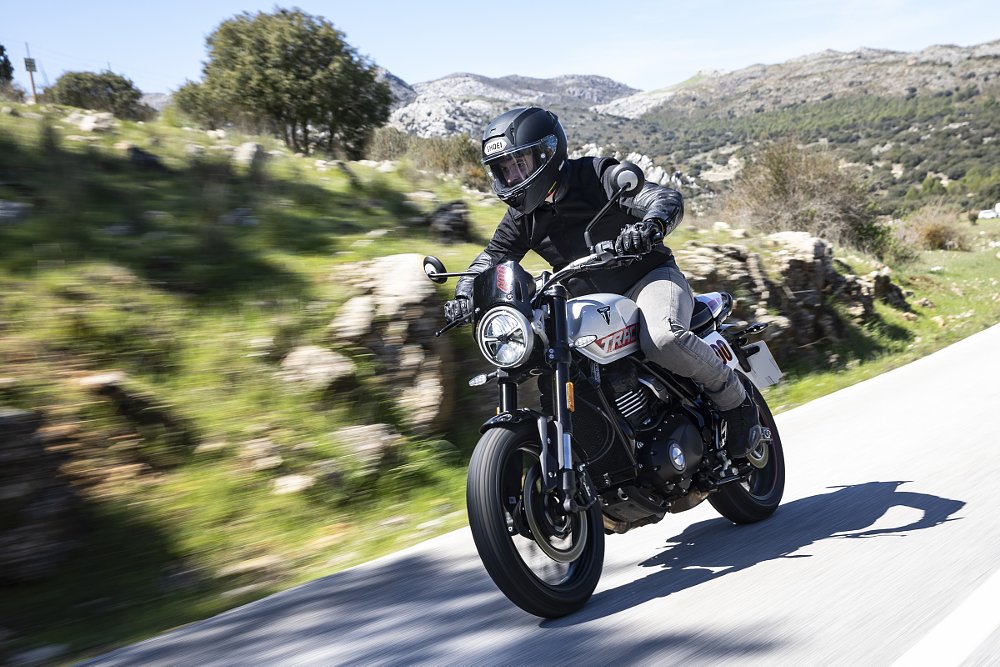
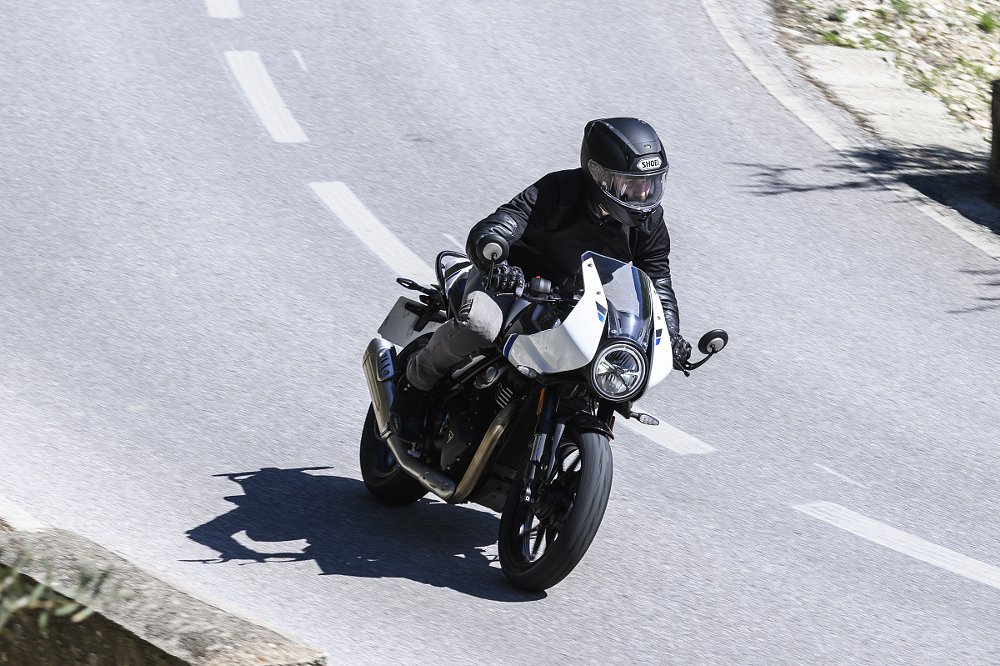
The Thruxton is arguably more visually striking, and its visual roots can be traced back to the 1960s. A low tank line and flat seat create a long profile. Combine this with a short fender, and you've got the silhouette of a classic café racer. But it's the Thruxton's half fairing that steals the show, along with the round LED headlight it contains. It doesn't shy away from showing its frame and putting the engine on display, with its faux air cooling fins and imposing exhaust header. Bar-end mirrors and a color-matched seat cowl make the Thruxton's MSRP of $6,295 feel more like a package deal, and it's a similar story with the Tracker.
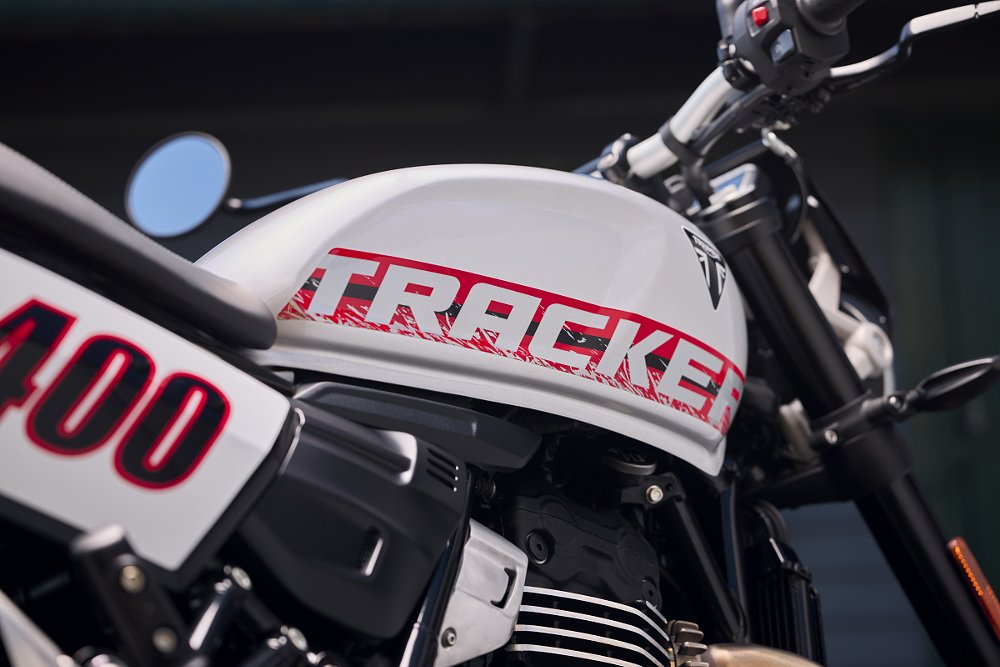
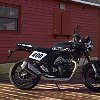
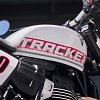
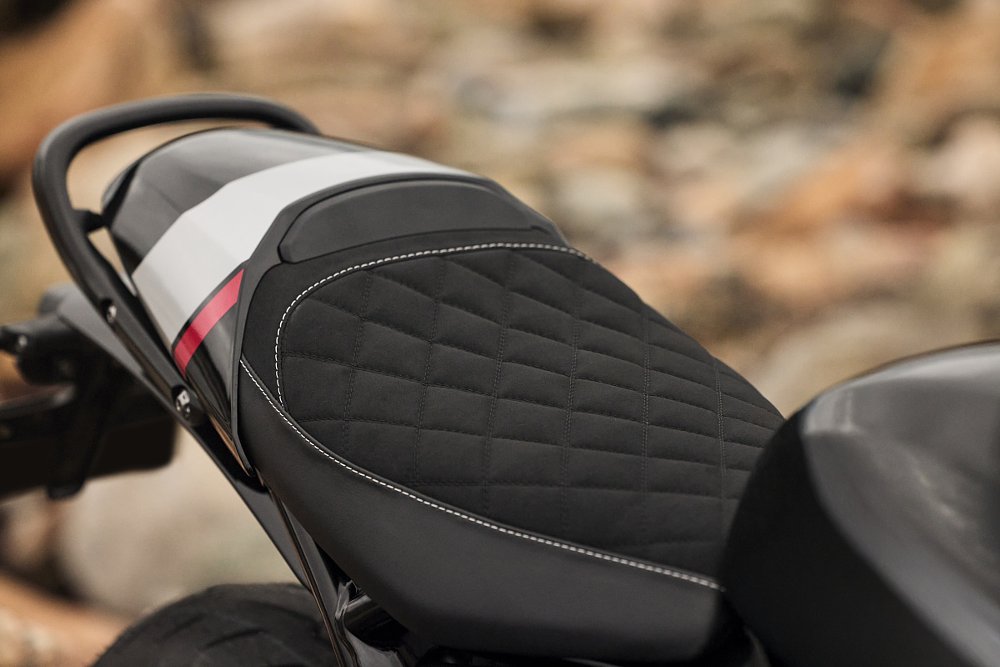
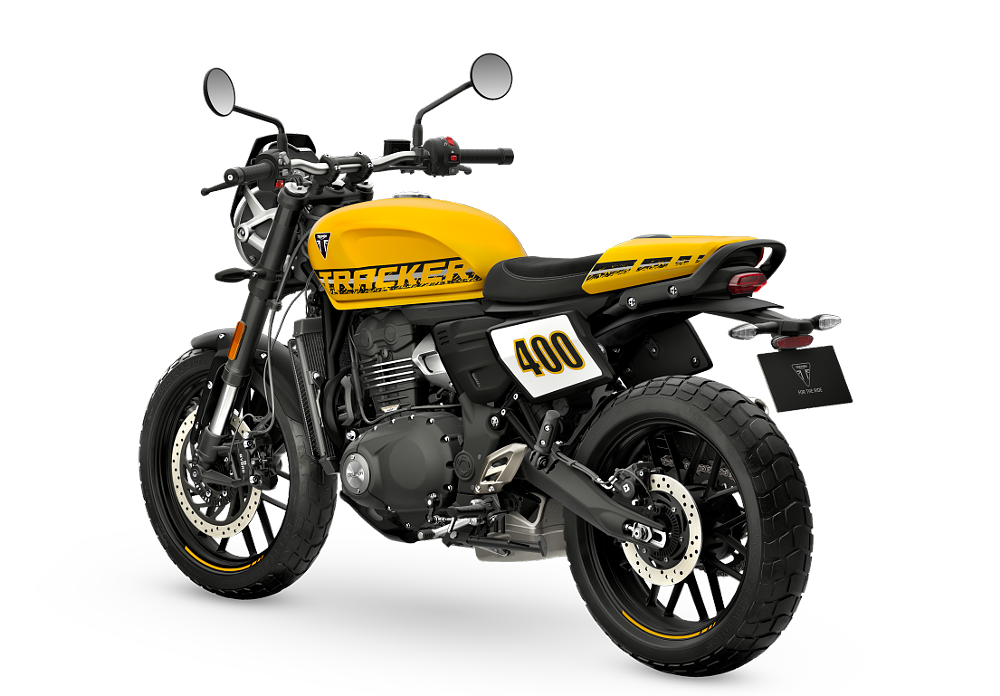
The Tracker has a long flat stance, as it should for a motorcycle inspired by flat-track racers. But it's where Triumph has gone beyond what's expected that makes the difference, including the same removable color-coded seat cowl, short rear fender, a grippy textured seat, and fly screen. All this is before you get into the "400" racing-style number plates found on the sides, which is the reason many of the folks at the launch, myself included, had to check with Triumph reps to make sure all this was included in the Tracker's $5,995 MSRP.
Although Triumph has done a lot to separate the Tracker and Thruxton, it's undeniable that these bikes share a lot of DNA, including the engine, frame, and brakes. So there are some aspects that are just too similar to critique separately.
Non-identical twins
It's not crazy to think of the Tracker and Thruxton as fraternal twins; they share some DNA but they're not identical. The most important element they share is the 398 cc single-cylinder engine, and that's also where I had the most difficulty in forming my opinions.
The powerplant has a relatively narrow powerband that's full of delight between 6,000 rpm and 9,500 rpm, where it's peppy, responsive, and left me feeling like I could string the sections of blacktop together via the throttle. But I often found myself revving higher than this, very close to the new 10,200 rpm redline, although nothing much happens here. I can hear you asking, "So why would you do that?" The short answer is: fear.
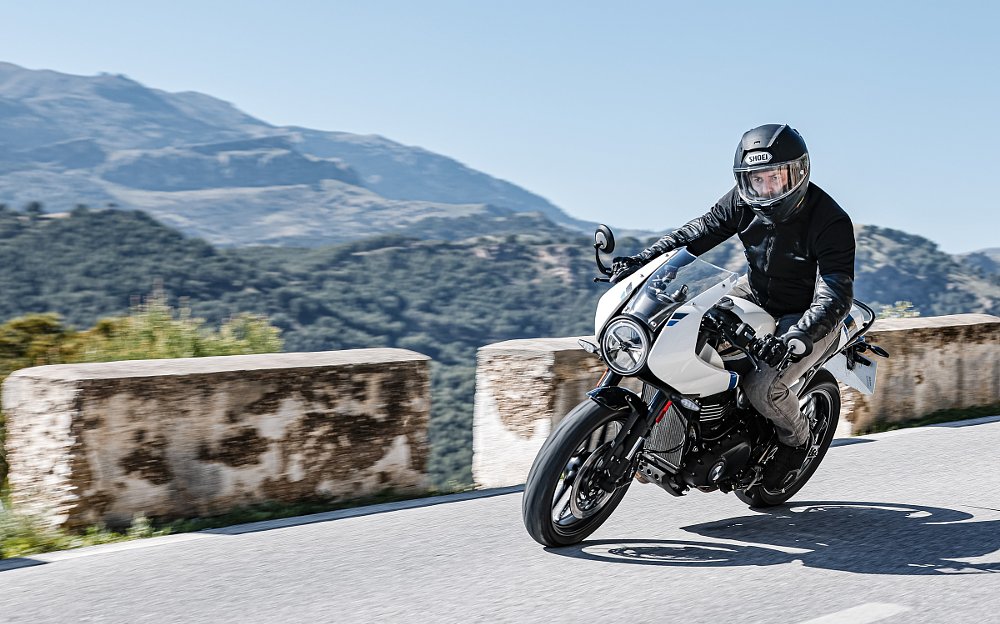
I had an angry pack of Triumph Modern Classic LED headlamps in my mirrors, all trying to keep their momentum up through the corners because that's the most enjoyable way to ride these bikes. I was afraid to venture ever-so-slightly below the spunky upper midrange because the latest TR-series engine does not reward falling below it; it punishes it. My workaround was to keep the engine spinning close to the redline rather than shifting up if I knew I'd need to shift down again soon.
By keeping the revs high, I ensured that I'd never wait three to five business days for the power to pick up and the engine's response to directly match the inputs from my right hand once more. I won't say that riding close to redline is like riding a tattoo gun, but it's not a million miles away. The vibrations were intense, but because it's so much fun raging a relatively low-capacity motorcycle on beautiful Spanish roads, I didn't care if my feet and hands were numb after the ride. If I wasn't out riding with a bunch of other folks enjoying the wonders of riding small bikes to their limits, I'd probably have shifted up more often and taken breaks from the kinetic overload.
Vibrations hit the mirrors by around 6,000 rpm, and by 9,000 rpm you should only check them if you're sure someone didn't spike your drink; that's how you might be feeling afterward. I imagine when someone is riding above 9,000 rpm on the Tracker or Thruxton, checking their mirrors is one of the last things on their mind. To give the 400s some highway credentials, Triumph fitted a tall sixth gear, meaning the bikes sit at around 6,000 rpm at 60 mph. At that speed in sixth gear, the rearview-ruining vibrations weren't as noticeable, but I didn’t have a chance to sit steady at 70 mph or 80 mph. I imagine the information from the mirrors would be more of a mere suggestion at those speeds.
Riding in sixth gear is more of a select-and-sit operation because if you need to overtake, rest assured you'll want to drop a gear or two. Choosing my gears wisely wasn't just a necessity when rounding the twisties or cruising at high speeds, as slow-moving traffic presented a different characteristic to figure out. Snatchy fueling at low rpm and in a low gear, particularly first, was ever-present around urban environments. I envision that's where these bikes will spend a lot of time, but again, there's a workaround. It just takes some finagling with the clutch or short-shifting to a higher gear to reduce the on-off feeling upon the first application of the throttle from 0%.
All this clutch work and short-shifting didn't pain me because the lever action is so light, thanks to Triumph's slip-and-assist clutch, and the gearbox didn't miss a shift throughout the 100-mile-plus route. There's no quickshifter, but the gearbox will happily agree to clutchless upshifts. Although I never locked the rear wheel, if you're too abusive with your downshifts, the back end will let you know it's unhappy. A Triumph engineer said the slip-and-assist clutch on the small-displacement models is designed to focus more on the assist, less on the slip.
Aggressively downshifting was something I became very familiar with on the 400s, partly because I needed to keep the engine spinning to get the drive out of the corner, and partly because I wasn't a huge fan of the brakes. To be fair, they're more or less what I expected, considering the price point and entry-level nature. The non-adjustable brake lever offers a lot of play before it engages the front disc, and then, well, there's not much play after. Once you start to apply the brakes, there's not much in the way of progressive stopping power. You can trail into corners — I did it a lot to keep the bikes composed and flowing — and you can come to an emergency stop via a serious two-finger pull on the lever. So, the brakes do the job that most entry-level riders will ask of them, but more experienced riders will notice a lack of feedback and power.
Even when I overshot a right-hander that I entered with the overzealous nature I imagine will afflict some new riders, the ABS wasn't overly intrusive for road riding. Likewise, I saw the TC light up the dash plenty of times; however, it rarely felt intrusive except when I was being overzealous, again for professional research reasons.
Similar to the rider aids, the analog speedometer and LCD display do their job well despite being basic. I probably prefer this dash in the Modern Classic range to the one found on the 660s. It still shows all you need to know, including the fuel gauge, distance-to-empty, and the gear position, while keeping the retro facade alive.
The only criticism I have about the dash is that I found it difficult to read the speedo when vibrations were high, and that's exactly when I needed to know my speed. This is probably something I'd get more used to if I owned the bike, but when unfamiliar with the dash, a quick glance down might leave you uncertain as to whether you're approaching the speed limit or 10 over. I wonder whether the LCD would better serve as my speedometer, in place of the digital bar-style tachometer. On a side note, I was terribly confused as to why the tachometer showed a 12,000 rpm rev limit, which the bars agonizingly never reach.
The gauges take some points back for the 400s compared to the competition, as it is one of the few in the class with a USB-C port. Going out and getting lost on the roads as a new rider is a lot more endearing when you know your phone will never run out of battery and you can navigate your way home. The switchgear works well and isn't overly complicated, which fits the bill for what first-time riders need. If I had to be critical, I'd say the plastic used doesn't look as high-quality as you'd find on larger Triumphs, but this is one of the few giveaways that these models have substantially lower prices than their more grown-up siblings.
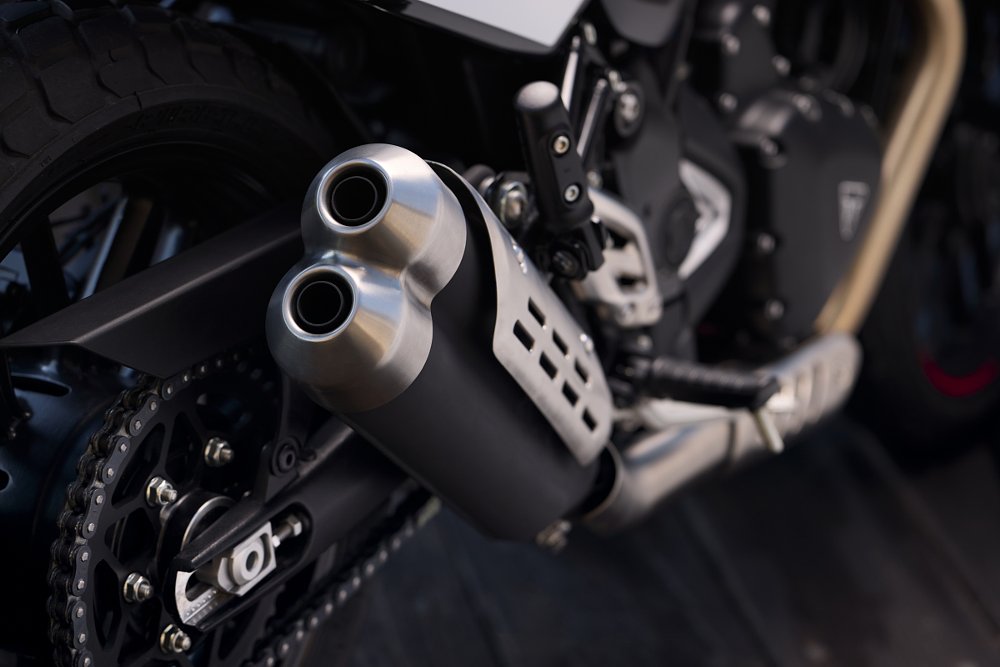
It might sound as though the engine and brakes took a few licks from me in this review, but I enjoyed finding the workarounds to get the most from them. Both bikes kept me grinning and giddy around the sweeping twisties and I was left feeling more rewarded for riding well than punished for misjudgments. They also made me more engaged and focused, knowing I had nowhere to hide should I misjudge things. But that's me, as a more seasoned rider. For newer riders or folks returning from a long stint off two wheels, it should take you a while to need to engage with the workarounds I mentioned.
Whether you're new or just want something that will steal attention from bikers and non-bikers alike, you'll still have a decision to make because this is where the differences between the Thruxton and the Tracker begin.
What the heart wants
I had never walked up to an entry-level motorcycle and felt butterflies until I rode the Thruxton 400. This bike looks cooler than bikes that are twice the price and could fool the uninitiated into thinking it costs as much.
Once I threw my leg over and looked down to a narrow tank, leading to a small fairing that left a large gap to see a 110-section front tire, the Thruxton felt smaller than I anticipated. I felt like my thighs could almost touch as I squeezed the tank. But the bike's unintimidating stature will serve newer riders well, as flat-footing was a doddle for my six-foot frame, thanks to the tapered seat, and even left riders as short as five feet, three inches tall without issue during the launch.
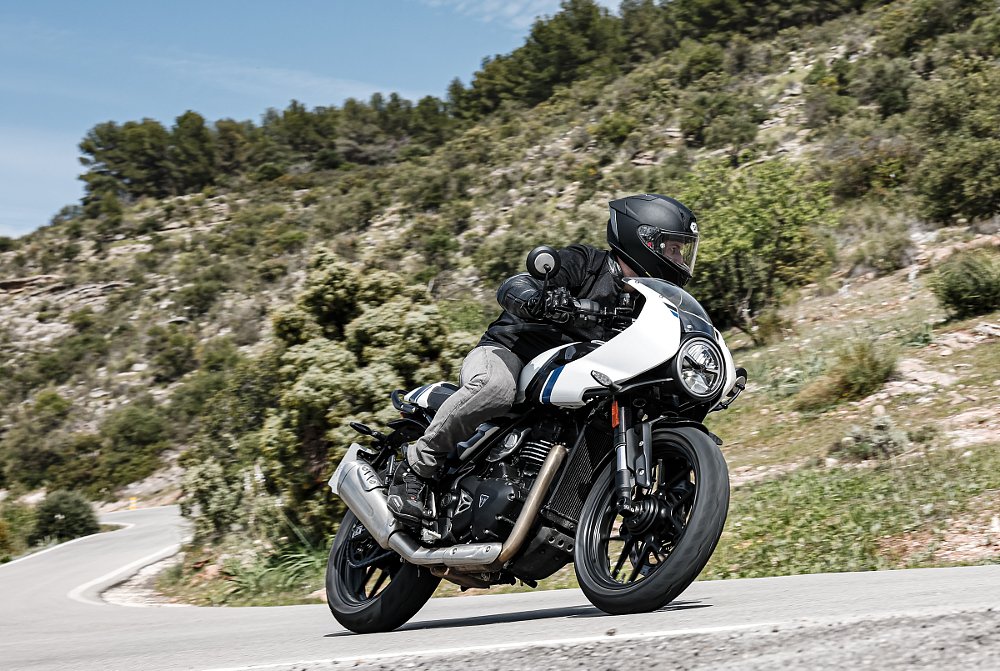
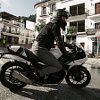
As a small-ish motorcycle with a compact, sporty riding position, the Thruxton still feels like you're on a serious machine, but the package feels more approachable, particularly around town where lane splitting felt like second nature, although the bike was deceptively wider than it felt between my legs due to its mirrors. As soon as I settled my weight onto the seat, I realized the suspension was not what I expected from a bike in this class, meaning it wasn't undersprung. Not only is the Thruxton sprung well for a beginner motorcycle, but it's also appropriately stiff for sporty riding, without being so serious that first-time riders will feel like they're on a razor blade that's out to get them. On one section of road, I think this suspension might have saved my bacon.
Rounding a sweeping left-hand bend, I was in the groove, flowing with the Thruxton. Then, having barely caught a glimpse of the mid-corner bump, it felt like the bike was almost airborne or at least had unloaded its suspension to the nth degree. Well sorted rebound damping was likely what stopped me from becoming a bacon sandwich between guardrails. That, and its Pirelli Diablo Rosso IV tires.
The rubber is part performance and part aesthetic. We know how well these tires grip the road, give good feedback, and encourage you to tip further into a corner, thanks to a consistent round profile. But aside from the performance, I can't imagine approaching a Thruxton 400 and seeing anything but a Diablo Rosso tread pattern on the back; it's part of what makes approaching the bike feel more exciting than it should.
Whenever I forgot that the Thruxton was designed to get low around every corner, my wrists reminded me. The bike's clip-ons are above the top yoke, but the rider is still canted forward, and the bend in my leg was greater than I expected. I found myself riding with one arm on the gas tank when appropriate, although the ride wasn't uncomfortable to the point of exhaustion. I'd commute on the Thruxton, do a short-ish highway stint, and I'd certainly take it to my nearest set of tight twisties. But what's most surprising to me is I'd probably sooner do all of this on the Tracker.
That tracks
I don't know why I felt less excited to ride the Tracker than the Thruxton. That's a straight lie, I do. Just look at the Thruxton. It almost seemed unfair to launch the two together because without the Thruxton stealing everyone's heart, the Tracker's looks would have stolen the show at the launch. Who doesn't love a flat-track-inspired motorcycle, apart from Indian? I jest, of course, because if we'd bought more, we might still have the FTR 1200. But now, for less than half of what an FTR would've cost you, you can have a Tracker that's a riot in its own right.
It turns out you don't need a bonkers engine to inspire hooligan antics. You just need enough pep, a wide handlebar, and a sporty(ish) upright rider triangle to encourage you to hunt apexes. Having a race plate on the sides doesn't hurt either. Although the Tracker shares its powerplant with the Thruxton, my bum dyno felt like it was peppier, and I don't think the Tracker's seven-pound weight advantage over the Thruxton has anything to do with the reason.
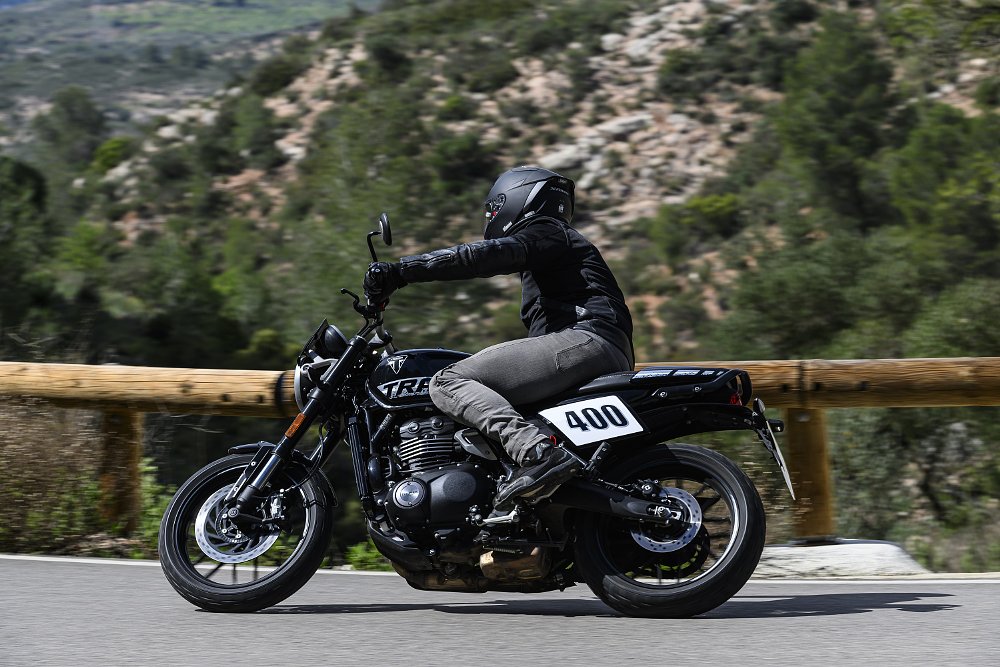
The wide handlebar instantly unleashed any hooligan nature that lay within me, and the fact that I wasn't braced under acceleration like I was on the Thruxton made the Tracker feel slightly more responsive. The fork is valved differently from the Thruxton to make it softer, which made it feel like the 398 cc single was working the chassis harder under acceleration. The fact that the wheelbase is slightly shorter than the Thruxton's made the Tracker feel slightly more agile around town. It is slower to turn in due to the extra trail, but there's plenty of leverage from the handlebar, so it doesn't take much more than a thought to induce lean angle.
The softer suspension lends itself more to day-to-day riding, without taking from the fun of a twisty road, although a Thruxton will be slightly quicker and feel more planted around a set of curves. But the times around your favorite section of blacktop won't be vastly different, as the pack of riders I was with stayed together on a mixture of machines, and we weren't waiting around. What's even more impressive about the Tracker's road manners is how well the dual-purpose, road-oriented Pirelli MT60RS tires performed. There was ample, predictable grip and good feedback from the rubber that gives the Tracker its ride-anywhere look.
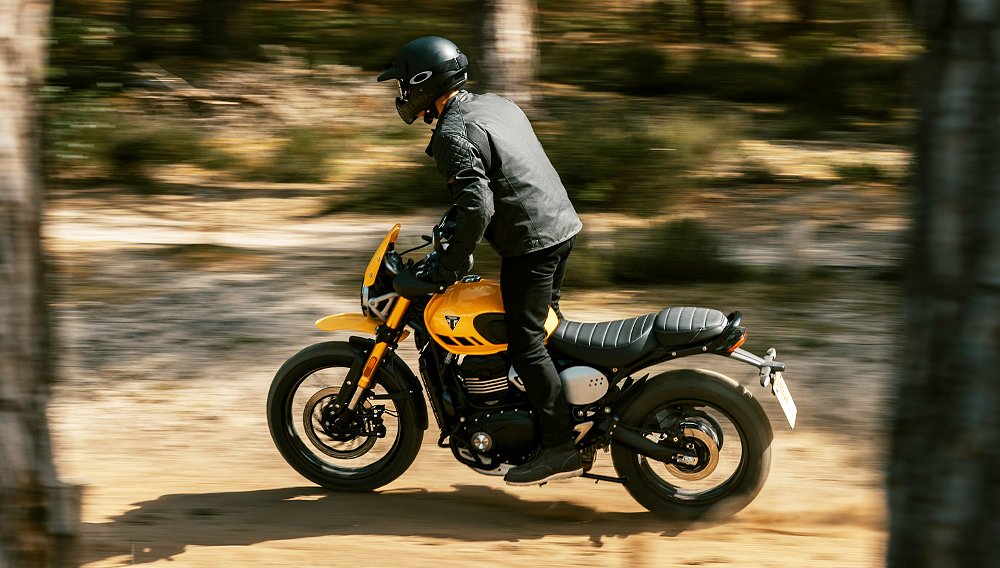
There were some dirt sections where we pulled over to wait before setting off for photos, and turning the TC and ABS off here made me feel like I wanted to take the Tracker away for a few hours on some well-maintained dirt and do my best Chris Carr impersonation. Unfortunately, there was no off-road portion set aside for the Tracker because it's not really intended to spend any time off-roading. A regular Joe wouldn't know that from a glance.
Unlike the Thruxton, which looks slightly bigger than it feels, the Tracker feels bigger than it looks. It's more like a full-sized bike, thanks to its higher seat and wider tank, but even easier to get on with than the Thruxton, thanks to its commanding riding position.
Paradox of choice
I went to Mallorca with a relatively open mind, but probably would've told anyone who asked that I'd ride home on the Thruxton, given the choice. This "probably" turned to a "definitely" after I saw both bikes in person. The Thruxton won the battle for my heart. After riding both, someone asked me which one I'd ride home, and I couldn't have been more torn. Every time I went to pull the trigger on an answer, I felt like I was betraying the other bike, because each wins in different ways.
Beauty is in the eye of the beholder. Right now, the beholder is me, and I say the Thruxton 400 is the best-looking entry-level motorcycle you can buy. If I could open my garage door to this every day and ride it to work, I'd be far more easily persuaded to go sit at a desk for eight hours. Every time I walked up to the Thruxton with the key in my hand, I felt as excited as the time before. The riding experience was enjoyable, but it didn't quite live up to the emotions the Thruxton inspires visually. I don't know a sub-47-horepower bike that would, but the Tracker is kind of the opposite.
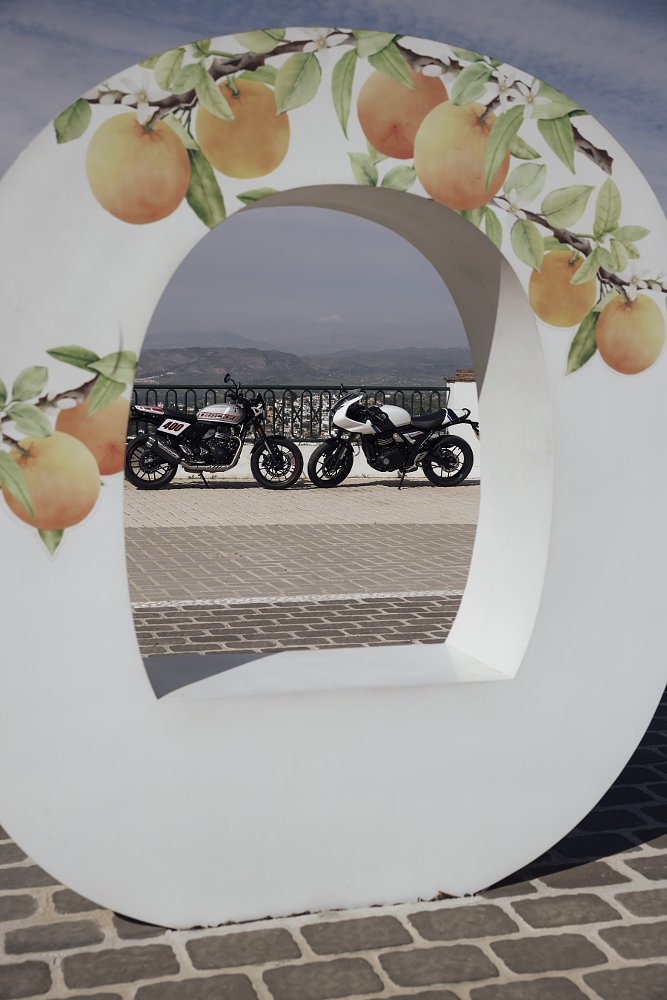
Let me preface what I'm about to say by telling you I think the Tracker is also a good-looking bike and equally, if not more, unique than the Thruxton, but it didn't give me butterflies when I approached it. Unlike on the Thruxton, my excitement grew on the Tracker as I rode it. It encouraged me to be more playful, whether that meant letting the clutch out aggressively at low speeds for journalistic purposes or turning rider aids off and spinning the rear wheel on dirt. All this on closed roads, of course. This is the paradox of choice, because whichever I choose, I'd feel like I'm missing out in another way. The Tracker is the bike I'd take to bed, but I'd prefer to wake up next to the Thruxton. With their looks, both will turn more heads from riders and non-riders alike than the competition.
I wouldn’t blame a rider for opting for a more refined bike or one with higher specifications. But if I were speaking to myself as a first-time bike buyer, I'd say, "You have your life to chase performance and you'll be able to buy it secondhand for less money when you're ready. But once you move beyond this class, it's going to take a helluva lot of cash to buy those butterflies."
I guess that means I'd go with the Thruxton… Wait, no.
| 2026 Triumph Thruxton 400 | 2027 Triumph Tracker 400 | |
|---|---|---|
| Price (MSRP) |
$6,295 U.S.A. $7,395 Canada |
$5,995 U.S.A. $6,995 Canada |
| Engine | 398 cc, liquid-cooled, four-valve, single | |
|
Transmission, final drive |
Six-speed, chain | |
| Claimed horsepower | 41.4 @ 9,000 rpm | |
| Claimed torque | 27.7 foot-pounds @ 7,500 rpm | |
| Frame | Hybrid spine/perimeter tubular steel | |
| Front suspension | 43 mm inverted fork; 5.3 inches of travel | 43 mm inverted fork; 5.5 inches of travel |
| Rear suspension | Single shock, adjustable for preload; 5.1 inches of travel | |
| Front brake | Single four-piston caliper, 300 mm disc with ABS | |
| Rear brake | Single-piston caliper, 230 mm disc with ABS | |
| Rake, trail | 24.5 degrees, 4.0 inches | 24.4 degrees, 4.2 inches |
| Wheelbase | 54.2 inches | 53.9 inches |
| Seat height | 31.3 inches | 31.7 inches |
| Fuel capacity | 3.4 gallons | |
| Tires | Pirelli Diablo Rosso IV, 110/70R17 front, 150/60R17 rear | Pirelli MT60 RS, 110/70R17 front, 150/60R17 rear |
| Claimed weight | 388.0 pounds wet | 381.4 pounds |
| Available | March 2026 | April 2026 |
| Warranty | 24 months | |
| More info | triumph motorcycles.com | triumph motorcycles.com |